

Table of Contents
- Why Repurpose Old Hockey Jerseys Instead of Storing Them
- Before You Start: Authentic vs. Replica Jersey Care
- Hockey Jersey Quilt Patterns: Sewing a Memory Blanket
- How to Frame a Hockey Jersey: A Step-by-Step Guide
- DIY Sports Jersey Pillows for Your Game Day Room
- No-Sew Ways to Repurpose Old Hockey Jerseys
- When to Hire a Professional vs. DIY
- Sustainable Options for Jerseys You Can't Keep
- Frequently Asked Questions
Last Updated: September 6, 2026
Why Repurpose Old Hockey Jerseys Instead of Storing Them
That box of old hockey jerseys in your closet holds more than fabric. It holds the memory of a first goal, a playoff run, or a season spent in the stands with family. Storing them away means those stories gather dust instead of adding warmth to your home. At MoonlightWeave, we believe vintage memorabilia deserves to live on in your everyday life, which is why we put together this guide on how to repurpose old hockey jerseys into pieces you will actually use and love.
Repurposing old hockey jerseys is the practice of transforming worn or outdated team apparel into functional keepsakes like quilts, pillows, framed art, and wearable goods. The process protects the sentimental value of the fabric while giving it a fresh purpose. Below, we will walk through seven distinct projects, from beginner-friendly no-sew options to heirloom-quality commissions. But first, here is what most guides get wrong: they treat every jersey the same, which can ruin a valuable authentic jersey before the project even starts.
Before You Start: Authentic vs. Replica Jersey Care
Authentic and replica jerseys require different handling during any repurposing project. Authentic jerseys feature stitched tackle twill lettering and embroidered team logos, while replicas typically use heat-pressed vinyl that can crack or peel when heat is applied. Knowing which type you own determines whether you can safely iron, cut, or sew the material.
Check the inside hem for a manufacturer tag. Authentic jerseys usually list materials like 100% polyester with specific care codes, while replicas often say "printed" or "screen printed" somewhere on the tag. For authentic jerseys with stitched details, preserve the stitching by cutting around the letters rather than through them. For replicas, avoid high heat entirely. If you are unsure about material durability, test a small inside seam first.
Hockey Jersey Quilt Patterns: Sewing a Memory Blanket
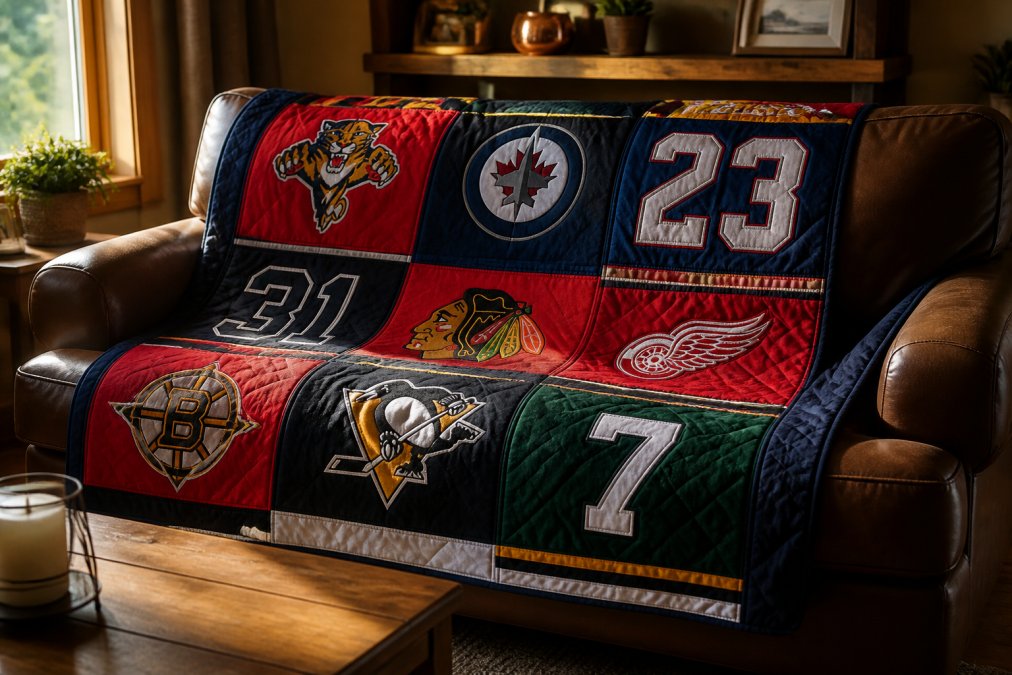
A hockey jersey quilt is the most popular way to preserve a collection of old jerseys, and for good reason. The finished blanket turns game day apparel into a functional heirloom that keeps you warm during the next match. The standard hockey jersey quilt pattern uses a grid layout, with each square cut from a different part of a jersey: the back numbers, the front crest, and the sleeves.
Start by washing all jerseys in cold water and air drying them to set the colors. Cut each jersey into 14-inch squares, centering the most meaningful graphics like the team logo or player number. Interface the back of each square with fusible backing to prevent stretching, then arrange the squares in a pattern you like before sewing. Layer the quilt top with batting and a soft backing fabric, then quilt through all three layers. Edge the blanket with binding made from jersey sleeves for a cohesive finish.
How to Frame a Hockey Jersey: A Step-by-Step Guide
Framing a hockey jersey turns a single treasured piece into wall-mounted sports decor that protects the fabric for decades. This project suits a jersey you cannot bear to cut, whether it is signed, game-worn, or simply a favorite from childhood. The key is using a shadow box deep enough to avoid crushing the fabric and its patches.
Follow these steps for a professional-looking frame:
- Wash and dry the jersey, then button or zip it fully closed.
- Fold the sleeves across the chest so the jersey forms a flat, wide rectangle.
- Pin the jersey to a foam or acid-free backing board, smoothing wrinkles without stretching the fabric.
- Position the jersey so the team logo and player number face forward.
- Place the backing board inside a shadow box frame with UV-protective glass.
- Seal the frame and hang it away from direct sunlight to prevent fading.
For a signed jersey worth real money, consider using a professional framer who specializes in textile preservation. They will use archival mounting hardware and museum-grade materials that protect the autograph and fabric integrity.
DIY Sports Jersey Pillows for Your Game Day Room
Sports jersey pillows offer a quicker sewing project that adds team spirit to a couch, bed, or man cave. Each pillow uses the front crest of one jersey, making it an ideal way to repurpose old hockey jerseys that have stains on the sleeves or back. You can complete a single pillow in an afternoon with basic sewing skills.
Cut the front panel of the jersey into two 18-inch squares, centering the crest on one square. Cut the back panel from a coordinating solid fabric. Place the pieces right sides together, sew around three edges, turn it right side out, and stuff with a pillow form. Hand-stitch the fourth edge closed. For a polished look, add a hidden zipper to the bottom seam so the cover is removable and washable.
No-Sew Ways to Repurpose Old Hockey Jerseys
Not everyone owns a sewing machine, and that is fine. Several no-sew methods let you repurpose old hockey jerseys with just scissors, fabric glue, or a frame. These options work well for replicas or jerseys with minor damage that disqualifies them from quilting.
- Shadow box display: Fold the jersey flat and pin it inside a shadow box, exactly like the framing method above, without the sewing.
- Jersey-backed corkboard: Stretch the jersey over a cork bulletin board and staple it on the back for a functional memo board.
- Patch removal and crafting: Cut out the team logo and player patches, then glue them onto a tote bag, denim jacket, or canvas sneakers with fabric adhesive.
- Jersey wall hanging: Attach wooden dowels to the top and bottom of a flattened jersey and hang it like a banner.
These projects preserve the visual identity of the jersey while giving it a new job. They also keep the fabric intact, which matters if you later decide to have a professional transform the jersey into a more complex piece.
When to Hire a Professional vs. DIY
Choosing between a DIY project and a professional service comes down to the value of the jersey and your skill level. DIY makes sense for replicas, jerseys with sentimental but not monetary value, and projects where the finished look is casual. Professional services are the right call for authentic jerseys, signed memorabilia, or any piece worth hundreds of dollars where a mistake is not an option.
A professional can handle complex hockey jersey quilt patterns with multiple jerseys, precise framing with archival materials, and custom creations like tote bags or luggage tags that require specialized equipment. MoonlightWeave specializes in transforming vintage memorabilia into handcrafted fabric goods. Pricing depends on the complexity of the project and materials, so check the website for current rates.
| Project Type | Best For | Skill Level | Risk Level |
|---|---|---|---|
| Quilt | Multiple jerseys, full collection | Intermediate sewing | Medium |
| Framing | Signed or valuable single jersey | Beginner (DIY) or Pro | Low (Pro) |
| Pillows | Single crest, quick project | Beginner sewing | Low |
| No-sew crafts | Damaged replicas | Beginner | Low |
| Professional commission | Valuable authentic jerseys | N/A | Lowest |
For guidance on preserving the value of authentic versus replica jerseys, the Smithsonian's textile conservation guidelines recommend archival materials and minimal intervention, which is why professional framing uses acid-free boards and UV glass.
Sustainable Options for Jerseys You Can't Keep
Some jerseys are too damaged to repurpose, and that is okay. Rather than sending them to a landfill, consider sustainable disposal that gives the fabric a second life elsewhere. Textile recycling programs accept polyester jerseys and break them down into new fibers for insulation or carpet padding.
Many local sports teams and community centers accept gently used jerseys for youth programs, which is a meaningful way to pass fan gear to the next generation. If the jersey has sentimental patches or embroidery, cut those out and store them in a memory box before donating the rest. For jerseys that are truly beyond use, check with your municipal waste service about textile recycling drop-off locations. The EPA's guide on textile recycling notes that textiles make up a significant portion of municipal solid waste, and recycling them conserves resources. This approach ensures every part of your hockey memorabilia serves a purpose, whether in your home or someone else's.
Frequently Asked Questions
Are old hockey jerseys worth anything?
Yes, some old hockey jerseys hold significant value. Authentic game-worn jerseys, especially those from notable players or historic teams, can be worth thousands. Even vintage replicas from defunct teams or with unique designs have collector appeal. Before cutting into any jersey, check the tags, look for a fight strap (a sign of a game-issued jersey), and research the player or team online. If you have a signed or potentially valuable jersey, consider professional framing instead of cutting it up.
How do you turn a hockey jersey into a quilt?
To make a hockey jersey quilt, first stabilize the stretchy jersey fabric with iron-on interfacing. Cut the jerseys into large squares or rectangles, focusing on the front crest, back numbers, and sleeves. Arrange the pieces for a balanced look, then sew them together with a sturdy sewing pattern. Add quilt batting and a soft backing (like fleece) to complete it. For a simpler approach, sew jersey squares directly onto a canvas backing for a no-quilting throw.
What is the best way to preserve the fabric of an old hockey jersey?
To preserve an old hockey jersey, wash it inside-out in cold water on a gentle cycle, then air dry it flat, away from direct sunlight which fades colors. Never use bleach or high heat. Store it folded in a breathable cotton garment bag, not on a wire hanger which can stretch the shoulders. For valuable authentic jerseys, professional cleaning is recommended before framing to prevent stains from setting over time.
Can you repurpose a hockey jersey without sewing?
Absolutely. You can frame the jersey in a shadow box, which requires no sewing at all. Another option is to stretch the jersey over a canvas frame to create wall art. For a functional piece, use fabric glue to attach the crest or patches to a store-bought throw pillow cover. You can also turn the sleeves into a backpack or tote bag with simple knots and fabric adhesive.
Repurposing old hockey jerseys protects the memories they carry while giving your home pieces that start conversations. Whether you sew a quilt, frame a signed jersey, or commission a custom creation, the goal is the same: keep the story alive. MoonlightWeave turns your vintage memorabilia into handcrafted blankets, pillows, and decor that celebrate your team in everyday life. Continue shopping to explore how your old jerseys can become something new.