

Table of Contents
- Preparing Your Vintage Sports Fabric for Cleaning
- Removing Sweat Stains from Vintage Sports Fabric
- Best Detergent for Vintage Clothing
- How to Wash Vintage Jerseys and Delicate Fabrics
- Drying and Air-Drying Best Practices
- Odor Removal Without Washing
- Professional Restoration vs. DIY Care
- Conclusion
Last Updated: August 16, 2026
Preparing Your Vintage Sports Fabric for Cleaning
Before washing vintage sports fabric, understand what you're working with. Vintage fabrics are fragile, and one wrong move can destroy decades of history. At MoonlightWeave, we understand these pieces are memories, not just clothing.

Lay your vintage sports fabric flat on a clean, dry surface and inspect every inch. Run your fingers gently across the material, searching for damage: loose threads, separating seams, holes, pilling, or thin spots. These weak points will worsen when exposed to water and agitation. If you spot significant damage, professional restoration may be safer.
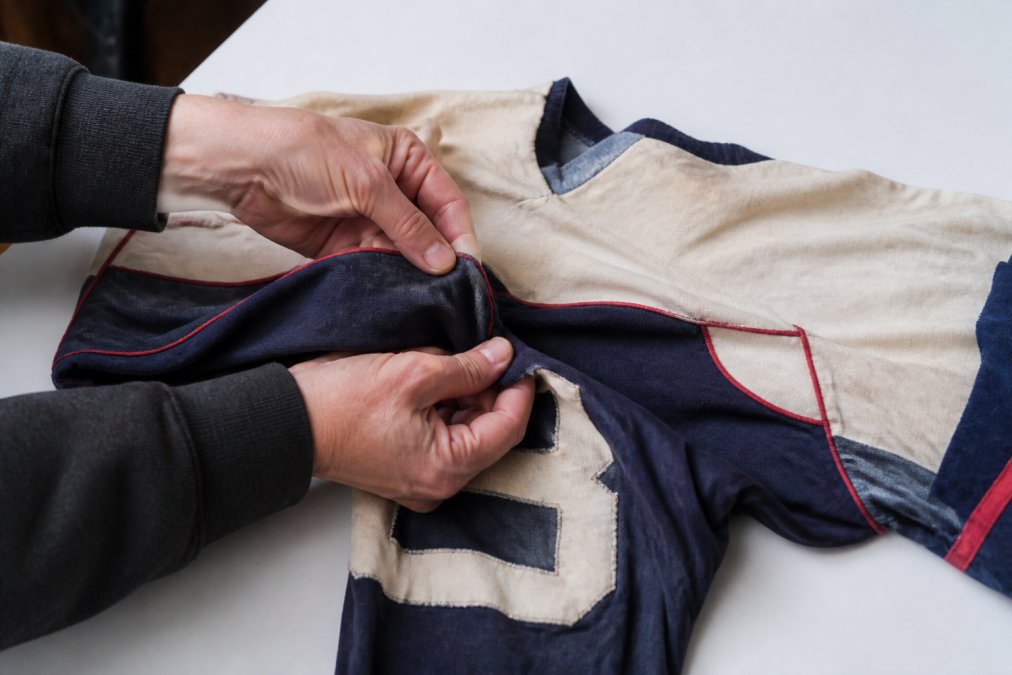
Inspection and Colorfastness Testing
Check whether the dyes will bleed. Colorfastness is the fabric's ability to retain its color when exposed to water and detergent. Vintage pieces from the 1950s-1980s often used unstable dyes.
Test colorfastness by dampening a white cloth with cold water and pressing it against an inconspicuous area, the inside seam or back of the collar. Hold for 30 seconds, then lift away. If color transfers to the white cloth, the dye will run during washing. Do not proceed with traditional washing; focus on spot cleaning or professional restoration instead.
Checking for Loose Threads and Damage
Examine seams carefully. Look for visibly separated or frayed threads, unraveling seams, small holes or tears, compromised weave, and degraded elastic in cuffs or waistbands.
Resist the urge to pull out or trim loose threads; this often unravels the seam further. For holes or tears, professional restoration is safest. Attempting to patch a valuable vintage piece yourself can reduce its value and authenticity.
Removing Sweat Stains from Vintage Sports Fabric
Sweat stains set in over time, turning yellowed and crusty. They contain both organic compounds and mineral deposits from body salts, making them stubborn without being harsh enough to damage delicate fibers.
Pre-treating Fresh and Set-In Stains
For fresh sweat stains, act quickly. Mix cold water with a small amount of mild detergent. Apply directly to the stain using a soft brush or cloth, working gently from the outside edges toward the center. Let it sit 5-10 minutes, then rinse thoroughly with cold water.
Set-in stains require longer treatment. Soak the entire garment in cool water for 30 minutes to an hour to rehydrate the fibers and loosen the stain. Apply pre-treatment solution and let it sit up to 24 hours for stubborn stains. Never use hot water; heat can set the stain permanently.
Using White Vinegar and Hydrogen Peroxide
White vinegar and hydrogen peroxide are safe, effective stain removers for vintage sports fabric.

White vinegar is a mild acid that breaks down mineral deposits left by sweat. Mix equal parts white vinegar and cold water. Apply to the stain and let sit 15-30 minutes. The vinegar smell fades once the garment dries.
Hydrogen peroxide (3% solution) is a gentle oxidizing agent that breaks down organic compounds in sweat stains. Test on an inconspicuous area first. Apply directly to the stain, let sit 10-15 minutes, then rinse thoroughly. Bubbling is normal and safe.
For stubborn stains, try this sequence: white vinegar first, rinse, then hydrogen peroxide, then rinse again. Never mix vinegar and hydrogen peroxide together in advance; the combination creates peracetic acid, which is too strong for delicate vintage fabrics.
Best Detergent for Vintage Clothing
Standard laundry detergents damage older textiles. Use pH neutral, mild detergent formulated for delicate fabrics.
pH Neutral and Mild Detergent Options
pH neutral means the detergent doesn't tip toward acidic or alkaline extremes. Most vintage fabrics, especially natural fibers like cotton and wool, are sensitive to pH imbalance. A pH-neutral formula (around 7 on the pH scale) is safest.
Look for detergents labeled for delicate fabrics, wool, or silk. Brands marketing toward textile conservation are your best bet. In a pinch, plain baby shampoo works, it's mild, pH neutral, and safe for sensitive fabrics. Use sparingly.
What to Avoid: Bleach and Fabric Softeners
Never use bleach on vintage sports fabric. Bleach chemically breaks down fiber structure and causes yellowing, fading, or complete color loss. Oxygen-based bleach alternatives are also too aggressive.

Fabric softeners leave a waxy residue that builds up over time, trapping odors and making fabric stiff or slick. Skip them entirely. Avoid detergents with "brightening" or "whitening" agents; these optical brighteners can change the appearance of vintage colors.
How to Wash Vintage Jerseys and Delicate Fabrics
Hand washing is the only safe method for most vintage sports fabric. Machine washing applies too much agitation and stress to weakened fibers.
Hand Washing Techniques for Heirloom Fabrics
Fill a basin with cool water and add a small amount of pH-neutral mild detergent. Submerge the fabric completely and soak for 5-10 minutes. Gently agitate the water around the fabric by squeezing soapy water through the fibers, never rub or twist.
After agitation, drain the soapy water. Rinse thoroughly under cool running water 2-3 times until the water runs clear and no soap residue remains. Leftover detergent causes yellowing and stiffness.
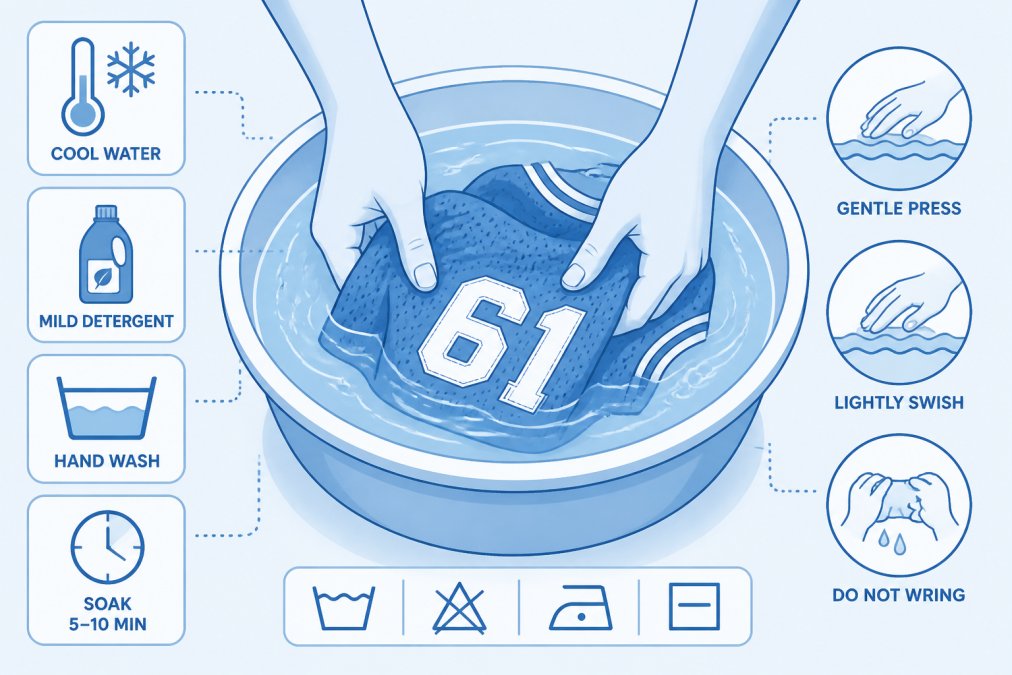
Cold Water Wash and Soaking Methods
Cold water is non-negotiable. Hot water accelerates fiber degradation and can set stains permanently.
For heavily soiled jerseys, extend soaking time to 30 minutes to an hour. Many stains and odors release simply from extended soaking. For delicate fabrics with loose threads or thin spots, use a "soak-only" wash with minimal agitation.
Never wring out vintage sports fabric. Instead, gently press out excess water using your hands or a clean towel.
Drying and Air-Drying Best Practices
Heat and direct sunlight accelerate fiber degradation, cause fading, and can set remaining stains permanently.
Flat Drying vs. Drying Rack Techniques
Flat drying is safest. Lay the freshly washed garment flat on a clean, dry towel or drying rack. Smooth out wrinkles gently. Ensure the fabric is fully supported so it doesn't stretch or distort.
If using a drying rack, choose one with fine mesh or closely spaced bars. Position it in a well-ventilated area away from direct sunlight and heat sources. Avoid hanging vintage sports fabric on hangers or clotheslines; the weight puts stress on fibers and can cause stretching or seam separation.
Avoiding Heat and Direct Sunlight
Never use a clothes dryer, heat lamps, or space heaters. Direct sunlight will fade vintage sports fabric. Air dry in shade or indoors, away from windows. Air drying takes 24-48 hours but is worth the wait.
Once completely dry, fold gently along original seams. Store in a cool, dry place away from direct sunlight, ideally in acid-free tissue paper or unbleached cotton storage bags.
Odor Removal Without Washing
Sometimes vintage sports fabric has absorbed odors but washing isn't an option. Air airing is most effective: hang the garment in a well-ventilated area, outdoors if possible, for 24-48 hours. Fresh air and sunlight naturally break down odor compounds.
Baking soda is another safe option. Place the garment in a sealed container with an open box of baking soda for 24-48 hours. White vinegar spray (equal parts vinegar and water, lightly misted) can neutralize odors; the vinegar smell fades as it dries. Activated charcoal works similarly to baking soda.
Never use synthetic fragrances to mask odors; they don't remove underlying smells and can stain or damage vintage fabrics.
Professional Restoration vs. DIY Care
Not every vintage sports fabric piece is a DIY project. DIY care works well for pieces with minimal damage, fabrics that passed colorfastness testing, and items with sentimental value. Professional restoration is right for signed jerseys or high-value collectibles, pieces with significant damage, fabrics that failed colorfastness testing, rare items, and delicate fibers like silk or antique wool.
Professional conservators have specialized knowledge, equipment, and insurance. For truly valuable vintage sports fabric, the cost of professional care is worth the peace of mind. If you choose DIY care, start with less valuable pieces and always err on the side of caution.
Vintage sports fabric deserves care that matches its value. Whether you're preserving a cherished jersey or preparing memorabilia for display, these methods will help you clean and maintain these pieces safely. At MoonlightWeave, we celebrate the stories these fabrics tell. Our handcrafted pieces, like our 1963 Dodgers Vintage Poster Golf Towel, show how vintage sports fabric can be transformed into functional art that honors the past. Proper care ensures these pieces remain vibrant and intact for decades to come.
Frequently Asked Questions
How can I safely clean vintage sports fabric without damaging it?
Start with a colorfastness test by dabbing a hidden corner with cool water and mild detergent. Prepare the fabric by inspecting for loose threads and checking for damage. Use cold water, a pH neutral mild detergent, and hand wash gently. Avoid bleach, fabric softeners, and hot water. Air dry flat or on a drying rack away from direct sunlight. This approach preserves fabric integrity and prevents fiber degradation of natural fibers and synthetic vintage materials.
What's the best detergent for vintage clothing?
Choose a pH neutral, mild detergent specifically designed for delicate or heirloom fabrics. Avoid regular laundry detergents, bleach, and fabric softeners, which can cause discoloration and yellowing. Look for products labeled as gentle or for vintage textiles. When hand washing vintage jerseys and other sports items, use only a small amount diluted in cool water. These detergents help maintain textile conservation and prevent residue buildup that can degrade fabric over time.
How do I remove sweat stains from vintage sports fabric?
For fresh sweat stains, rinse immediately with cool water. For set-in stains, soak the fabric in a solution of white vinegar and cool water (1:4 ratio) for 30 minutes. For stubborn stains, create a paste of hydrogen peroxide and mild detergent, apply to the stain, and let sit for 15-20 minutes before rinsing. Always spot test on a hidden area first. Avoid bleach and high heat, which can worsen yellowing and cause bleach damage to vintage sports fabric.
Can I machine wash vintage sports jerseys?
Hand washing is strongly recommended for vintage jerseys to avoid stretching, pilling, and fiber degradation. If you must machine wash, use a delicate cycle with cold water and mild detergent, place the jersey in a mesh laundry bag, and skip the dryer entirely. Flat drying is the safest option. For valuable or heavily worn jerseys, professional textile restoration services can provide specialized care that preserves both appearance and fabric integrity better than DIY methods.
This article was written using GrandRanker