

Table of Contents
- Why Preserving Signed Sports Jerseys Matters
- Step 1: Assess Your Jersey's Current Condition
- Step 2: Choose the Right Storage or Display Method
- Step 3: How to Frame a Signed Jersey with Proper Techniques
- Step 4: Best UV Protection for Sports Memorabilia
- Step 5: Preventing Autograph Fading and Ink Degradation
- Step 6: Cleaning and Maintenance Protocols
- Step 7: Insurance and Appraisal Documentation
Last Updated: August 6, 2026
Why Preserving Signed Sports Jerseys Matters
A signed sports jersey is a piece of history, a memory of a moment that mattered. Whether it's from your favorite player's breakthrough season or a gift from a memorable game, these items deserve protection matching their emotional and monetary value. Signed jerseys face serious threats: UV light breaking down ink, humidity warping fabric, improper storage accelerating deterioration, and well-intentioned cleaning causing permanent damage.
Preserving signed sports jerseys properly keeps them vibrant, authentic, and valuable for decades. At MoonlightWeave, we understand the nostalgia and significance these items hold. Many collectors treat signed jerseys as investments or heirlooms, yet store them in ways that guarantee slow degradation. The difference between a museum-quality jersey in 20 years and one that's faded and brittle comes down to specific, actionable preservation steps you can take today.
This guide covers assessment, storage, framing, UV protection, humidity control, cleaning, and documentation. By the end, you'll know exactly how to protect your signed sports jerseys from common threats.
Step 1: Assess Your Jersey's Current Condition
Before implementing any preservation strategy, understand what you're working with. Examine your signed jersey under natural light, checking for existing damage that affects storage or display.
Look for signature fading, fabric stains, discoloration, or weak spots where threads deteriorate. Run your fingers gently along the signature to feel for raised ink or lifting. Inspect seams for fraying and examine the overall fabric for pilling, tears, or breaking weave.
Pay special attention to material composition. Polyester jerseys respond differently to humidity and temperature than cotton or wool blends. Check the jersey's tag for fiber content and manufacturer care instructions, as this influences your preservation approach.
Document the jersey's condition with photographs. Take clear images of the signature from multiple angles, the jersey front and back, and any existing damage. These photos serve as your baseline for monitoring condition over time and become essential for insurance claims.
Step 2: Choose the Right Storage or Display Method
The fundamental choice in preserving signed sports jerseys comes down to one question: will you display it or store it? This decision shapes every other preservation step.
Display means the jersey hangs where you see it regularly, exposed to ambient light, temperature changes, and humidity fluctuations. Storage means the jersey lives in a controlled environment, protected from light and environmental stress. Most collectors benefit from a hybrid approach: display one jersey while storing backups or less valuable pieces in archival conditions.
Display vs. Storage: What Works Best
If you display your signed jersey, accept that it will fade gradually. Displayed items face constant UV exposure and temperature swings. This works best for jerseys with sentimental rather than significant monetary value, or pieces you've already accepted will show aging.
Storage protects your jersey aggressively but means you don't see it. Stored jerseys stay in darkness, stable temperature, and controlled humidity, fading minimally over decades. Choose storage for valuable vintage jerseys, rare autographed items, or pieces you're preserving as investments.
If you want to display a valuable signed jersey without accepting rapid fading, professional framing with archival-quality materials and UV-protective glass becomes essential. This approach costs more upfront but allows display while minimizing damage.
Step 3: How to Frame a Signed Jersey with Proper Techniques
Framing a signed jersey correctly requires specific materials and mounting methods that preserve the fabric while showcasing the signature. Poor framing accelerates autograph fading and can cause permanent fabric damage.
A shadow box frame works best for signed jerseys. This style creates depth, allowing the jersey to hang naturally without pressure against glass. The jersey sits on a backing board, supported by the frame's structure rather than adhesives or tight mounting.
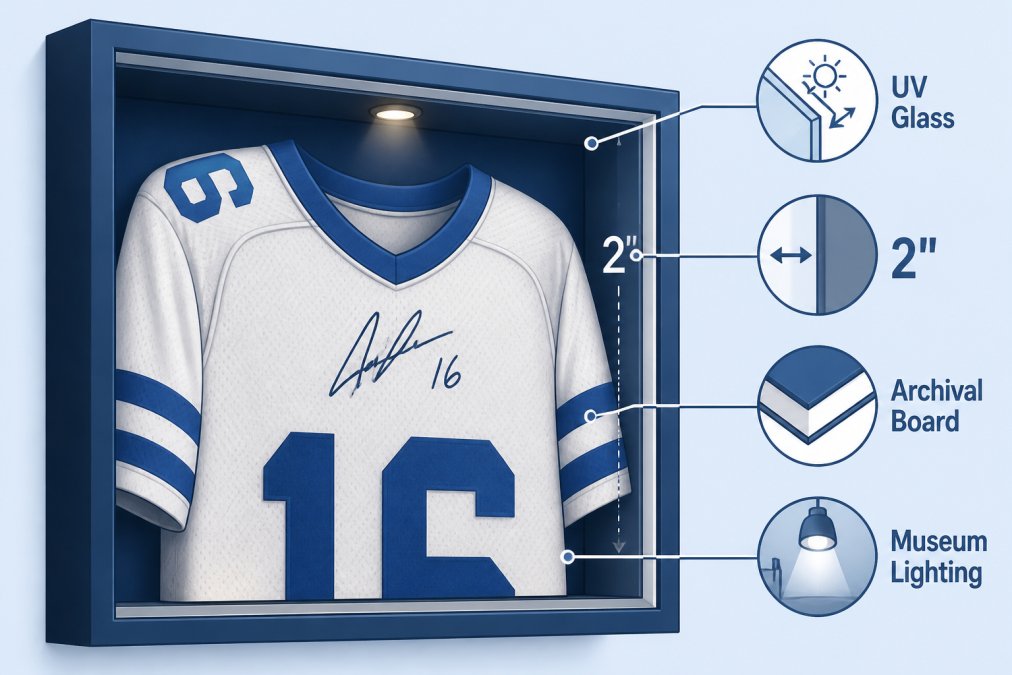
Selecting Archival-Quality Materials
Archival quality means materials won't degrade or transfer acids to your jersey over time. Standard framing materials contain lignin and acid that slowly damage fabric and ink. Archival materials are acid-free and designed for long-term preservation.
Use acid-free mounting board for backing to support the jersey's weight and prevent sagging. Acid-free mat board creates a border around the jersey, protecting edges from direct contact with glass and frame edges. Avoid regular cardboard, foam board, or standard mat board, which leach acid into fabric.
UV-protected glass or acrylic is non-negotiable. Standard glass allows UV rays to pass through, causing ink to fade and fabric to weaken. UV-protective glass blocks 99% of ultraviolet light. Acrylic offers similar UV protection with less glare, though it scratches more easily. For valuable jerseys, UV glass is worth the cost.
Mounting Hardware and Support
Never use nails, staples, or permanent adhesives to mount a signed jersey. These damage the fabric and can't be reversed. Instead, use fabric-safe mounting techniques that distribute weight evenly.
Sew the jersey to the backing board using archival thread at specific support points. Place stitches at shoulder seams and side seams, areas that naturally support the garment's weight. Keep stitches small and use matching thread so they're invisible.
Alternatively, use fabric mounting strips or archival adhesive tabs designed for textile preservation. These hold securely without damaging fabric and can be removed if you need to remount the jersey later. Never use regular double-sided tape, hot glue, or spray adhesive.
Your shadow box should be deep enough that the jersey hangs 1-2 inches away from the glass. This spacing prevents condensation from reaching the fabric and allows air circulation around the garment.
Step 4: Best UV Protection for Sports Memorabilia
UV light is the primary threat to displayed signed jerseys. Ultraviolet radiation breaks down chemical bonds in ink, causing signatures to fade. It also weakens synthetic fibers, making fabric brittle and prone to tearing. The damage is cumulative and irreversible.
UV-protective glass blocks the wavelengths that cause this damage. Standard glass allows 100% of UV rays through. UV-protective glass reduces UV transmission to less than 1%. This dramatic difference means a framed jersey with UV protection maintains its signature color for decades while an unprotected jersey fades noticeably in months.
For display cases, use UV-protective acrylic or glass on all sides if possible. If your display case uses standard glass on some sides, ensure the primary viewing side has UV protection.
The location of your display matters. Direct sunlight through windows causes the most rapid fading. Indirect natural light from north-facing windows is safer. Artificial lighting, particularly LED bulbs, produces minimal UV radiation compared to incandescent or fluorescent lights. Position valuable signed jerseys away from windows and under LED lighting to minimize UV exposure.
Step 5: Preventing Autograph Fading and Ink Degradation
Autograph fading results from UV light exposure, oxidation of the ink, and chemical breakdown from environmental pollutants. Ink stability depends on the pen the player used. Modern ballpoint pens create durable signatures that resist fading better than older fountain pen signatures. Vintage signed jerseys from the 1950s-1970s often have fountain pen ink, which is more vulnerable to oxidation and fading.
Oxygen exposure accelerates ink degradation. Storing a signed jersey in a sealed, archival container slows this process by limiting oxygen exposure.
Environmental Control and Humidity
Temperature and humidity fluctuations are the secondary threat to signed sports jerseys. Rapid changes cause fabric expansion and contraction, stressing fibers and the signature area. Consistent temperature and humidity protect the jersey's structural integrity.
Maintain temperature between 60-70°F. Avoid storing jerseys in attics, basements, or garages where temperature swings are extreme. These environments experience 40-degree seasonal changes, which weakens fibers and can cause the signature to crack or lift.
Humidity should stay between 30-50%. Low humidity causes fabric to become brittle and makes ink prone to cracking. High humidity encourages mold growth and accelerates oxidation. Use a dehumidifier in humid climates and a humidifier in dry climates.
Avoid basements for storage. Basements are humid and prone to flooding. The best storage location is a climate-controlled closet or cabinet in your home's main living area. If you display your signed jersey, maintain consistent room temperature and humidity, avoiding exterior walls and areas near heating vents or windows.
Chemical Compatibility of Cleaning Agents
If your signed jersey gets stained or dirty, cleaning requires extreme care. The wrong cleaning agent can damage the signature permanently. Never use bleach, acetone, or harsh solvents. Avoid dry cleaning, which uses chemical solvents that can fade signatures.
For light dust, use a soft brush or microfiber cloth. Gently brush the jersey away from the signature area.
For stains, test any cleaning solution on an inconspicuous area first. Mix a solution of distilled water and mild detergent like Woolite. Dampen a soft cloth with the solution, never soak the jersey. Gently dab the stained area, then rinse with a cloth dampened in distilled water only. Allow the jersey to air dry completely away from direct heat or sunlight.
Avoid the signature area entirely when cleaning. If the stain is on or near the autograph, consider professional textile conservation instead of DIY cleaning.
Step 6: Cleaning and Maintenance Protocols
Regular, gentle maintenance prevents the buildup of dust, moisture, and environmental contaminants that accelerate deterioration. A simple maintenance routine takes minutes per month and extends your jersey's lifespan significantly.
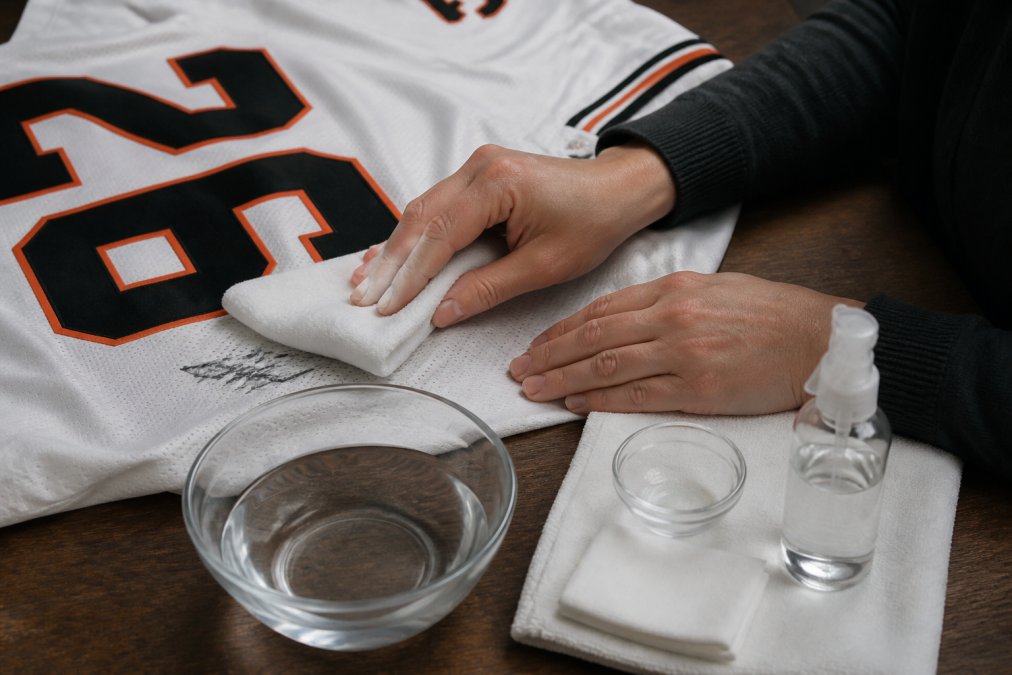
Dust your displayed jersey monthly using a soft microfiber cloth or soft-bristled brush. Dust particles trap moisture and can harbor mold spores. Brush gently away from the signature. Never use a vacuum cleaner, which can pull fibers or damage fabric.
For stored jerseys, check them quarterly. Inspect for any signs of moisture, mold, or pest damage, and gently brush away dust. Reclose the container promptly to maintain the controlled environment.
If your jersey develops a musty smell, it indicates moisture or mold growth. Remove the jersey and air it in a dry, shaded area for several hours. If you see visible mold spots, contact a textile conservator who can safely remove mold without damaging the fabric or signature.
Monitor the signature for changes. Compare current photos to your baseline images. If fading accelerates faster than expected, adjust your display location or storage conditions.
Prevent creases by storing jerseys on acid-free padded hangers or laying them flat in archival storage boxes. If the jersey must be folded, fold along seams rather than across the signature area. Use acid-free tissue paper between folds to prevent sharp creases.
Step 7: Insurance and Appraisal Documentation
A valuable signed jersey should be insured as part of your homeowner's or renter's policy. Insurance protects your investment if the jersey is damaged, stolen, or lost. However, insurance companies require documentation of the jersey's value and condition.
Get a professional appraisal from a sports memorabilia expert or autograph authentication service. The appraiser verifies the autograph's authenticity and assigns a monetary value based on the player, team, condition, and current market demand.
Documentation should include:
- Professional appraisal with assigned value
- High-quality photographs of the jersey front and back
- Close-up photos of the signature showing condition
- Certificate of authenticity if available
- Purchase receipt or proof of acquisition
- Video documentation of the jersey in your home
Store copies of this documentation in a separate location from the jersey. Keep originals in a safe deposit box or fireproof safe. Digital copies should be stored in cloud backup.
For very valuable jerseys (worth more than $5,000), consider a rider on your homeowner's policy that specifically covers the item. Standard policies have limits on individual items. Update your appraisal every 3-5 years, as market values for signed memorabilia fluctuate.
Preserving a signed sports jersey requires attention to light, humidity, temperature, and handling, but it's entirely manageable with the right approach. The jerseys you protect today become the heirlooms and investments your family enjoys for generations. MoonlightWeave celebrates the nostalgia and significance of sports memorabilia. Whether you're displaying your signed jersey as a conversation piece or storing it as an investment, the preservation steps in this guide protect what makes it valuable: the signature, the fabric, and the memory it represents. Start with assessment, choose your display or storage method, and commit to the maintenance routine. Your jersey will reward you with decades of vibrant condition.
Frequently Asked Questions
Will a signature wash off a signed jersey?
Most signatures applied with permanent markers or Sharpie will not wash off completely, but water exposure can cause fading, bleeding, or smudging. Machine washing is the biggest risk, it exposes the signature to agitation, heat, and harsh detergents that degrade ink stability. Hand washing in cool water with mild detergent is safer, but the safest approach is to avoid washing signed jerseys altogether. For display pieces, preserve signed sports jerseys by keeping them dry and away from moisture barriers that trap humidity.
How do you prevent autograph fading on a signed jersey?
Preventing autograph fading requires controlling light exposure, humidity, and temperature. Keep signed jerseys away from direct sunlight, which causes ink oxidation and signature fading over time. Store or display them in a cool, dry environment with relative humidity between 30-50%. Use UV-protected glass or acrylic if framing. Avoid handling the signature directly, oils from skin accelerate degradation. For valuable collector's items, professional framing with museum-grade materials provides the best long-term protection against environmental degradation.
What is the best way to frame a signed jersey?
The best approach uses archival-quality materials and proper mounting techniques. Mount the jersey in a shadow box with acid-free mat board and backing. Use UV-protected glass that blocks 99% of ultraviolet rays. Secure the jersey with non-abrasive polyester straps or archival thread, never use nails or staples that damage fabric. Ensure adequate air circulation behind the jersey to prevent moisture buildup. If the signature is particularly valuable, consider professional framing by a conservator experienced with sports memorabilia to ensure proper handling and long-term preservation.
What is the best UV protection for sports memorabilia?
UV-protected glass or acrylic is essential for any displayed signed jersey. Look for glass that blocks 99% of UV-A and UV-B rays, this standard is common in museum-grade framing materials. Acrylic offers similar UV protection and is lighter and more impact-resistant than glass, making it ideal for valuable pieces. Position framed jerseys away from windows and direct sunlight exposure. Even with UV protection, rotate display pieces periodically or store them in a dark environment to minimize cumulative light damage and preserve autograph integrity over decades.
This article was written using GrandRanker