

Table of Contents
- What Makes Custom Fabric Goods From Vintage Items Special
- Where to Source Authentic Vintage Materials and Deadstock
- Best Vintage Fabrics for Home Decor and Everyday Use
- Upcycled Vintage Fabric Projects: From Concept to Finished Piece
- Creative Ways to Use Old Tickets and Sports Memorabilia
- Restoration Versus Repurposing: Choosing Your Approach
- Legal and Copyright Considerations for Reproducing Vintage Prints
- Caring for Your Custom Vintage Fabric Goods
Last Updated: August 22, 2026
What Makes Custom Fabric Goods From Vintage Items Special
Custom fabric goods from vintage items offer something mass-produced decor cannot: authenticity rooted in genuine memory. When you transform a vintage jersey, concert ticket stub, or sports memorabilia into a functional piece, a blanket, pillow cover, luggage tag, or doormat, you're preserving a moment that matters to you. The difference between a generic sports blanket and one crafted from your actual hockey jersey is the difference between decoration and legacy.
Handcrafted custom fabric goods combine qualities mass production cannot replicate: material authenticity (vintage textiles carry their era's character, weight, and naturally faded patina), personalization (your finished piece is literally one of a kind), and craftsmanship (individual attention to pattern matching and construction quality). At MoonlightWeave, we've built our practice around this principle: your vintage memories deserve to be woven into your daily life, not stored away.
Where to Source Authentic Vintage Materials and Deadstock
Finding genuine vintage textiles requires knowing where to look. Estate sales and auctions remain the gold standard, offering rare textile pieces with verifiable provenance. Textile-focused online marketplaces democratize access globally, though you cannot physically inspect fabric before purchase. Fabric wholesalers and liquidation sales occasionally release deadstock, overstock from manufacturers that carries the aesthetic and material quality of its era. Local fabric shops in older neighborhoods sometimes maintain back-room inventory acquired through estate purchases. Sports memorabilia dealers are underutilized sources for old team apparel, stadium programs, and vintage tickets suitable for repurposing.
Authentic vintage materials carry a cost premium because supply is limited. Expect to pay more than mass-produced alternatives, but you're paying for genuine history.
Best Vintage Fabrics for Home Decor and Everyday Use
Not all vintage fabrics suit functional custom goods. Cotton from the 1940s-1960s ranks among the most durable for repurposing; pre-synthetic era cotton was tightly woven and becomes softer with age without losing strength. Linen pieces, particularly mid-century, excel for home decor and naturally improve with use. Wool blends from the 1960s-1970s work well for decorative items and blankets, though they require careful condition assessment. Novelty prints and character fabrics featuring vintage sports teams or retro patterns are ideal candidates because their visual appeal is the entire point.
Avoid delicate silks, rayon, and early synthetic blends from the 1930s-1950s, which lack structural integrity for functional pieces. Fabrics with severe deterioration, staining, or fiber breakdown compromise both aesthetics and function. The best vintage materials show age gracefully, fading and gentle wear patterns that tell a story without compromising utility.
Upcycled Vintage Fabric Projects: From Concept to Finished Piece
Transforming vintage materials into custom fabric goods requires a structured approach.
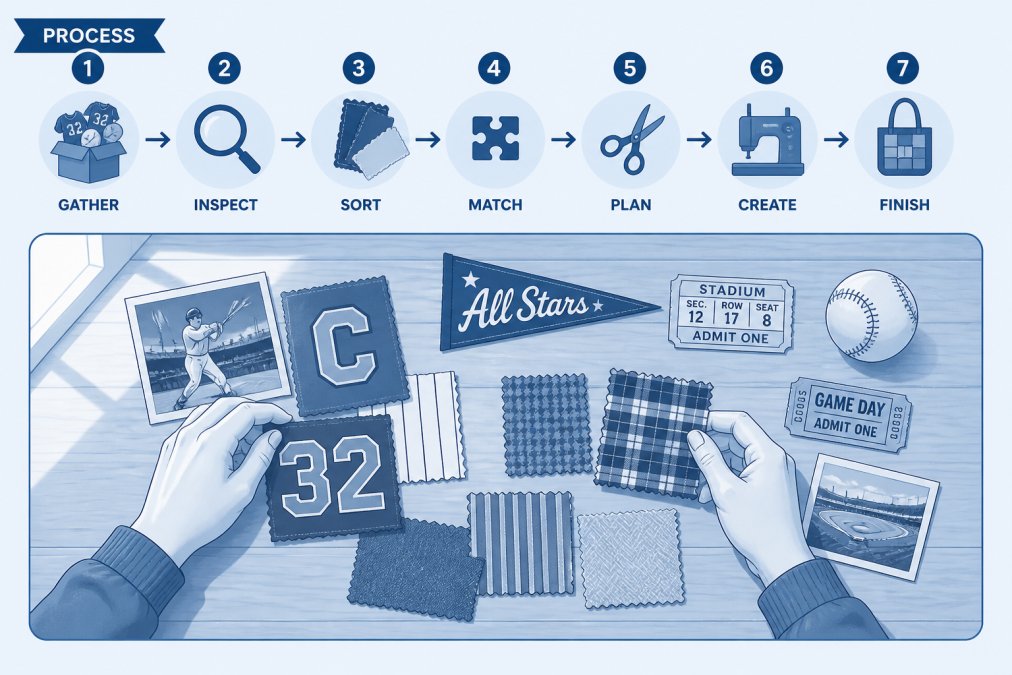
Step 1: Define your end product before selecting materials. Are you creating a blanket, pillow cover, luggage tag, or doormat? The end use determines material requirements and shapes everything that follows.
Step 2: Assess your source materials for condition, fiber content, and visual appeal. Examine fabric under natural light and check for brittleness by gently flexing a corner. Vintage materials rarely come pristine; determine whether imperfections enhance or detract from your vision.
Step 3: Plan your layout if combining multiple fabric pieces or integrating non-fabric memorabilia. Sketch your design, considering how different elements flow together and how seams align.
Step 4: Prepare materials through gentle cleaning if necessary. Never machine wash vintage textiles (si.edu). Hand wash delicate pieces in cool water with mild soap, or use dry cleaning for fragile materials. Allow thorough air drying before construction.
Step 5: Execute construction with attention to seam placement and edge finishing. Vintage materials may require adjusted techniques; reinforce seams on functional pieces and consider edge binding for durability.
Assessing Fabric Quality and Fiber Content
Understanding fiber composition determines how your finished piece will perform. Cotton springs back slowly when squeezed and holds wrinkles; it absorbs moisture quickly. Linen has a distinctive slubbed texture with visible thick and thin spots; it feels slightly textured and irregular. Wool has a characteristic smell when dampened and feels warmer with a slightly fuzzy surface. Synthetic blends feel slippery, spring back quickly, and have uniform appearance. custom garment design.
For custom fabric goods destined for regular use, prioritize natural fibers or natural-dominant blends, which age better and develop character over time.
Pattern Matching and Design Considerations
Directional patterns require careful planning; lay out pattern pieces and verify they're all oriented the same direction before cutting. Repeat patterns offer natural breaking points for seams; align seams with pattern repeats so they disappear visually. Color matching across multiple vintage pieces requires viewing them together under natural light; assess whether color variations enhance or detract from your vision. Scale matching applies when combining multiple prints; decide whether mixing different scales is intentional or accidental. Incorporating non-fabric elements like vintage tickets or patches requires planning their placement before cutting fabric.
Creative Ways to Use Old Tickets and Sports Memorabilia
Vintage tickets and sports memorabilia carry narrative weight, marking specific moments in time.
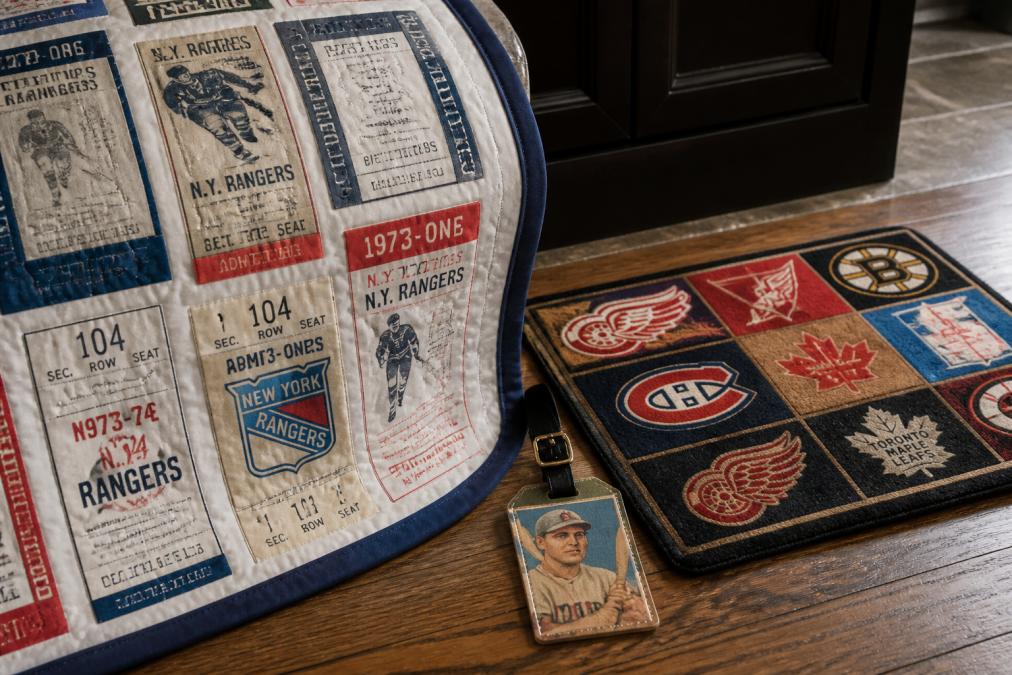
Ticket-embedded blankets integrate actual ticket stubs into fabric through appliqué or encasement, preserving the ticket's physicality while making it functional. Sports memorabilia doormats combine printed reproductions of vintage cards or programs with durable backing, keeping memories active in daily life. Luggage tags and travel accessories work beautifully with smaller memorabilia pieces. Patchwork projects integrate multiple tickets into a unified textile, creating a timeline in fabric form. Pillows and cushions work well with smaller memorabilia pieces or reproductions.
The principle: memorabilia should be visible and integrated, remaining the focal point while gaining new utility.
Restoration Versus Repurposing: Choosing Your Approach
Restoration prioritizes preserving the original item in its intended form, appropriate for rare, valuable, or historically significant textiles. Repurposing reimagines the material's future, accepting that the original form will change to create something new and useful.
For most people working with custom fabric goods from vintage items, repurposing aligns better with their goals. However, if your source material is genuinely rare or valuable, a signed vintage sports jersey worth significant money, consult a textile conservator before proceeding. For typical vintage materials, old blankets, faded curtains, common textiles, repurposing is the right choice.
Legal and Copyright Considerations for Reproducing Vintage Prints
Original artwork and designs on vintage textiles carry copyright protection. Works created before 1928 are in the public domain in the United States; works created between 1928 and 1977 have complex rules (copyright.gov). Licensed designs featuring characters, logos, or team insignia carry additional trademark protections.
Personal use versus commercial use matters legally. Creating a blanket featuring a vintage design for your own home carries minimal legal risk. Selling that blanket commercially potentially violates copyright or trademark protections. If you're considering selling your creations, consult with a lawyer familiar with textile and intellectual property law.
When working with custom fabric services, the service provider typically handles legal considerations of reproduction and use.
Caring for Your Custom Vintage Fabric Goods
Finished pieces made from vintage materials require different care than new textiles. Washing guidelines depend on fiber content; hand washing in cool water with mild detergent works best for blankets or larger pieces. Avoid machine washing, which stresses aged fibers. Air dry completely; heat from dryers can damage older fibers.
For pieces incorporating non-fabric elements, spot cleaning is safer than full washing. Storage should be cool and dry, away from direct sunlight, which fades vintage materials fastest. Use acid-free tissue paper or cotton storage bags rather than plastic containers, which trap moisture (si.edu).
Stain treatment requires caution; fresh stains should be blotted, not rubbed. Wear patterns on functional pieces are normal and add character. Repair should happen proactively; address separating seams or fraying edges before they worsen.
Custom fabric goods from vintage items deserve care that honors their age and history. They're meant to age gracefully while remaining functional and beautiful.
Creating custom fabric goods from vintage items bridges nostalgia and utility in ways mass-produced decor cannot. Whether working with materials yourself or partnering with MoonlightWeave, the process transforms stored memories into active parts of your daily life. From assessing fiber quality to navigating legal considerations, the journey requires attention and intention. The result, a blanket holding your sports memories, a doormat featuring meaningful tickets, a pillow cover stitched from fabric your grandmother loved, makes every step worthwhile. Get started with MoonlightWeave and discover how your vintage memorabilia can become handcrafted fabric goods that tell your story for years to come.
Frequently Asked Questions
Q: What types of vintage items work best for custom fabric goods?
A: Sports jerseys, vintage concert tees, old bedsheets, quilting-weight cotton, tapestries, and deadstock fabric samples are ideal. Look for pieces with strong fiber content (100% cotton or cotton blends hold up best), minimal damage, and designs you genuinely love. Vintage memorabilia with sentimental value, like old tickets, team patches, or retro prints, transforms into meaningful custom fabric goods that celebrate your memories.
Q: How do you clean and prepare vintage fabric for repurposing into custom goods?
A: Inspect the fabric for stains, odors, and structural damage first. Wash gently in cool water with mild detergent, air-dry flat, and press with low heat if needed. Test a small hidden area before full cleaning. For delicate antique textiles, hand-wash or use a gentle cycle. Remove any hardware, trim loose threads, and assess the weave for durability. Proper textile preservation during prep ensures your custom pieces remain vibrant and functional for years.
Q: Is it better to restore or repurpose vintage textiles?
A: Restoration preserves the original item and is best for high-value or historically significant pieces. Repurposing transforms vintage materials into new, functional custom fabric goods, blankets, home decor, accessories, extending their life with fresh purpose. Most people choose repurposing because it breathes new life into deadstock or sentimental items while creating unique, wearable or usable pieces. Consider the item's provenance and your goals before deciding.
Q: What should I know about copyright when reproducing vintage prints on custom fabric?
A: If the original design is still under copyright protection, you need permission from the copyright holder to reproduce it commercially or for resale. Vintage prints from before 1928 are generally in the public domain. For personal use, reproduction is typically allowed. Always verify the publication date and copyright status before creating custom goods from reproductions. When in doubt, consult copyright resources or work with licensed reproductions to avoid infringement issues.
This article was written using GrandRanker