

Table of Contents
- What You Can Do With Vintage Sports Memorabilia
- Upcycled Sports Memorabilia Ideas That Actually Work
- Custom Sports Jersey Quilt Service: What to Know
- How to Frame Vintage Sports Cards Without Damage
- DIY vs. Professional Restoration: Which Path Fits Your Items
- Insurance and Legal Considerations for Valuable Memorabilia
- Getting Started With Your Repurposing Project
- Conclusion
Last Updated: August 13, 2026
What You Can Do With Vintage Sports Memorabilia
Vintage sports memorabilia repurposing transforms dusty boxes of old jerseys, tickets, and cards into functional, beautiful pieces that celebrate your fandom daily. A signed jersey locked in a box serves nobody; transformed into a throw blanket, it becomes a conversation starter. A stack of vintage baseball cards framed properly becomes wall art that tells a story. Jerseys become quilts, pillows, and wall hangings. Game-worn items get mounted as focal points in dens. Vintage tickets transform into doormats. Even damaged pieces find new life through creative upcycling.

Upcycled Sports Memorabilia Ideas That Actually Work
Custom upcycled sports memorabilia ideas work when they respect the original piece while creating something genuinely functional. A jersey that's unwearable becomes a throw blanket. A collection of old tickets becomes a doormat. Damaged cards get incorporated into shadow boxes or resin projects.

Turning Jerseys Into Functional Home Pieces
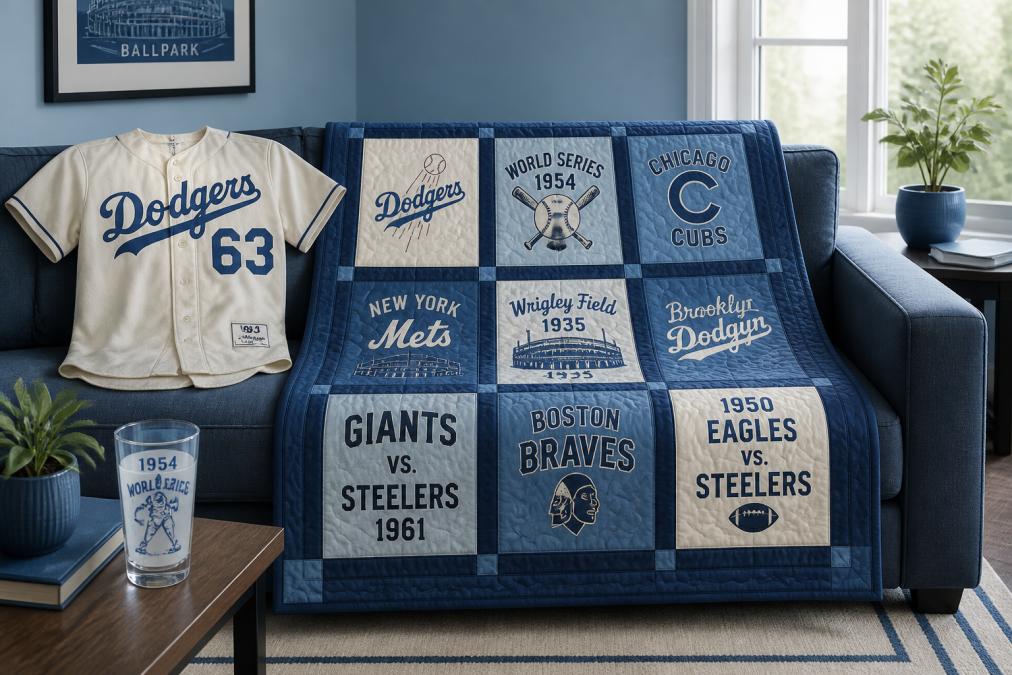
Game-worn and vintage jerseys are the most versatile pieces for repurposing. A single jersey can become a throw blanket, quilted wall hanging, or custom pillow. The fabric quality of older jerseys often surpasses modern reproductions, making them genuinely durable when transformed.
The most popular approach is the custom sports jersey quilt service. This takes multiple jerseys and transforms them into a patchwork quilt that's both protective and decorative. Each jersey becomes a panel, preserving the original design while creating something warm and functional. A quilt built from four to six jerseys typically measures throw-size (60" × 80"), perfect for draping over a couch or displaying on a bed frame.
What makes jersey quilts work is that they're tactile and meant to be used. A quilt isn't precious, it's meant to be touched, wrapped in, and lived with. That permission to use it transforms a jersey from storage item to daily comfort. Pillows offer another direct path, with a single jersey becoming a pillow cover or stuffed pillow. Wall hangings preserve the full jersey design behind glass, suspended like art.
Game-Worn Collectibles as Wall Display
Framed game-worn items, cleats, gloves, signed memorabilia, become powerful focal points when displayed correctly. These pieces have physical presence and history embedded in them. Wall display works best when the frame respects the item's fragility. Museum-quality framing uses UV-protective glass, acid-free matting, and proper spacing to prevent degradation over time.
Positioning matters as much as framing. Game-worn items deserve sight lines, places where people naturally look when entering a room. A prominent spot above a sofa or at eye level in an entryway says: this matters here.
Custom Sports Jersey Quilt Service: What to Know
A custom sports jersey quilt service takes your collection of jerseys and transforms them into a single, functional textile piece. The process typically involves selecting jerseys, determining layout and design, choosing binding and backing materials, and then professionally quilting the piece together.
The quality of the finished quilt depends on the condition of the jerseys, the skill of the person doing the work, and the materials chosen for backing and binding. Most services use quilting cotton for backing, which holds up well to washing and use. Pricing varies widely depending on complexity. MoonlightWeave specializes in transforming vintage memorabilia into unique, handcrafted fabric goods, including custom quilts that bring your collection to life as functional art.
One honest limitation: not all jerseys quilt equally well. Mesh jerseys behave differently than knit jerseys. Heavily worn jerseys with thin fabric require careful handling. A good service will discuss these factors upfront rather than promising perfect results regardless of starting material.
How to Frame Vintage Sports Cards Without Damage
Framing vintage sports cards requires specific materials and techniques to preserve the card while displaying it properly. The wrong frame can destroy a card's value and condition within months.
Choosing the Right Framing Materials
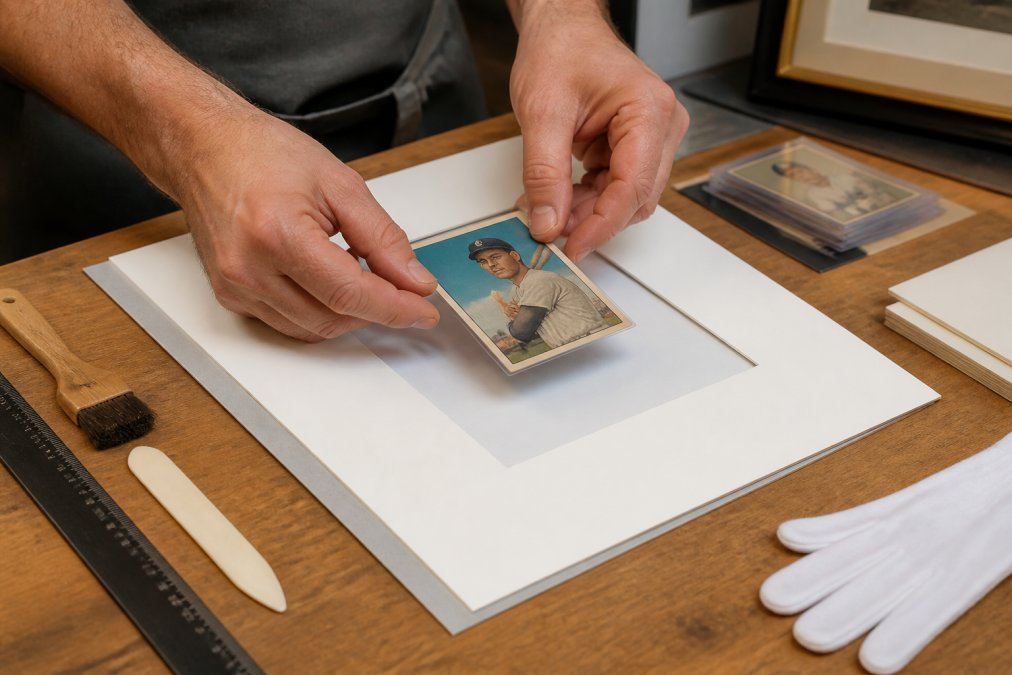
The foundation of proper card framing is archival-quality materials: acid-free matting, acid-free backing board, and UV-protective glass. Acid deteriorates paper and cardboard over time. Standard mat board from craft stores contains acid and will damage your card. Archival materials cost more but actually protect what you're framing.
UV-protective glass blocks ultraviolet light that fades colors and degrades ink. The glass should be non-reflective so the card remains visible from different angles without glare. The mat opening should be slightly larger than the card itself, creating a small buffer space that prevents the card from touching the glass. The mat opening should be cut with a beveled edge, which looks more professional and protects the card's edges.
Preservation During the Framing Process
The card should be attached to the backing board using only archival tape on the back edges, never glue or staples. There should be at least a quarter-inch of air between the card and the glass to prevent condensation and allow for minor expansion and contraction. The frame itself should be sealed on the back to prevent dust and insects from entering.
For valuable cards worth more than a few hundred dollars, professional framing at a shop specializing in sports memorabilia is worth the cost. For sentimental cards or lower-value pieces, quality DIY framing kits exist, but they require patience and careful execution.
DIY vs. Professional Restoration: Which Path Fits Your Items
The choice between DIY and professional restoration depends on the item's value, your skill level, and what you're trying to achieve. DIY framing works well for cards you're not worried about damaging further. If the card is already creased or worn, the pressure of attempting perfect framing is off.
DIY jersey quilting is trickier. Quilting requires specific equipment, material knowledge, and time. If you have quilting experience, you can do this. If you're starting from zero, the learning curve is steep and mistakes are expensive.
Professional restoration makes sense for high-value items, pieces with sentimental weight that you can't afford to damage, or projects requiring specialized equipment. A professional sports memorabilia restorer can clean, repair, and preserve items in ways that DIY approaches simply can't match.
Insurance and Legal Considerations for Valuable Memorabilia
If you own valuable sports memorabilia, insurance and legal documentation matter more than most collectors realize. Homeowners insurance typically covers collectibles only up to a limit, often $1,500 to $2,500 for all personal property combined. A single valuable piece can exceed that. You need a rider or separate collectibles insurance policy that specifically covers your memorabilia at its appraised value.
Documentation is your legal protection. Keep photographs of items, receipts from purchases, certificates of authenticity, and appraisal reports in a secure location, preferably off-site. Provenance matters legally and financially. Documentation of authenticity protects you and increases value.
When transforming items through repurposing services, verify that your service provider has insurance covering your items in their possession. Ask about handling procedures and what happens if something gets damaged. Get agreements in writing. For high-value pieces being sent to professional services, consider shipping insurance. Require signature on delivery so there's proof the item arrived.
Getting Started With Your Repurposing Project
Starting a repurposing project begins with honest assessment of what you have. Pull out the memorabilia, sort it by condition and type, and decide what actually matters to you versus what's just taking up space.
Separate investment-grade items from sentimental pieces. Investment items stay protected and stored properly. Sentimental pieces are candidates for repurposing. For items you want to repurpose, research services carefully. Look for examples of finished work. Ask questions about materials, process, and what happens if something goes wrong. MoonlightWeave transforms vintage memorabilia into unique, handcrafted fabric goods and home accessories, offering options like custom quilts and functional decor pieces that celebrate your sports memories in everyday life.
Get quotes from multiple services. Pricing varies significantly based on complexity and materials. Don't automatically choose the cheapest option; you're paying for skill and material quality. Start with one project rather than committing everything at once. See how the process works and whether the service meets your expectations. Keep documentation throughout. Photograph items before sending them out and get written confirmation of what you're sending and what you expect back.
Vintage sports memorabilia repurposing transforms nostalgia from storage burden into daily celebration. Whether you're framing cards, quilting jerseys, or creating functional home decor from game-worn pieces, the goal remains the same: move your favorite memories from boxes into spaces where you actually see and use them. The process requires honesty about what matters, respect for the pieces themselves, and choosing services or approaches that match your skill level and the items' value. Start small, document everything, and let your collection become part of your home rather than a hidden archive.
Frequently Asked Questions
What's the best way to repurpose old sports memorabilia I no longer display?
Vintage sports memorabilia can be transformed into functional home decor through upcycling. Common options include custom quilts from old jerseys, framed vintage sports cards, doormats featuring historic tickets or team logos, and wall art from game-worn collectibles. The key is matching the item's condition and sentimental value to the right repurposing method. High-value pieces benefit from professional restoration services, while everyday collectibles work well for DIY projects or handcrafted transformations.
Can I turn old sports jerseys into quilts or other fabric items?
Yes. Custom sports jersey quilt services specialize in transforming vintage jerseys into quilts, blankets, and pillows. The process involves carefully deconstructing the jersey, preserving logos and significant sections, and stitching them into a new functional piece. Professional services handle authentication and condition assessment before work begins, ensuring your memorabilia is treated with care. Many collectors choose this option to keep cherished jerseys in active use while preserving their nostalgic value.
How do I safely frame vintage sports cards without causing damage?
Professional framing for vintage sports cards requires acid-free materials, UV-protective glass, and proper spacing to prevent card deterioration. Avoid direct contact between the card and glass by using archival-quality backing boards. Third-party certification or condition reports should be obtained before framing high-value cards. If framing DIY, use only archival supplies and never use adhesive directly on the card. For investment-grade memorabilia, professional framing services with preservation expertise are strongly recommended.
What legal and insurance issues should I consider before repurposing valuable memorabilia?
Document provenance and obtain appraisals before repurposing high-value items, as the process may affect resale value. Check your homeowner's insurance policy to ensure repurposed memorabilia is covered as home decor or collectibles. If using a professional service, verify they carry liability insurance and offer written guarantees for your items during the repurposing process. For pieces worth thousands, consider separate collectibles insurance. Always get written agreements outlining what happens if the final product doesn't meet expectations.
This article was written using GrandRanker