

Table of Contents
- Why Custom Luggage Tags From Vintage Jerseys Make Perfect Travel Gear
- Materials and Tools You'll Need to Get Started
- How to Sew Fabric Luggage Tags From Your Old Jerseys
- Preserving Vintage Jersey Fabric During the Process
- Creative Ways to Use Old Tickets and Memorabilia
- Design and Customization Options for Your Tags
- Making Your Custom Tags Durable for Travel
- When to Choose Professional Custom Luggage Tags
Last Updated: August 18, 2026
Why Custom Luggage Tags From Vintage Jerseys Make Perfect Travel Gear
Custom luggage tags from vintage jerseys transform nostalgia into function. Instead of letting old sports memorabilia gather dust, you're creating something you'll actually use every time you travel. A luggage tag made from your old hockey or football jersey becomes an instant conversation starter at the airport while being durable enough to withstand baggage handling and personal enough that you'll spot your bag immediately on the carousel.

MoonlightWeave specializes in transforming vintage memorabilia into functional accessories. You're not just decorating your luggage, you're preserving a memory in a way that serves you daily. This approach also offers sustainability benefits: instead of discarding worn jerseys, you're giving them a second life as weatherproof, travel-ready accessories.
Materials and Tools You'll Need to Get Started
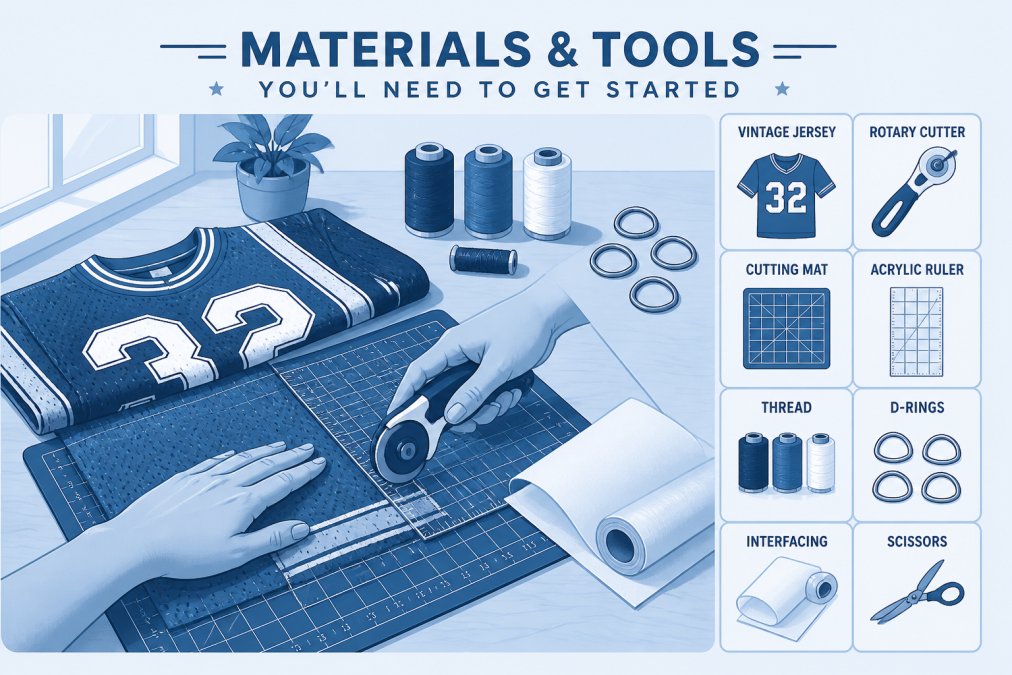
Before you begin, gather the essentials. You'll need your vintage jersey, acrylic or PVC backing material for durability, and fusible interfacing to add structure. Quality thread matters, polyester or nylon resists UV damage better than cotton. Metal D-rings or plastic loops provide secure attachment, with metal holding up better over years of use.
A rotary cutter and cutting mat make precise cuts far easier than scissors, especially when working with layered fabric. A heat press or iron helps fuse interfacing and backing materials, dramatically improving durability. A sewing machine handles the work faster and more consistently than hand-sewing, though both methods produce functional results.
How to Sew Fabric Luggage Tags From Your Old Jerseys
Creating custom luggage tags from vintage jerseys follows a straightforward process, but precision matters.
Cutting and Preparing Your Jersey Pieces
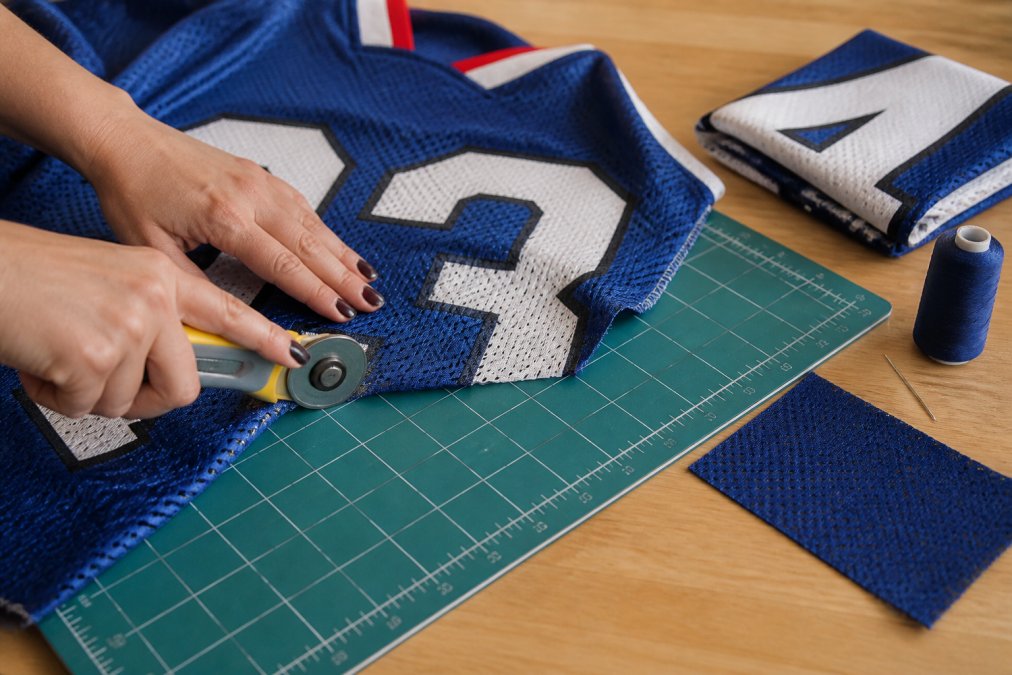
Select the section of your vintage jersey with strong color, minimal wear, and good graphic definition. Cut your jersey piece to your desired tag dimensions, most luggage tags fall between 2-3 inches wide and 3-4 inches tall. Use a rotary cutter for clean, straight edges that won't fray as easily as scissor cuts.
Cut your backing material and interfacing to match. Fuse the interfacing to the wrong side of your jersey fabric using a heat press or iron set to medium heat. This prevents the jersey from shifting or wrinkling when you stitch. Stack your materials: jersey fabric (right side out), then interfacing, then backing material.
Stitching the Tag Together
Mark your seam allowance at 1/4 inch from the edge. Begin stitching around the perimeter, leaving a 1.5-inch opening on one edge for your loop attachment hardware. Backstitch at the beginning and end of each seam. Machine stitching creates tighter, more durable seams than hand-sewing, especially important for travel wear.
Once you've stitched three sides, turn the tag right-side out through your opening. Use a blunt tool to push out the corners and create crisp edges. Press the tag flat with an iron to set the shape.
Adding Hardware and Attachment
Insert your loop attachment through the opening. Position it flush with the edge, centered on one short end. You can either stitch the opening closed around the loop or use rivets for a more permanent connection. Rivets create an industrial finish and won't fail after thousands of luggage handlings.
For a professional finish, topstitch around the entire perimeter about 1/4 inch from the edge. This reinforces all seams and keeps your backing material aligned.
Preserving Vintage Jersey Fabric During the Process
Vintage jersey fabric requires careful handling. Avoid excessive heat when fusing interfacing, use a medium setting and a pressing cloth to prevent scorching. Make clean, decisive cuts rather than sawing back and forth, as jersey fabric can stretch and distort under uneven pressure.
During stitching, go slowly to avoid puckering or stretching the fabric. Store your finished tag away from direct sunlight to prevent fading. If your vintage jersey has weak spots, reinforce those sections with additional interfacing before cutting.
Creative Ways to Use Old Tickets and Memorabilia
Small ticket stubs can be laminated and attached to the back of your tag, creating a layered memory piece. Game program covers can be scanned and printed onto transfer paper, then heat-transferred onto your jersey fabric before construction. Some crafters incorporate small embroidered details referencing specific moments, player numbers, or championship years.
If you have multiple old jerseys, you can create a patchwork design by combining fabric sections from different teams or eras. Consider adding a small pocket on the back for storing emergency contact information or a luggage claim ticket.
Design and Customization Options for Your Tags
The vintage jersey itself dictates much of the aesthetic, but you can customize supporting elements significantly. Choose your color palette based on the jersey's dominant colors. The shape of your tag can vary beyond standard rectangles, some crafters cut tags into shield shapes or rounded corners.
Typography matters if you're adding custom text. Your name or initials can be embroidered, heat-transferred, or hand-lettered onto the back. Backing material choices affect both durability and aesthetics: clear acrylic lets the jersey fabric dominate, while opaque PVC creates a more finished appearance. Consider adding a secondary design element to the back of your tag for visual interest.
Making Your Custom Tags Durable for Travel
Durability separates a beautiful craft project from a functional travel accessory. Start with quality materials throughout, cheap backing material cracks or warps, poor thread unravels, and weak hardware fails.
The stitching quality determines longevity more than any other factor. Small, tight stitches create stronger seams than loose or irregular stitching. Double-stitch all seams for added security. Seal the edges of your tag to prevent fraying using pinking shears or a zigzag stitch.
Protect your finished tag with a clear acrylic or polyurethane coating. This topcoat seals the fabric, protects against moisture, and prevents color fading from UV exposure. Test your tag's durability by tugging on the loop attachment firmly, it shouldn't budge.
When to Choose Professional Custom Luggage Tags
DIY projects offer satisfaction and customization that mass-produced alternatives can't match. Professional services can handle technical challenges that trip up many crafters, using industrial-grade equipment for perfectly aligned stitching and bulletproof attachments.
MoonlightWeave offers professionally crafted custom luggage tags from vintage jerseys, including options like the Vintage 1956 New York Giants Baseball Luggage Tag (priced at $22.95) and the 1961 Baseball Boston Luggage Tag ($20.95). These ready-made options skip the construction work while delivering the nostalgic appeal and durability you want.

Turnaround time is another consideration, DIY projects take weeks, while professional services typically complete custom work within 2-4 weeks. Professional options make sense if you need consistent quality across multiple tags or have an upcoming trip deadline.
Creating custom luggage tags from vintage jerseys bridges nostalgia and practicality in a way few other projects can match. Whether you choose the DIY route or work with professionals, you're transforming memorabilia into something you'll use and appreciate for years. MoonlightWeave's collection of handcrafted vintage sports accessories makes it easy to add authentic, personalized pieces to your travel gear. Explore our luggage tag options and discover how vintage memorabilia becomes your most memorable travel companion.
Frequently Asked Questions
How do you preserve vintage jersey fabric for crafts?
Start by gently hand-washing the jersey in cool water with mild detergent, then air-dry flat away from direct sunlight. Store it in a breathable cotton bag, not plastic, to prevent moisture buildup and mildew. Before cutting, inspect for weak spots or damage. If the fabric shows fading or brittleness, reinforce stressed areas with a backing fabric during your tag construction. Avoid heat pressing directly on vintage fibers, use a pressing cloth instead to protect the original material.
What materials are needed to make a luggage tag from fabric?
You'll need your vintage jersey, acrylic or PVC backing (2-3mm thickness), thread, a needle or sewing machine, scissors, a heat press or iron, and hardware like a loop attachment or metal ring. A rotary cutter and cutting mat make precise cuts easier. Fabric glue or fusible webbing can reinforce seams. For weather protection, consider clear acrylic or UV-resistant laminate sheets. Having a template helps ensure consistent tag dimensions (typically 2.5 x 4 inches).
Can you use old sports jerseys for DIY luggage tag projects?
Yes, old sports jerseys are ideal for DIY luggage tags because their durable synthetic or cotton-blend fibers hold up to travel wear. The graphic designs and team-specific imagery create unique, personalized tags that double as conversation starters. However, ensure the jersey section you're using isn't torn or severely worn. Jerseys with screen-printed or embroidered logos work best; avoid heavily damaged areas that won't withstand repeated handling and weather exposure.
How long does it take to make a custom luggage tag from a vintage jersey?
A single DIY tag typically takes 1-2 hours from start to finish, including cutting, stitching, and hardware attachment. If you're hand-sewing, add extra time for careful stitching. Once you've made your first tag, subsequent ones take 45 minutes to an hour as you refine your technique. If you prefer professional-grade results without the time investment, MoonlightWeave's handcrafted options like the Vintage 1956 New York Giants Baseball Luggage Tag ($22.95) eliminate the DIY timeline entirely while delivering durability tested through actual travel use.
This article was written using GrandRanker