

Table of Contents
- Why Personalized Hockey Equipment Bags Matter for Youth Players
- Hockey Bag Sizing Guide for Kids: Finding the Right Fit
- Durable Hockey Bag Materials That Last Through Seasons
- How to Organize Hockey Equipment Inside Your Bag
- Customization and Personalization Options
- Maintenance and Cleaning Guide for Hockey Bags
- Sustainability and Eco-Friendly Hockey Bag Materials
- Frequently Asked Questions
Last Updated: September 29, 2026
Why Personalized Hockey Equipment Bags Matter for Youth Players
Personalized hockey bags youth players use do more than hold gear, they build identity. When young players see their name, number, or team logo on their bag, they're carrying something that belongs to them, not just another piece of equipment. This matters psychologically. Youth hockey players spend significant time with their gear, and personalization transforms a functional item into a badge of belonging.
The practical side is equally important. A well-chosen personalized hockey bag for youth keeps equipment organized, protected, and easy to transport. Youth players often struggle with standard bags that are oversized or poorly designed for their smaller frames. A bag tailored to youth dimensions, with smart compartments and durable construction, makes the difference between gear that lasts one season and gear that survives multiple years of ice time, tournaments, and travel.
Personalization also solves a common problem: lost or mixed-up equipment. When every player's bag looks identical, mix-ups happen at tournaments and team events. A customized bag with a player's name or number eliminates confusion instantly. Parents appreciate this too, it's one less thing to track during busy hockey seasons.
Hockey Bag Sizing Guide for Kids: Finding the Right Fit
Choosing the right size is the foundation of a good personalized hockey bag for youth. Too large, and the bag becomes cumbersome and difficult for a young player to carry. Too small, and equipment gets crammed, damaged, or left behind. The key is matching bag dimensions to the player's age, size, and the amount of gear they're transporting.
Youth vs. Senior Bag Dimensions
Youth hockey bags typically range from 32 to 40 inches in length, compared to senior bags that stretch 42 to 50 inches. A 10-year-old player needs a bag that sits comfortably when carried or wheeled, something that doesn't drag on the ground or tower above their shoulders. At that age, a 32-36 inch bag works well.
By age 14-16, players are closer to adult size, and a 38-42 inch bag becomes appropriate. The transition isn't just about height; it's about the volume of gear. Older youth players often carry more protective equipment, additional jerseys for tournaments, and personal items like water bottles and snacks. A slightly larger bag accommodates this without forcing a player to overpack.
Weight matters too. Youth bags should weigh less than senior bags when empty, since a young player is lifting and carrying the full load. Look for bags constructed with lighter materials that don't add unnecessary bulk.
Wheel Bag vs. Carry Bag for Young Players
This choice depends on how the player travels to games and practices. A wheel bag is ideal for tournament travel and longer distances, wheels reduce strain on young shoulders and backs. However, wheel bags are heavier when empty, which can be a drawback for players who walk short distances to local rinks.
A carry bag with padded shoulder straps works better for short trips and players who prefer to sling their equipment over one shoulder. Many youth players use both: a wheel bag for tournaments and a carry bag for regular practice. Shoulder strap design matters significantly, look for bags with ergonomic straps that distribute weight evenly across the shoulders rather than concentrating pressure on one side.
Some hybrid designs offer both wheels and carry handles, giving flexibility. These tend to be pricier but solve the versatility problem for families managing multiple rinks and travel schedules.
Durable Hockey Bag Materials That Last Through Seasons
Youth hockey bags take a beating. Equipment is heavy, practices are frequent, and bags get thrown into car trunks, dragged across parking lots, and exposed to wet conditions. Material choice determines whether a bag survives one season or lasts through multiple players.
Waterproofing and Ventilation for Moisture Management
Hockey gear is inherently wet. Skates, jerseys, and protective padding absorb sweat and ice moisture during play. A bag without proper ventilation traps that moisture, creating an environment where mold, mildew, and odor develop quickly. Look for bags with mesh panels or ventilation vents that allow airflow even when the bag is closed.
Waterproofing is equally critical. A water-resistant exterior keeps rain and melted ice from soaking through to the gear inside. However, complete waterproofing can trap internal moisture, so the best designs balance water resistance with breathability. Many quality youth hockey bags use a combination: a water-resistant outer shell with ventilated compartments inside.
Some bags include removable, washable liners that protect gear from moisture while allowing the bag itself to dry between uses. This feature extends the life of both the bag and the equipment inside.
Reinforced Stitching and Heavy-Duty Construction
Reinforced stitching at stress points, where handles attach, where wheels mount, and where compartments meet the main body, determines durability. A youth hockey bag experiences constant stress from heavy equipment and frequent handling. Bags with double or triple stitching at high-stress areas resist tearing and last significantly longer.
The material itself matters. High-denier polyester or ballistic nylon resists punctures and abrasion better than standard fabric. The bottom of the bag, which drags across floors and pavement, should be reinforced with extra layers or rubberized material to prevent wear-through.
Zippers are another durability factor often overlooked. Heavy-duty, metal zippers with reinforced pull tabs withstand repeated opening and closing better than plastic zippers. Look for bags where zippers are backed by fabric tape to prevent the zipper from tearing away from the bag material.
How to Organize Hockey Equipment Inside Your Bag
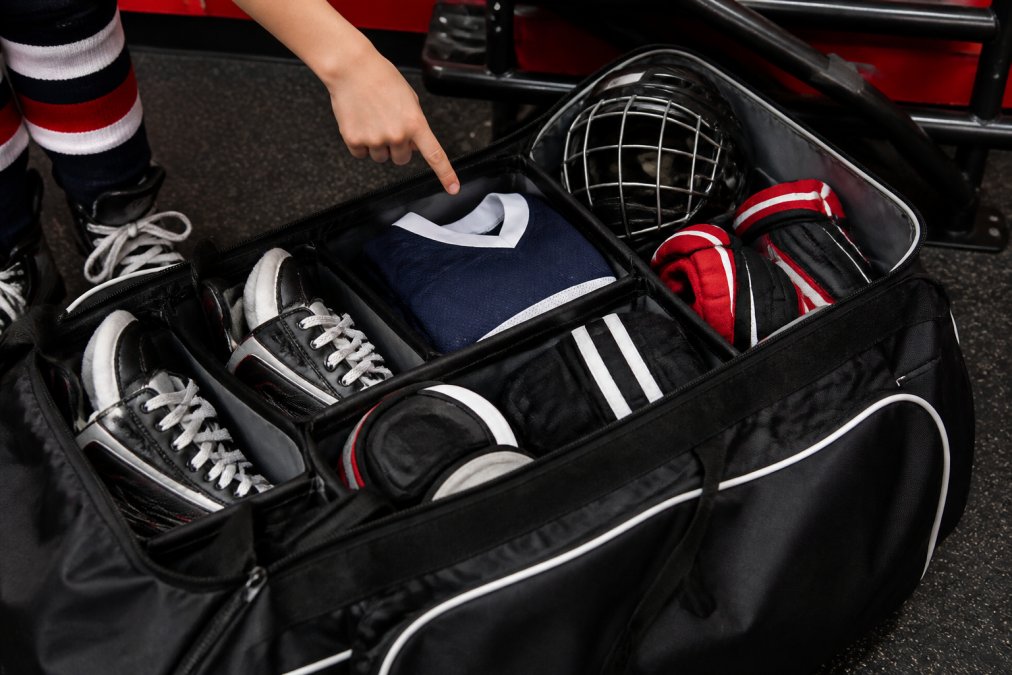
Organization prevents damage, saves time, and makes finding gear at the rink faster. Well-designed personalized hockey bags youth players use include compartments and pockets that accommodate different equipment sizes and types.
Compartments, Mesh Pockets, and Storage Features
The best youth hockey bags feature at least three main compartments: one for skates, one for protective gear, and one for jerseys and clothing. Skates need their own space because their blades can damage softer equipment. Protective gear, shoulder pads, elbow pads, shin guards, benefits from a ventilated compartment where airflow can reach the padding.
Mesh pockets serve multiple purposes. They allow visibility of contents without opening the bag, they provide ventilation for damp gear, and they keep small items like mouthguards, tape, and socks from getting lost. A good bag includes at least two mesh pockets on the exterior and one or two inside.
Some bags include a dedicated wet pocket with a waterproof lining for storing damp gloves or towels separately from dry gear. This feature prevents moisture from spreading to clean equipment and is worth the extra cost for players in cold climates where equipment stays wet longer.
Packing Checklist for Youth Hockey Gear
Effective packing starts with a system. Here's a practical approach:
- Place skates in the dedicated skate compartment, blades facing inward
- Roll jerseys and clothing tightly to save space
- Stack protective gear (shoulder pads, elbow pads, shin guards) in the main compartment
- Use mesh pockets for gloves, socks, and accessories
- Store the helmet in a separate padded section or protective bag within the larger bag
- Keep tape, water bottle, and personal items in small exterior pockets
- Place a small towel or moisture-absorbing cloth in a mesh pocket to manage condensation
- Leave at least one inch of space at the top for ventilation and to prevent overloading zippers
Customization and Personalization Options
Personalization transforms a generic bag into something that reflects a player's identity. The options range from simple name embroidery to custom designs incorporating team colors, logos, and player numbers.
Team Logo, Player Number, and Design Tools
Color customization is another option. Many manufacturers allow you to choose the bag's base color and accent colors to match team colors. This creates a cohesive look that young players take pride in carrying.
Vintage Memorabilia and Handcrafted Personalization
For families wanting something truly unique, handcrafted personalization using vintage memorabilia offers a special option. MoonlightWeave specializes in transforming vintage sports memorabilia, old hockey jerseys, cards, and other collectibles, into custom fabric goods. A personalized hockey bag for youth can incorporate vintage fabric from a family member's old jersey or a historic team design, creating a one-of-a-kind piece that carries sentimental value alongside practical function.
Maintenance and Cleaning Guide for Hockey Bags
A personalized hockey bag for youth requires regular maintenance to stay functional and odor-free. Hockey gear is inherently damp and smelly, and without proper care, bags develop persistent odors and mold.
Sustainability and Eco-Friendly Hockey Bag Materials
As families become more environmentally conscious, sustainable hockey bag options are gaining traction. Eco-friendly materials reduce environmental impact without sacrificing durability or performance.
Frequently Asked Questions
What size hockey bag does a youth player actually need?
Youth hockey bags typically range from 32 to 38 inches in length, compared to 40+ inches for senior bags. A 12-year-old usually needs a 36-inch bag, while younger players (8-10 years) fit better in 32-34 inch models. The right size holds all gear without forcing it, skates, helmet, gloves, shoulder pads, and jersey should fit with room to spare. Oversized bags waste space and become harder to carry; undersized ones force cramped packing that damages equipment.
How do durable hockey bag materials protect expensive youth equipment?
Heavy-duty materials like reinforced nylon and polyester with waterproof coatings protect gear from moisture, mold, and mildew that develop in damp hockey bags. Reinforced stitching at stress points (handles, wheel attachment, zipper areas) prevents tears that expose equipment to damage. Ventilation mesh pockets allow air circulation, reducing odor and moisture buildup. Quality materials also resist abrasion from concrete rink floors and repeated transport, extending both the bag's lifespan and the protection it offers to skates, pads, and other gear.
What makes personalized hockey bags worth the investment for youth players?
Personalized hockey bags help young players take ownership of their equipment and make identification easier in crowded locker rooms where multiple similar bags exist. Handcrafted vintage touches create a sense of pride and belonging.
How should you clean and maintain a personalized hockey equipment bag?
For personalized elements like handcrafted fabric details, avoid machine washing and harsh chemicals, spot-clean only.