

Table of Contents
- Best Ways to Display Vintage Memorabilia
- How to Preserve Vintage Collectibles on Display
- Creative Display Ideas for Sports Memorabilia
- Best Lighting for Vintage Displays
- Styling and Curation Techniques
- Small-Space Solutions for Apartment Displays
- Insuring and Valuing Your Vintage Collection
- Conclusion
Last Updated: August 28, 2026
Best Ways to Display Vintage Memorabilia
Vintage memorabilia sits in boxes for years because most people don't know how to display it properly. You've got the pieces, the signed jerseys, the old ticket stubs, the program covers, but turning them into a cohesive display that actually looks intentional rather than cluttered feels like a puzzle with missing pieces.
The good news: displaying vintage memorabilia doesn't require interior design expertise or a custom-built man cave. It requires understanding a few core principles about preservation, arrangement, and presentation. At MoonlightWeave, we transform memorabilia into functional home decor that tells a story. The best ways to display vintage memorabilia combine preservation techniques with thoughtful curation so your collection stays protected while looking intentional.
Below, we'll walk through proven methods for displaying everything from sports cards to vintage jerseys, methods that work whether you're working with a small apartment or a dedicated collector's room.
How to Preserve Vintage Collectibles on Display
Displaying vintage memorabilia means balancing aesthetics with protection. Your pieces deserve to be seen, but exposure to light, humidity, and temperature fluctuations degrades them over time. The key is choosing display methods that minimize environmental stress while keeping your collection visible.
Archival Materials and Storage Standards
Start with the foundation: archival-quality materials. This means acid-free storage boxes, UV-protective glass or acrylic, and materials that won't chemically interact with your memorabilia over decades.
Acid-free cardboard and tissue paper prevent yellowing and deterioration that happens with standard storage materials. For framed pieces, use archival-quality matting and backing. For items in cases or shadow boxes, ensure the interior materials are also acid-free, cheap foam or cardboard backing will damage items over time.
According to Library of Congress preservation guidelines, archival materials meet specific standards to prevent chemical degradation. When selecting display cases, look for UV-protective acrylic or glass that blocks harmful ultraviolet rays without distorting colors. Regular acrylic yellows and degrades; UV-protective versions maintain clarity for decades.
For textiles like vintage jerseys or blankets, consider acid-free tissue paper for padding inside display cases. Never use regular tissue or newspaper, they contain lignin that accelerates deterioration.
Climate Control and Environmental Protection
Temperature and humidity fluctuations cause memorabilia to expand, contract, crack, and fade. Stable conditions are more important than perfect conditions.
Aim for temperatures between 60-70°F and humidity levels between 30-50% (loc.gov). Extreme swings damage items more than consistent conditions slightly outside this range. Keep displays away from direct sunlight, heating vents, air conditioning units, and exterior walls where temperature varies significantly.
Avoid displaying vintage memorabilia in basements or attics where humidity spikes seasonally. A climate-controlled bedroom, living room, or interior hallway provides far better protection than a garage or storage area. If you're displaying items near windows, use UV-filtering curtains or blinds to reduce light exposure without completely blocking the display.
For high-value pieces, consider a dehumidifier in the display area during humid seasons. Many collectors use inexpensive hygrometers to monitor temperature and humidity, catching problems before they damage pieces.
Creative Display Ideas for Sports Memorabilia
Displaying sports memorabilia effectively combines visual impact with practical organization. The goal is creating an arrangement that feels curated, not random, where each piece has a purpose and the overall effect draws the eye.
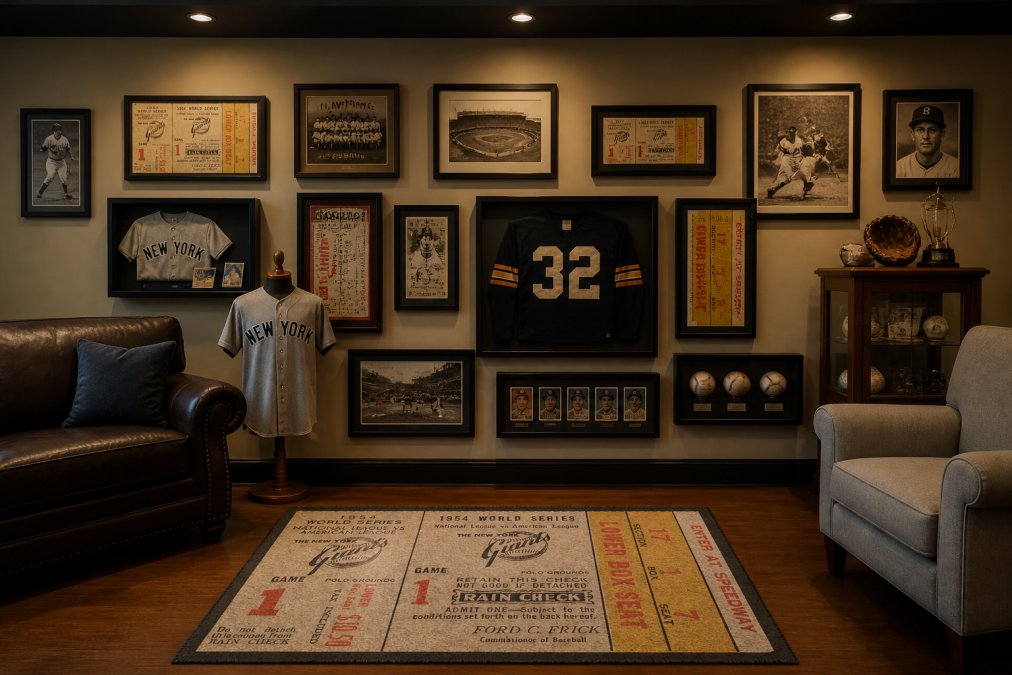
Gallery Walls and Grouping by Odd Numbers
Gallery walls transform scattered memorabilia into a focal point. The principle is simple: group items intentionally rather than spreading them randomly across walls.
Arrange pieces in odd numbers, three, five, or seven items per grouping. This creates visual balance that feels intentional. Even-numbered arrangements feel static; odd numbers create dynamic tension that draws attention. Mix frame sizes and orientations: vertical and horizontal pieces together, different frame widths, some with matting and some without.
Start by laying everything on the floor in your desired arrangement before hanging anything. This lets you test combinations without committing to nail holes. Leave consistent spacing between frames, typically 2-3 inches, so the grouping reads as unified rather than scattered.
For sports memorabilia specifically, group by theme or era rather than random arrangement. Three vintage baseball tickets from the 1950s, two program covers, and a small framed photo of the stadium create a cohesive narrative. A separate grouping of football memorabilia maintains visual clarity.
Shadow Boxes and Glass Cabinets for Keepsakes
Shadow boxes are flat frames designed for depth. They accommodate folded jerseys, stacked items, or layered arrangements. The key is arranging items so they're visible from the front without crowding. Use acid-free padding or mounting materials to position pieces. Never glue or attach items directly to the backing, you want to preserve the ability to remove and restore pieces later.
Glass cabinets offer similar protection with easier access. Display cases with acrylic or tempered glass fronts, adjustable shelving, and interior lighting create a museum-quality presentation. MoonlightWeave's handcrafted memorabilia pieces, like our Vintage Sports Wall Clock, Retro 1960 Football Patriots-Bills Acrylic Clock and 1967 World Series Ticket St Louis Doormat, complement this type of display by offering functional alternatives that don't require glass cases.


For high-value items like signed jerseys or rare memorabilia, glass cabinets provide security and climate control. Interior LED lighting highlights details without generating heat that damages textiles.
Floating Shelves and Picture Ledges
Floating shelves and picture ledges offer flexibility for rotating collections or displaying items without permanent wall damage. They work particularly well in apartments or rental spaces where drilling into walls isn't an option.
Picture ledges hold framed items at an angle, creating a gallery-like effect without the commitment of hanging frames. They're ideal for rotating seasonal displays or trying different arrangements. Floating shelves accommodate three-dimensional items: small busts, framed pieces, vintage clocks, or a mix of memorabilia with decorative spacing.
The styling matters here. Don't pack shelves solid with items. Leave breathing room. A framed vintage baseball ticket, a small vase, a vintage clock, and empty space creates visual interest. Crowded shelves feel cluttered; spaced items feel intentional.
Best Lighting for Vintage Displays
Lighting makes or breaks a display. Poor lighting hides details and makes even beautiful arrangements feel dull. The right lighting reveals colors, textures, and details while protecting pieces from UV damage. card display alternatives.
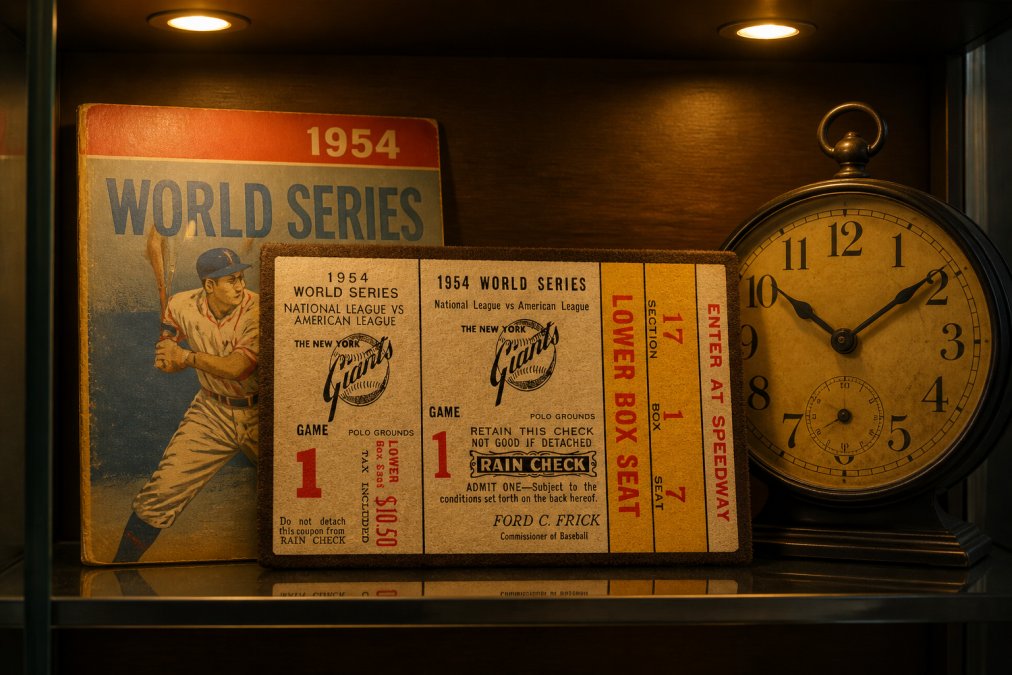
LED spotlights are the standard for memorabilia displays (si.edu). They produce minimal heat, critical for protecting textiles and aged materials, and offer directional control. Position spotlights at a 45-degree angle to frames to minimize glare while highlighting details.
Warm white LEDs (2700-3000K color temperature) complement vintage memorabilia better than cool white or daylight LEDs. Warm light mimics gallery lighting and feels nostalgic, appropriate for vintage pieces. Avoid harsh overhead lighting, which flattens displays and creates glare on glass.
For shadow boxes and glass cabinets, interior LED strips mounted along the top or sides provide even illumination without spotlighting. This prevents hotspots while ensuring all items are visible.
Consider the surrounding room lighting too. If your memorabilia display is in a bright room with lots of natural light, the display will fade faster and look washed out. A display in a darker room with controlled LED lighting maintains colors and creates drama.
Styling and Curation Techniques
The difference between a collection and a curated display is intentionality. Curation means making choices about what to show, how to arrange it, and what story the arrangement tells.
Thematic Arrangement and Color Coordination
Group memorabilia by theme or era rather than random placement. A collection of 1950s baseball memorabilia tells a clearer story than mixing 1950s baseball with 1980s football with 1990s hockey. Thematic grouping creates narrative coherence.
Color coordination matters more than people realize. Vintage sports memorabilia comes in predictable color palettes: red and blue for baseball, green and gold for older football, black and white for hockey. Grouping items with similar color schemes creates visual harmony. A mix of random colors feels chaotic.
This doesn't mean everything in a display must match perfectly. It means being intentional about color balance. If you're displaying three baseball memorabilia pieces in red and blue, balance them with a neutral-toned frame or piece to prevent color overload.
Using Trays and Acrylic Organizers
Trays and acrylic organizers create visual boundaries within larger displays. A wooden tray grouped with three framed vintage tickets creates a contained vignette within a larger gallery wall. It tells your eye: these items belong together.
Acrylic organizers work well for smaller memorabilia: vintage cards, ticket stubs, or program covers. Clear acrylic keeps items visible while protecting them. Organizing items into compartments prevents the scattered look that makes collections feel like storage rather than display.
For apartment displays or small spaces, trays on shelves or nightstands create mini-displays. A vintage baseball card in a small frame, a program cover, and a vintage clock on a single tray occupy minimal space while showcasing multiple pieces.
Rotating Collections to Reduce Visual Clutter
You don't have to display everything at once. Rotating displays keeps your collection fresh and prevents the overwhelming visual clutter that happens when too many items compete for attention.
Divide your memorabilia into seasonal or quarterly rotations. Display your baseball collection during baseball season, switch to football memorabilia in fall, and rotate to hockey or winter-themed pieces in winter. This seasonal rotation keeps displays feeling fresh and relevant.
Rotating also protects your collection. Items not on display spend time in archival storage, minimizing cumulative light and environmental exposure. A piece displayed for three months, then stored for nine months, experiences far less degradation than something displayed year-round.
Keep detailed photos of previous arrangements. This lets you recreate displays you loved or try new variations without guessing at placement.
Small-Space Solutions for Apartment Displays
Apartment living doesn't mean sacrificing memorabilia displays. It means being strategic about space and choosing display methods that work within constraints.
Wall-mounted displays are essential in apartments. Gallery walls, floating shelves, and picture ledges maximize vertical space without consuming floor area. Corner displays work well too, a tall floating shelf in a corner uses dead space efficiently.
Consider multifunctional pieces. MoonlightWeave's vintage sports doormats and wall clocks serve as both decor and functional items, giving you display value without dedicated display space. A doormat featuring vintage baseball memorabilia welcomes guests while showcasing your collection. A vintage sports wall clock displays memorabilia while telling time.
For apartments with limited wall space, display cases on dressers, shelves, or nightstands work well. A compact shadow box on a bookshelf displays memorabilia without wall commitment. Floating shelves above desks or in hallways provide display space in unexpected areas.
Avoid floor displays in apartments. They consume valuable space and make rooms feel cramped. Keep everything vertical or on furniture.
Insuring and Valuing Your Vintage Collection
High-value memorabilia deserves protection beyond physical preservation. Insurance and documentation protect against loss, theft, or damage.
Document everything. Photograph each piece from multiple angles. Record purchase date, price, condition, and any provenance information. This documentation is essential for insurance claims and establishes value.
Get high-value items appraised by a professional memorabilia appraiser. Insurance companies require appraisals for items over a certain value (typically $1,000-$2,500, depending on your policy). A professional appraisal provides documentation that protects your claim if something happens.
Talk to your insurance agent about coverage. Standard homeowner's or renter's insurance typically covers memorabilia, but coverage limits vary. Valuable collections may need a rider or separate policy. Collectors insurance specifically covers collectibles and often provides better coverage than standard policies.
Keep appraisals and documentation in a separate location, ideally a safe deposit box or cloud storage. If your home is damaged, physical documents stored at home may be lost too.
Displaying vintage memorabilia is about balance: protecting pieces while showing them off, creating visual impact without overwhelming spaces, and treating your collection as something worth displaying intentionally rather than storing haphazardly.
The pieces you own matter. They represent memories, history, and passion for sports and collecting. MoonlightWeave transforms that same spirit into handcrafted home decor, turning vintage memorabilia into functional pieces like doormats, blankets, and clocks that celebrate your collection while serving your everyday life. Whether you're displaying original memorabilia or incorporating vintage-inspired pieces, the goal is the same: creating a home that reflects what you love. Continue shopping to explore how vintage memorabilia can become part of your daily decor.
| Display Method | Best For | Space Required | Protection Level |
|---|---|---|---|
| Gallery walls | Framed memorabilia, tickets, photos | Vertical wall space | Moderate (depends on framing) |
| Shadow boxes | Folded jerseys, 3D items, mixed collections | Wall-mounted or shelf | High (sealed, dust-free) |
| Floating shelves | Mixed displays, rotating items | Minimal floor space | Moderate (open to dust) |
| Glass cabinets | High-value items, complete collections | Moderate floor/wall | High (enclosed, lockable) |
| Picture ledges | Framed pieces, rotating displays | Minimal wall depth | Moderate (angled display) |
| Trays and organizers | Small items, cards, compartmentalized displays | Shelf or furniture top | Moderate (contained grouping) |
Frequently Asked Questions
What are the best ways to display vintage memorabilia without creating clutter?
Use grouping in odd numbers (three, five, or seven items) to create visual balance and reduce clutter. Employ floating shelves, wall-mounted gallery displays, and glass cabinets to keep items visible but organized. Rotate your collection seasonally, display your favorite pieces for three months, then swap in others. This prevents visual fatigue and keeps your display fresh while protecting items from constant light exposure.
How do I preserve vintage collectibles while displaying them?
Keep memorabilia away from direct sunlight, which fades colors and degrades materials. Maintain stable temperature and humidity levels between 60-70°F and 30-50% humidity. Use archival-quality materials like acid-free mats and UV-protective glass. Store items in glass cabinets or shadow boxes to minimize dust exposure. Avoid handling valuable pieces frequently, and consider using cotton gloves when you must touch them. Regularly inspect for signs of deterioration.
What type of lighting works best for displaying vintage items?
LED spotlights and picture lights are ideal because they produce minimal heat and UV radiation, protecting delicate materials. Use warm white bulbs (2700K-3000K) to enhance vintage aesthetics without harsh glare. Position lights at a 45-degree angle to highlight details without creating shadows. Avoid halogen bulbs, which generate excessive heat. Consider dimmable lights to control intensity and reduce light exposure over time, extending the life of your collectibles.
How should I arrange a collection of vintage items on a shelf?
Start with odd-numbered groupings (three, five, or seven items) as your base unit. Vary heights by using books, risers, or display stands to create visual interest. Place larger or statement pieces as anchors, then layer smaller items around them. Use trays to corral related pieces and define zones on the shelf. Leave some breathing room, don't overcrowd. If displaying sports memorabilia like vintage jerseys or tickets, consider acrylic risers or shadow boxes to elevate key pieces and prevent them from getting lost among other items.
What's the difference between displaying memorabilia in glass cabinets versus open shelves?
Glass cabinets offer dust-free protection and climate control, making them ideal for valuable or delicate vintage collectibles. Open shelves allow easier access and showcase items more prominently but require regular dusting and offer less environmental protection. For high-value pieces like signed jerseys or rare tickets, glass cabinets are worth the investment. Open shelves work well for hardier items like vintage blankets or doormats that can handle occasional handling and dust exposure.
How can I display vintage memorabilia in a small apartment?
Maximize vertical space with wall-mounted gallery displays, floating shelves, and picture ledges instead of using floor space. Use corner shelves to capture unused areas. Shadow boxes and slim glass cabinets take up minimal footprint while protecting items. Hang vintage textiles like sports blankets as wall tapestries to serve double duty as decor and storage. Rotate your collection every few months to keep displays fresh without needing extra storage space. Consider displaying one curated piece prominently rather than spreading items throughout the apartment.
Should I insure my vintage memorabilia collection?
Yes, especially if your collection has significant monetary or sentimental value. Document each item with photos, descriptions, and purchase prices or appraisals. Contact your homeowners or renters insurance provider to add a rider for collectibles, as standard policies often have limits on valuable items. For high-value pieces like signed jerseys or rare vintage tickets, get a professional appraisal. Keep receipts and documentation in a safe place. This protects your investment and provides proof of ownership if items are damaged or stolen.
This article was written using GrandRanker