

Table of Contents
- Why Vintage Sports Decor Beats Mass-Produced Fan Gear
- What to Look for in Authentic Vintage Sports Decor
- Where to Shop: From Marketplaces to Specialty Makers
- Handcrafted Sports Home Accessories Worth the Splurge
- How to Style Sports Memorabilia by Era and Room
- DIY Ideas for Vintage Sports Decor on a Budget
- Caring for Your Collection: Preservation and Restoration
- Conclusion
- Frequently Asked Questions
Last Updated: September 5, 2026
Mass-produced fan gear from the big-box stores all starts to look the same after a while. That is why more collectors and homeowners are searching for where to buy unique vintage sports decor that actually tells a story. At MoonlightWeave, we specialize in transforming authentic vintage memorabilia into handcrafted pieces, and we offer high-quality, nostalgic pieces that allow you to celebrate your favorite sports and memories in your everyday life. This guide will walk you through the best places to source these treasures, how to spot the real deal, and how to style your finds so they feel intentional rather than cluttered.
The secret most guides miss is that the best vintage sports decor isn't always found in antique shops. It's often hiding in plain sight: old game programs, ticket stubs, and media guides that can be transformed into functional art. Below, we'll show you exactly how to source, verify, and display pieces that capture sports history without emptying your wallet.
Why Vintage Sports Decor Beats Mass-Produced Fan Gear
Vintage sports decor offers something modern manufacturing simply cannot replicate: a direct connection to a specific moment in sports history. A 1934 Chicago Cubs doormat or a 1955 World Series throw blanket carries the visual language of its era, from the typography to the color palette, that instantly transports you back to the ballpark. Mass-produced items rely on current logos and generic designs, which lack the character and storytelling potential of authentic vintage pieces.

The aesthetic difference matters more than you might think. Interior designers increasingly use vintage sports memorabilia as focal points because the aged patina and period-correct graphics add warmth that sterile, factory-new items cannot match. Whether you are decorating a man cave, a home office, or a family room, a single authentic piece from a bygone era anchors the space in a way that a rack of identical jerseys never will. This approach to room styling also creates natural conversation starters when guests ask about the story behind your 1969 World Series ticket doormat.
What to Look for in Authentic Vintage Sports Decor
Authentic vintage sports decor is defined by its provenance, material quality, and period-accurate design elements. When you are evaluating a potential purchase, start by examining the printing quality and the type of materials used. Genuine vintage pieces from the 1930s through the 1960s were often printed on heavy paper stock, canvas, or wood, and they show signs of natural aging that reproductions try to fake but rarely get right.
Authenticity Verification: Spotting the Real Deal
Learning how to verify authenticity protects you from paying reproduction prices for items that are not actually vintage. The first step is to examine the typography and color reproduction closely. Period-correct pieces use fonts and color palettes that match the printing technology of their era, while modern reproductions often have a slightly too-crisp appearance or use digital color matching that looks "off" to a trained eye.
Another reliable indicator is the condition of the item itself. Authentic vintage pieces will have natural wear patterns, such as fading along the edges or slight discoloration from sunlight exposure. According to the Smithsonian Institution's guidelines on preserving [sports memorabilia(/blogs/history/decorating-with-vintage-sports-gear-tips-ideas) | si.edu], collectors should also look for original markings, manufacturer stamps, or handwritten notations that confirm an item's history. If you are buying online, always ask the seller for photos of the back of the item and any visible wear, as these details are difficult to fake convincingly.
Where to Shop: From Marketplaces to Specialty Makers
When you are looking for where to buy unique vintage sports decor, your best sources fall into three main categories: online marketplaces, specialty antique dealers, and artisan makers who repurpose genuine memorabilia. Online marketplaces like eBay and Etsy offer the widest selection, but they also require the most careful vetting since sellers vary widely in their expertise and honesty. Specialty antique dealers who focus on sports collectibles are more reliable but often charge a premium for their curation.
The third option, artisan makers, offers something the other sources cannot: the chance to own a piece that has been thoughtfully transformed into something new. Rather than hunting for a framed print that thousands of other fans might own, you can commission a one-of-a-kind item that uses your team's actual history as its foundation. For example, MoonlightWeave takes vintage game programs, media guides, and ticket stubs and turns them into functional home accessories like doormats, clocks, and glassware, giving new life to materials that might otherwise sit forgotten in a box.
| Sourcing Option | Best For | Price Range | Authenticity Risk |
|---|---|---|---|
| Online marketplaces | Wide selection, rare finds | Varies widely | High, requires vetting |
| Antique sports dealers | Verified authentic pieces | Premium pricing | Low, expert curated |
| Artisan makers | One-of-a-kind transformed items | $21.95 - $58.95 | Low, uses real memorabilia |
Handcrafted Sports Home Accessories Worth the Splurge
Investing in handcrafted sports home accessories transforms your space from a fan cave into a curated gallery of personal history. These pieces justify their cost because they combine the emotional value of genuine vintage memorabilia with the functionality of everyday home goods. A mixing glass featuring a 1934 Cincinnati Reds design at $21.95 serves double duty: it is both a usable barware piece and a display item that sparks stories about football history.

The best handcrafted pieces succeed because they respect the source material. A 1954 Detroit Red Wings hockey program cover becomes a velveteen plush blanket at $42.95, preserving the artwork while making it approachable and useful. Similarly, a retro 1960 Football Patriots-Bills acrylic wall clock at $58.95 brings game day energy to a home office without overwhelming the space. These items work because they are not trying to be museum pieces; they are meant to be lived with, used daily, and enjoyed as part of your routine.
How to Style Sports Memorabilia by Era and Room
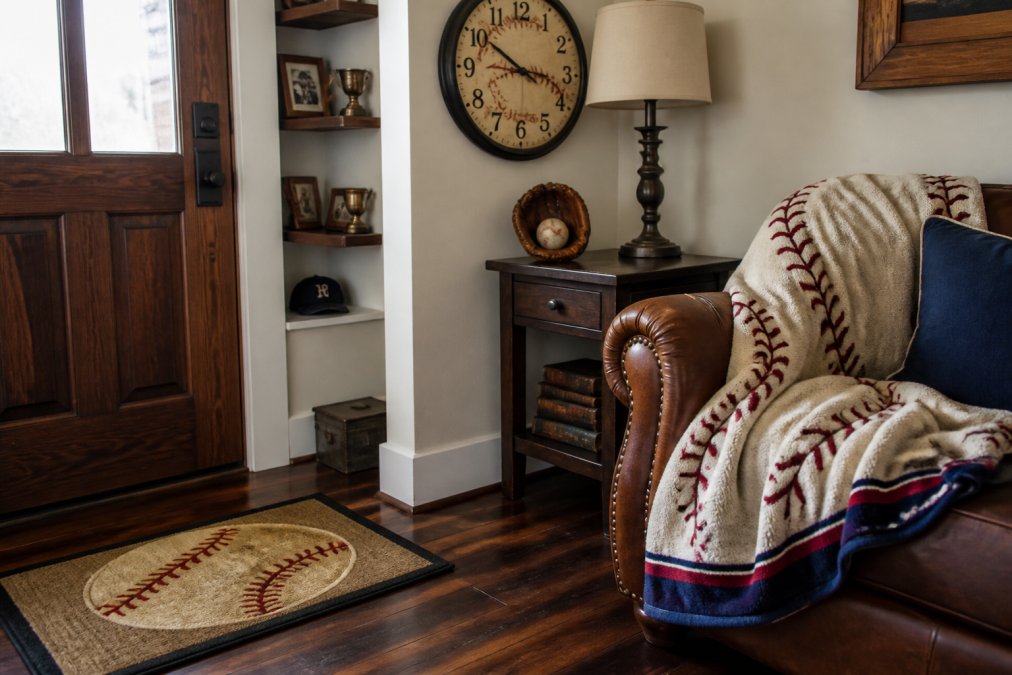
Styling sports memorabilia effectively comes down to matching the era of the piece with the aesthetic of the room. For a 1930s or 1940s baseball piece, lean into the vintage aesthetic with dark wood furniture, leather accents, and warm lighting that complements the aged tones of the artwork. These pieces pair beautifully with antique wood signs and classic framed prints that share the same design language.
For a mid-century home office, 1950s and 1960s football and hockey memorabilia works best with clean lines and retro color schemes. A 1962 Baltimore Orioles media guide mixing glass looks right at home on a bar cart next to mid-century glassware, while a 1955 World Series throw blanket adds a pop of period-correct color to a neutral sofa. The key is to treat sports memorabilia as interior design elements first, not just fan merchandise.

Styling by room:
- Entryway: Use a vintage ticket doormat as the first impression; pair with a simple bench and a framed program cover
- Living room: Drape a team-specific throw blanket over the sofa and anchor the wall with a retro acrylic clock
- Home office: Display a mixing glass on a shelf or bar cart; add a small framed photo of the original stadium
- Man cave or game room: Layer multiple eras together, but keep a consistent color story so the space feels curated rather than chaotic
DIY Ideas for Vintage Sports Decor on a Budget
Creating your own vintage sports decor is one of the most rewarding ways to personalize your space, and it does not require a large budget. The most accessible DIY projects for vintage sports decor start with items you may already own, such as old ticket stubs, programs, or photographs. A shadow box display case turns a handful of ticket stubs from memorable games into a framed piece of personal history for under $20 in materials.
Another popular project is converting vintage sports pages or program covers into custom wall art. Remove the pages carefully, mat them on acid-free paper, and frame them in simple black or wood frames for a clean, gallery-style look. If you are handy with basic tools, you can also distress a wooden sign and apply a vintage team logo using stencils and paint, creating an antique wood sports sign that looks like it has been in the family for decades. The key to successful DIY vintage sports decor is embracing imperfection, since the aged, worn look is exactly what makes these pieces feel authentic.
Caring for Your Collection: Preservation and Restoration
Proper preservation ensures your vintage sports decor investment holds its value and continues to look great for years. The most important rule is to protect items from direct sunlight, which causes fading and discoloration over time. According to the Library of Congress's preservation guidance for documents and artifacts, storing or displaying items in a climate-controlled environment with moderate humidity is essential to prevent paper from becoming brittle or developing mold.
For fabric items like throw blankets, follow the care instructions carefully. Most vintage-inspired fabric pieces should be machine washed in cold water and tumble dried on low heat, but hand washing will extend the quality of the product significantly. Doormats made from natural coir fibers will shed slightly during the first month of use, which is normal; simply shake them occasionally to remove loose fibers. Place coir mats in covered, weather-protected areas and avoid direct sunlight and excessive moisture to maximize their lifespan.
For restoration, resist the urge to over-clean vintage items. A gentle dusting with a soft, dry cloth is usually sufficient for framed pieces and clocks. For more delicate paper items, the American Institute for Conservation's find-a-conservator tool can help you locate a professional who specializes in paper restoration if a piece holds significant monetary or sentimental value. Attempting aggressive cleaning methods on your own can cause irreversible damage, so when in doubt, consult a professional before acting.
Conclusion
Building a collection of vintage sports decor takes patience, a discerning eye, and a willingness to look beyond the obvious sources. The reward is a home that reflects your personal sports history in a way that mass-produced fan gear never can, with each piece carrying its own story and character. Whether you are sourcing authentic finds at antique shops or investing in handcrafted accessories that repurpose genuine memorabilia, the key is to prioritize authenticity and quality over quantity.
At MoonlightWeave, we help you celebrate your favorite teams and memories with handcrafted pieces made from vintage sports memorabilia, from doormats and wall clocks to throw blankets and mixing glasses. Our collection turns nostalgic artifacts into functional decor you can use every day, so your sports history becomes part of your living space rather than a box in the attic. Continue shopping and find the piece that brings your favorite sporting memory home.
Frequently Asked Questions
What is considered vintage sports decor?
Vintage sports decor generally includes items that are at least 20 to 30 years old, or modern reproductions that faithfully capture the design aesthetic of a past era. Think 1930s baseball ticket doormats, 1950s hockey program blankets, or retro football wall clocks. These pieces feature classic typography, faded team colors, and historical references that mass-produced fan gear lacks. The appeal is nostalgia: they evoke specific moments in sports history while adding character to a room.
How can I tell if vintage sports memorabilia is authentic?
Check for period-correct materials, printing methods, and wear patterns. Look for manufacturer tags, copyright dates, and any signs of age like yellowing or fading that match the claimed era. For game-used items, request provenance documentation like letters of authenticity or photo matching. Be wary of items with uniform wear or suspiciously perfect condition. When buying reproductions, reputable sellers clearly label them as such rather than implying they are original artifacts from the era.
Where can I find unique, handcrafted sports-themed home goods?
Beyond mass-market retailers, look to specialty makers like MoonlightWeave that transform vintage memorabilia into functional home accessories. Their collection includes doormats featuring 1930s Chicago Cubs designs, throw blankets from the 1955 World Series, and acrylic clocks with 1960s football artwork. Prices range from $21.95 for mixing glasses to $58.95 for wall clocks. These pieces offer the nostalgia of vintage sports without the risk of damaging irreplaceable originals.
Is vintage sports decor a good investment?
Some vintage sports decor appreciates in value, particularly game-used equipment, signed items, and rare original posters from iconic moments. However, most decorative pieces like doormats, blankets, and clocks should be bought for their aesthetic value, not as financial investments. A 1932 World Series ticket doormat at $52.95 delivers daily enjoyment and conversation-starting appeal. If you want investment-grade pieces, focus on authenticated memorabilia with clear provenance and store it properly to preserve condition.
How do I incorporate vintage sports items into modern interior design?
Treat vintage sports pieces as accent elements rather than room themes. Place a retro baseball doormat at the entry, drape a 1954 hockey blanket over a neutral sofa, or hang a 1960s football clock in a home office. Mix eras intentionally: pair a 1930s ticket design with mid-century furniture, or offset a bold vintage print with clean lines and solid colors. The key is contrast, letting each nostalgic piece stand out without overwhelming the space.
This article was written using GrandRanker