

Table of Contents
- Vintage vs Modern Sports Decor: The Core Differences
- How to Display Sports Memorabilia Professionally
- Minimalist Sports Decor: Less Is More
- DIY Ideas for Vintage Sports Decor
- Blending Vintage and Modern: A Balanced Approach
- Material Durability and Preservation
- Sports Decor for Different Spaces
- Frequently Asked Questions
Last Updated: September 24, 2026
Vintage vs Modern Sports Decor: The Core Differences
When you're deciding how to display your sports memorabilia and team pride, the choice between vintage and modern aesthetics fundamentally shapes how your space feels. Vintage vs modern sports decor represents two distinct approaches to celebrating what you love about sports. One leans into nostalgic authenticity, faded game programs, worn pennants, authentic jerseys from decades past. The other embraces clean lines, minimalist presentation, and contemporary design principles. Understanding these core differences helps you make a choice that actually fits your home and your personal style.
The real tension here isn't about which is "better." It's about which one solves your specific problem: Do you want your space to feel like a living museum of sports history, or do you want your passion for sports to integrate seamlessly into a modern home without dominating the room?
What Defines Vintage Sports Aesthetics
Vintage sports aesthetics celebrate the authentic artifacts of sports history. Think hand-painted pennants from the 1950s, original game-day programs with creased spines, jerseys that have actually been worn, and collectibles that carry real age and character. The aesthetic is inherently nostalgic, it's about capturing a specific moment in time and letting that history be visible on your walls and shelves.
Vintage decor prioritizes authenticity over polish. Fading, wear, and imperfections aren't flaws; they're proof of genuineness. A 1960 Pirates pennant that's slightly discolored tells a story that a reproduction never can. This approach works beautifully if you have actual memorabilia with history, items you've collected over years or inherited from family members.
The challenge with pure vintage aesthetics is avoiding what feels like a cluttered nostalgia trap. Without intentional curation, vintage sports decor can tip into the "cheesy" territory that makes spaces feel dated rather than timeless. The key is selectivity: choose the pieces that genuinely matter to you, display them thoughtfully, and leave breathing room around them.
What Defines Modern Sports Aesthetics
Modern sports aesthetics strip away excess and focus on clean presentation. High-quality prints, minimalist framing, neutral color palettes, and strategic negative space define this approach. Rather than filling every wall, modern design emphasizes quality over quantity. A single stunning photograph of your team's championship moment, beautifully framed and positioned as a focal point, does more work than a wall covered in memorabilia.
Modern sports decor often incorporates contemporary materials, acrylic, metal, sleek frames, and treats sports themes as one element of a cohesive interior design rather than the dominant feature. This approach works especially well if you want your sports passion to feel sophisticated rather than obsessive, or if you're decorating a living area that needs to appeal to multiple people in your household.
The risk with modern sports aesthetics is that it can feel sterile or impersonal if you're not intentional. A perfectly framed print on a blank wall might look more like a hotel lobby than a home that reflects who you are. The solution is layering: combine one or two statement pieces with subtle touches, a throw pillow, a functional item like a clock, that reinforce your team loyalty without overwhelming the space.
How to Display Sports Memorabilia Professionally
The difference between a space that feels curated and one that feels cluttered comes down to display technique. Professional presentation transforms even modest memorabilia into something that commands respect and attention.
Framing and Mounting Techniques
Proper framing protects your investment while elevating its visual impact. For jerseys, use shadow boxes with UV-protective glass to prevent fading and deterioration. Acid-free matting and backing ensure your items won't degrade over time. For prints, documents, and photographs, invest in quality frames that complement your overall aesthetic, not every sports item needs a heavy wood frame or neon team colors.
Mounting height matters more than most people realize. Eye level is your anchor point. A focal piece should hang at 57-60 inches from the floor to its center. This creates natural sightlines and prevents your space from feeling top-heavy or bottom-weighted.
Consider the wall itself. A single statement piece on a feature wall creates impact. Multiple items work better when arranged in a intentional grid or salon-style layout rather than scattered randomly. Symmetry feels more modern and controlled; asymmetry can feel more collected and personal, but requires careful balance to avoid looking accidental.
Choosing Display Shelves and Focal Points
Shelving transforms how you present three-dimensional memorabilia, signed baseballs, bobbleheads, vintage equipment, team merchandise. Floating shelves create a clean, modern look. Traditional shelving with visible brackets feels more traditional but can work in vintage-leaning spaces.
The key principle: curate ruthlessly. A shelf with twelve items crammed together reads as clutter. A shelf with four carefully selected pieces, spaced intentionally with negative space, reads as a curated collection. Vary heights and depths to create visual interest, alternate tall items with shorter ones, lean some pieces at angles, and leave gaps that let viewers' eyes rest.
A focal point anchors the entire room. This might be a large framed print, a shadow-boxed jersey, or a wall-mounted collectible display. Everything else should support this focal point without competing for attention. Lighting matters here too, a single spotlight or directional light can make your focal piece feel like gallery-quality display.
Minimalist Sports Decor: Less Is More
Minimalist sports decor takes the modern approach further by stripping away everything except the essentials. This works beautifully in homes where you want to celebrate your team without letting sports dominate your aesthetic.
The minimalist framework asks a hard question about each piece: Does this spark genuine joy or connection? If the answer is "it's nice to have" rather than "I love this," it doesn't belong. One stunning piece matters more than ten mediocre ones.
Vintage 1929 Football Stanford-SC →
Minimalist sports decor often centers on functional items that serve dual purposes. A vintage acrylic wall clock like the Vintage 1929 Football Stanford-SC Acrylic Wall Clock ($58.95) works as both timepiece and art, it tells time while expressing your team loyalty.

DIY Ideas for Vintage Sports Decor
If you have old memorabilia collecting dust, transforming it into display pieces or functional items creates both meaning and conversation starters.
Upcycling Old Jerseys and Memorabilia
Old jerseys become throw pillows, wall tapestries, or framed shadow boxes. The simplest approach: frame the jersey in a shadow box with the player name and number as the focal point. This protects the fabric while making it a statement piece.
Creating Custom Wall Art from Team Collectibles
Pennants, trading cards, and vintage photographs become gallery walls when arranged intentionally. Collect items around a theme, your favorite player across decades, championship seasons, or memorable games, and frame them as a series.
Blending Vintage and Modern: A Balanced Approach
The best spaces often combine both aesthetics rather than choosing one exclusively. Vintage vs modern sports decor doesn't have to be an either-or decision.
Color Palettes That Work for Both Styles
A neutral base, whites, grays, blacks, warm beiges, lets both vintage and modern pieces coexist. This foundation prevents visual chaos when you're mixing eras and styles.

Avoiding the Cheesy Factor
The "cheesy" factor emerges when sports decor feels more about quantity than quality, or when the aesthetic overwhelms the room's actual purpose. A living room that's primarily a sports shrine reads differently than a living room that happens to celebrate sports.
Material Durability and Preservation
How your sports decor ages matters. Vintage pieces require protection; modern pieces need maintenance too.
Sports Decor for Different Spaces
Context shapes what works. The same piece might feel perfect in one room and out of place in another.
Man Cave and Game Room Styling
Man caves and game rooms are where sports decor can be more maximalist without feeling excessive. These spaces have permission to be immersive and team-focused.
Incorporating Sports Themes into Living Areas
Living rooms, bedrooms, and home offices require restraint. Sports decor here should feel like one element of the overall design, not the dominant feature.
Frequently Asked Questions
What is the main difference between vintage and modern sports decor?
Vintage sports decor emphasizes nostalgia, featuring authentic memorabilia, faded colors, and period-specific design elements like old pennants and game-day programs. Modern sports decor prioritizes clean lines, minimalist aesthetics, and contemporary materials like acrylic or metal. Vintage pieces celebrate history and authenticity, while modern pieces focus on sophistication and visual simplicity. Many collectors blend both styles to create a curated, balanced look.
How do I avoid making my sports decor look cheap or cheesy?
The key is intentional curation and restraint. Choose fewer, higher-quality pieces rather than filling every wall. Frame memorabilia professionally, use quality mounting hardware, and limit your color palette to 2-3 complementary tones. Avoid mass-produced novelty items and instead invest in authentic vintage pieces or handcrafted decor like acrylic wall clocks that blend nostalgic design with modern materials. Spacing and negative wall space matter as much as the pieces themselves.
Can I mix vintage and modern sports decor in the same room?
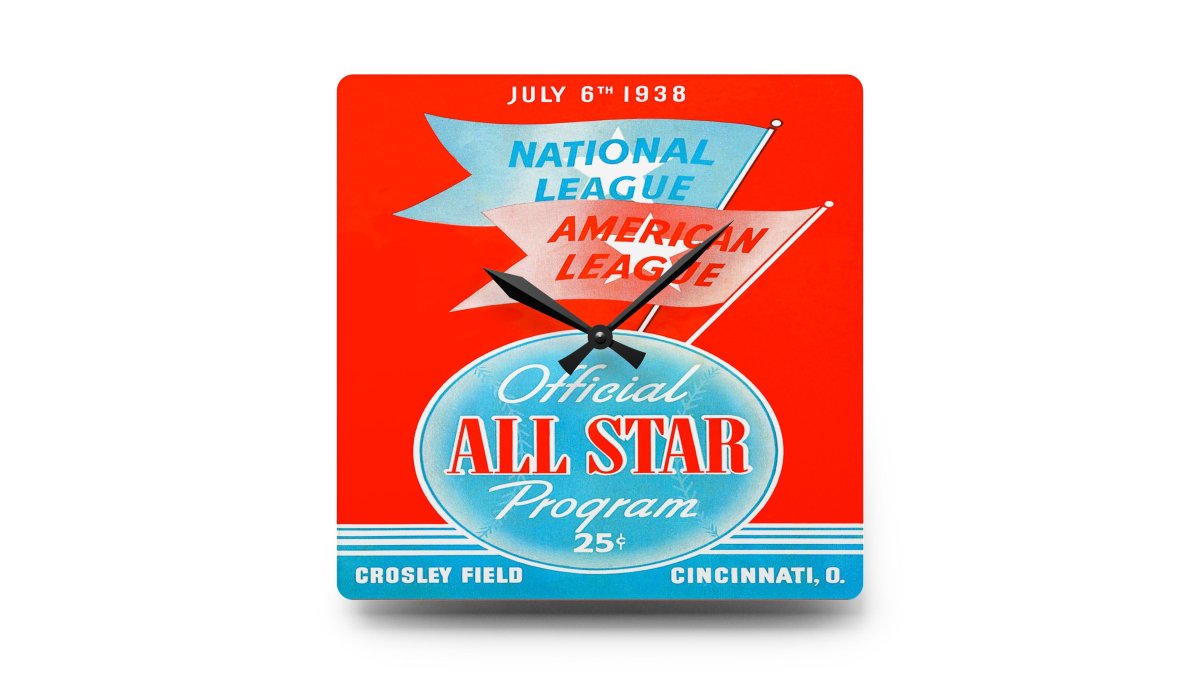
Yes, mixing vintage and modern sports decor creates depth and sophistication when done thoughtfully. Pair a vintage pennant with a sleek modern wall clock, or display old jerseys alongside contemporary photography. The trick is maintaining a cohesive color palette and using consistent framing or mounting styles. This approach works especially well in man caves and game rooms, where you can celebrate both sports history and contemporary design sensibilities.
What are the best ways to display sports collectibles professionally?
Use acid-free framing for jerseys and prints to prevent deterioration. Install display shelves with proper lighting to highlight collectibles. Mount items at eye level and create visual balance by grouping related pieces. Avoid overcrowding; spacing between items draws attention to each piece. For valuable memorabilia, consider shadow boxes with UV-protective glass. Acrylic wall clocks featuring vintage sports imagery, like the 1938 All-Star Game design priced at $58.95, combine display function with modern durability.
How do I incorporate vintage sports decor into a minimalist home?
Select one or two statement pieces rather than many small items. A single large vintage clock or framed memorabilia becomes a focal point without clutter. Use a neutral color palette (blacks, grays, whites) to keep the space feeling open. Ensure pieces have clean lines or modern framing. Minimalist sports decor works best when each item tells a story or holds personal meaning, making the space feel intentional rather than crowded.