

Table of Contents
- Why Vintage Jerseys Deserve Better Than a Closet
- How to Frame a Vintage Jersey: Pro Techniques
- Wall-Mounted Display Systems That Protect Your Gear
- Repurposing Old Jerseys Into Blankets and Art
- Locker Room and Man Cave Decor Ideas
- How to Clean Vintage Sports Jerseys Before Displaying
- What Is Your Vintage Jersey Worth? Display vs. Preserve
- Conclusion: Give Your Collection a Second Life
- Frequently Asked Questions
Last Updated: September 8, 2026
Why Vintage Jerseys Deserve Better Than a Closet
That old jersey tucked in a drawer carries the weight of a specific season, a legendary play, or a summer spent listening to games on the radio. Displaying vintage jerseys turns a personal memory into a centerpiece that sparks conversation.
This guide walks through unique ways to display vintage jerseys while protecting the fabric for decades, covering professional framing, damage-free mounting for renters, and creative repurposing, plus the cleaning steps you need before anything goes on the wall.
How to Frame a Vintage Jersey: Pro Techniques
Jersey framing is the gold standard for displaying vintage jerseys because it offers complete protection from dust, moisture, and curious hands. The difference between a good frame job and a great one comes down to materials and technique.
A common mistake is taking a jersey to a big-box frame shop that treats it like a photo. Sports jerseys need a custom frame with enough depth, usually 1.5 to 2 inches, to avoid crushing, and cost more than standard framing due to specialized mounting and archival materials.
Shadow Box Assembly and Archival Materials
A shadow box is the most popular frame style for jerseys because its depth creates a museum-quality presentation. The key is using archival-quality materials, acid-free matting and backing boards, since standard cardboard contains acids that can leach into the jersey and cause yellowing or brittleness.
When assembling a shadow box, never use pins that puncture the fabric. Use conservation-grade stitching or Velcro straps that hold the jersey gently by the shoulders or side seams, leaving the sleeves positioned naturally. For signed jerseys, face the autograph forward and add a small plaque or the ticket stub from that game below it.
The Mounting Mechanics: What Pros Do Differently
Professional framers rarely rely on a single method, combining techniques depending on the jersey's condition and weight. Here's what separates a pro job from a DIY attempt:
- Stitching vs. Straps: For heavy game-worn jerseys, pros use conservation-grade polyester thread to stitch the jersey directly to a fabric-covered backing board. This distributes weight evenly and prevents sagging. For lighter replicas, clear nylon straps threaded through the shoulder seams are sufficient. Avoid adhesive tapes, they leave residue that becomes permanent over time.
- Spacer Depth: The spacer between the jersey and the glass must be at least 1 inch for a standard jersey. If you're framing a jersey with thick embroidered patches or a sewn-on nameplate, you need 1.5 inches or more. Measure the thickest point of the jersey before ordering a frame.
- UV-Protective Glass: Standard glass blocks almost no UV radiation. Acrylic glazing labeled "UV-filtering" blocks 97-99% of UV rays. This is non-negotiable for signed jerseys or any shirt with original screen printing, which fades fastest.
- The "L" Pin Alternative: Some framers use stainless steel "L" pins that anchor the jersey from behind, hidden from view. These pins pierce the fabric but are placed along the inside seam where damage is invisible. This method is faster and cheaper than stitching but should only be used on jerseys with intact seams.
Cost Reality Check: DIY vs. Professional
A custom shadow box from a professional sports memorabilia framer typically runs between $200 and $500 depending on frame size, glass type, and mounting complexity. A DIY approach using a pre-made shadow box from a craft store, archival backing, and UV acrylic runs $60 to $120. The trade-off is precision: professional framers have the tools to stretch the jersey perfectly flat without distorting the crest, and they guarantee their work against sagging.
Wall-Mounted Display Systems That Protect Your Gear
Wall-mounted display systems let you swap jerseys seasonally or show off several at once without the expense of multiple custom frames. These systems use a hanging rod or clamp mechanism that grips the jersey by the shoulders, allowing it to hang naturally.
The trade-off is protection, since an open display leaves the jersey exposed to UV rays, dust, and airborne pollutants. Dedicate wall space away from direct sunlight and consider a UV-protective spray designed for textiles. For a middle ground, some display cases mount flush to the wall with a hinged acrylic front.
Damage-Free Hanging for Renters
Damage-free hanging systems use adhesive strips or tension rods instead of nails and screws. For lightweight jerseys, museum-grade adhesive strips rated for the weight of a framed jersey work well and remove cleanly when you move out.
Heavier framed jerseys need a different approach. Use a freestanding display easel on a shelf or dresser, which requires no wall damage at all. Alternatively, install a picture rail system that hooks over the top of the wall molding, a common feature in older apartments.
Repurposing Old Jerseys Into Blankets and Art
If you have a stack of shirts that are stained, torn, or simply too small, repurposing old jerseys into blankets gives them a second life as functional art. A t-shirt quilt or a fleece-backed jersey blanket turns a collection of memories into something you actually use on game days.
The process involves cutting the jerseys into equal squares, stabilizing the knit fabric with interfacing, and sewing them together with a backing layer, a substantial DIY project requiring a sewing machine and several hours of work. For those who want the result without the labor, MoonlightWeave specializes in transforming vintage memorabilia into unique, handcrafted fabric goods and home accessories. Another option is stretching a single jersey over a wooden canvas frame for simple wall art without any sewing.
| Method | Best For | Skill Level | Protection Level |
|---|---|---|---|
| Custom Shadow Box | Signed or high-value jerseys | Professional recommended | Highest |
| Wall-Mounted Hanger | Rotating a casual collection | Easy | Low |
| Jersey Blanket | Damaged or multiple jerseys | Intermediate sewing | N/A |
| Canvas Stretch | Single jersey front crest | Easy | Medium |
Locker Room and Man Cave Decor Ideas
The vintage aesthetic works best when it feels like a time capsule, not a showroom. A styled corner with a framed jersey on the wall, a weathered leather chair, and a vintage baseball doormat on the floor creates a lived-in, authentic space.

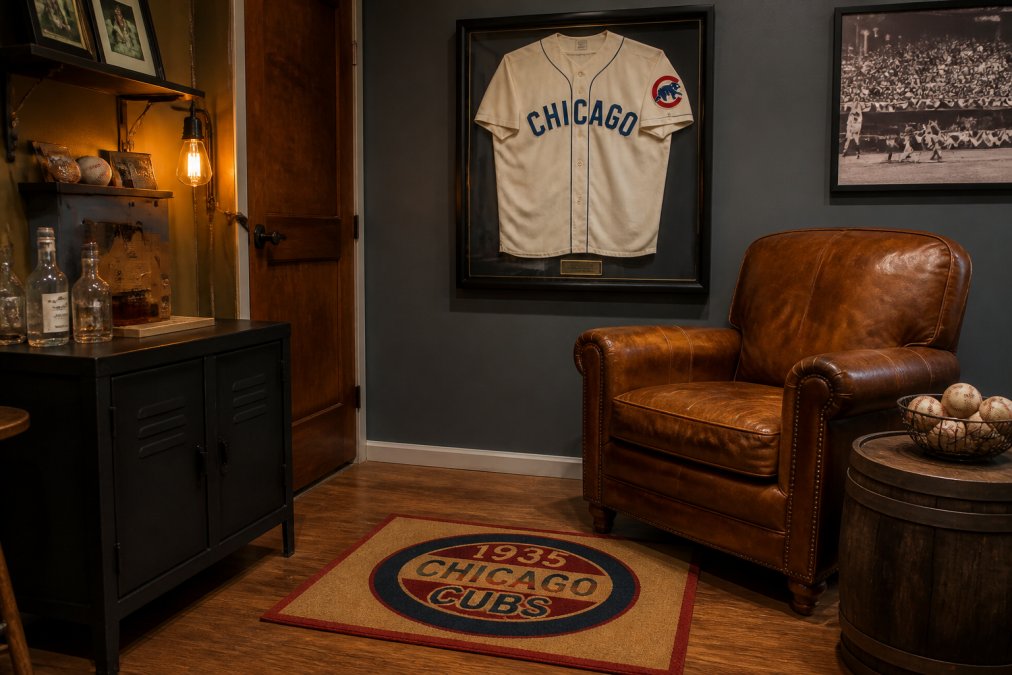
Start with one hero piece, usually the most valuable or sentimental jersey, and build the room around it. Use a wall collage of smaller items like ticket stubs, press photos, and a vintage pennant to fill the space without overwhelming the main display. For a locker room feel, install a metal locker or wooden cubby shelf next to the jersey for game-day essentials.
To tie the theme together, consider adding a Baseball Doormat - 1935 Chicago Cubs at the entry to the room. Priced at $52.95, this eco-friendly coir mat features a retro design that instantly signals the vintage sports vibe you've created on the walls.
How to Clean Vintage Sports Jerseys Before Displaying
Cleaning is the step everyone skips, and it's the one that determines whether your display vintage jerseys project succeeds or ruins the shirt. Never wash a vintage jersey in a standard machine, agitation can tear weakened seams, and modern detergents can strip original dyes.
Know Your Fabric First
Vintage jerseys fall into three broad categories, each requiring different care:
- Wool flannel (pre-1950s): These are the most fragile. Wool absorbs moisture and can shrink or felt if exposed to water. Never submerge a wool jersey. Dry-clean only, or vacuum gently with a low-suction hose attachment.
- Cotton mesh (1950s-1980s): These are more forgiving but prone to dye bleeding. If the jersey has screen-printed numbers or letters, the ink may crack or flake with any agitation.
- Polyester double-knit (1970s-present): The most durable, but polyester traps oils and odors. These can tolerate gentle hand-washing in cold water with a mild detergent.
The Spot-Cleaning Protocol
For light dust, use a lint roller or soft brush with gentle strokes. For stains, spot-clean with a mild detergent diluted in cold water, testing on an inside seam first. Avoid bleach and fabric softeners completely. Here is the step-by-step method textile conservators recommend for localized stains:
- Test first: Apply the diluted detergent to a cotton swab and dab an inside seam. Wait 10 minutes. If any color transfers to the swab, stop immediately and consult a professional.
- Work from the outside in: Using a clean white cloth dampened with the solution, blot the stain gently. Never rub, rubbing pushes the stain deeper into the fibers.
- Rinse with a damp cloth: Use a separate cloth with only cold water to remove detergent residue. Detergent left in the fabric attracts dirt over time.
- Air dry flat: Lay the jersey on a clean, dry towel and reshape it to its original dimensions. Never hang a wet vintage jersey, the weight of the water will stretch the shoulders.
The Conservation Angle: What Most Guides Miss
After cleaning, the next threat is environmental. The Library of Congress and the Smithsonian both publish textile preservation guidelines emphasizing three factors: light, temperature, and humidity. For a display jersey, that means:
- Light: UV radiation is the single biggest cause of fading. Even indirect sunlight through a window can fade screen-printed numbers within a few years. If your display area gets any natural light, use UV-filtering acrylic glazing or position the jersey on a wall opposite the window.
- Humidity: Basements and garages are common man cave locations, but they are also the worst environments for textiles. Humidity above 55% encourages mold growth and can cause the fabric to become brittle as it cycles between wet and dry. Use a dehumidifier in the room if you're displaying in a below-grade space.
- Temperature swings: Attics and garages experience extreme temperature swings that cause the fabric to expand and contract, weakening the fibers over time. A climate-controlled living space is always the best choice.
When to Call a Professional
If the jersey is heavily soiled, has significant value, or is made of wool, take it to a professional textile cleaner who specializes in sports memorabilia. They have the equipment to clean the fabric safely without damaging letters, patches, or autographs. Expect to pay $75 to $150, a fraction of the cost of replacing a damaged jersey.
What Is Your Vintage Jersey Worth? Display vs. Preserve
Before you drill holes or cut fabric, assess what you own. A game-worn or autographed jersey from a Hall of Fame player holds significant collector value, and how you display it directly impacts that worth. Improper mounting, exposure to light, or any damage from cleaning can cut its resale value dramatically.
For high-value pieces, professional framing with UV-protective glass is the only safe option. The conservation guidelines from the Smithsonian emphasize controlling light, temperature, and humidity to slow textile degradation. For casual fan jerseys worth less, you have more freedom to experiment with hanging systems or repurposing. The American Institute for Conservation recommends keeping any textile display away from direct sunlight and high-traffic areas where it could be brushed or bumped.
A good rule of thumb: if you wouldn't let a child wear it to a game, treat it as a collector item and frame it properly. If it's a shirt you'd happily toss in a bag for a road trip, feel free to turn it into a blanket or hang it on a simple rod.
Conclusion: Give Your Collection a Second Life
Your vintage jerseys are physical links to the players, teams, and moments that shaped your love of the game. Whether you choose the museum-quality route of a custom shadow box, the flexibility of a wall-mounted system, or the cozy comfort of a repurposed blanket, the goal is the same: get them out of the dark and into your daily life.
The process requires care, from cleaning to mounting, but the payoff is a home that reflects your sports heritage. For jerseys you're ready to transform into something entirely new, MoonlightWeave crafts your memorabilia into handcrafted blankets, doormats, and decor that keep the memory alive in a functional way. Explore textile preservation best practices before you start, then make the choice that fits your space and your collection.
Frequently Asked Questions
What are some creative ways to display jerseys without damaging them?
Use a shadow box with UV-protective acrylic or a wall-mounted display case designed for jerseys. For damage-free hanging, try magnetic jersey frames or clip-style hangers that don't puncture the fabric. Always wash your hands before handling and keep the display away from direct sunlight to prevent fading. If you want to display vintage jerseys without committing to a permanent frame, a padded hanger inside a glass-front cabinet works well and lets you rotate your collection.
Are vintage jerseys worth anything?
Some vintage jerseys hold significant value, especially game-worn, autographed, or rare team-issue pieces. A signed jersey from a Hall of Fame player can be worth thousands, but condition, provenance, and rarity drive the price. Even common vintage jerseys from the 1970s or 1980s can fetch $50 to $200 among collectors. Before drilling holes or applying adhesive, get an appraisal if you suspect your jersey is valuable. Professional conservation methods protect your investment while still letting you enjoy it on the wall.
How do you hang a jersey on a wall without a frame?
Use a wide wooden hanger or a dedicated jersey display hanger, then mount a hook or wall cleat behind it. For a floating look, try magnetic clips that grip the shoulders without piercing the fabric. Another option is a shadow box frame with pins positioned inside the seams, which keeps the jersey visible but protected. If you want to display vintage jerseys in rotation, a curtain rod with clip hangers lets you swap pieces easily without committing to one frame.
Can I turn old jerseys into blankets or other home decor?
Yes. Repurposing old jerseys into blankets is a popular way to preserve sentimental fabric that's too worn for display. You can sew jersey panels into a quilt, or send them to a company that weaves them into a fleece blanket. MoonlightWeave also turns vintage sports memorabilia into unique, handcrafted fabric goods and home accessories. A 1935 Chicago Cubs doormat at $52.95 brings that same nostalgic team spirit to your entryway without risking damage to a valuable original.
The challenge is deciding which jersey deserves the spotlight first. Whether you frame it, hang it, or weave it into a blanket, MoonlightWeave can help you display vintage jerseys in a way that honors their history. Browse our collection of handcrafted sports decor and continue shopping for a piece that turns your memories into everyday art.