

Table of Contents
- Is Custom Memorabilia Worth the Cost? The Real Answer
- Personalized Autograph Value and Market Demand
- Custom Sports Card Resale Value: What Collectors Actually Pay
- Collectible Authentication Standards and Professional Costs
- Sentimental Value vs. Monetary Investment
- Provenance, Condition, and Long-Term Asset Appreciation
- Preservation, Insurance, and Tax Implications
- Pros and Cons of Custom Memorabilia
Is Custom Memorabilia Worth the Cost? A Buyer's Guide
Last Updated: August 4, 2026
When collectors and sports fans ask whether is custom memorabilia worth the cost, they're really asking two things: Will this hold its value? Will it make me happy? At MoonlightWeave, we've watched these conversations play out for years, and the answer is almost never simple. Some custom pieces appreciate meaningfully over time. Others sit in boxes, emotionally precious but financially flat. The difference comes down to authentication, provenance, personalization choices, and market demand.

Is Custom Memorabilia Worth the Cost? The Real Answer
Custom memorabilia worth evaluating depends entirely on your goal. If you're buying for display and sentimental value, cost becomes secondary, a $50 custom piece that brings daily joy outweighs a $500 unsigned item gathering dust. But if you're treating memorabilia as an investment, the financial calculation shifts dramatically.
The critical insight most buyers miss: personalization typically reduces resale value. A signed baseball worth $200 unsigned drops to $120 when inscribed with your name. That's because personalization narrows the potential buyer pool. Collectors want pristine, unaltered signatures they can resell to anyone.
Custom framing, preservation work, and handcrafted transformations can add value if executed professionally. MoonlightWeave specializes in transforming vintage memorabilia into unique, handcrafted fabric goods and home accessories, turning old jerseys, vintage scorecards, and faded pennants into functional pieces like blankets, doormats, and clocks. These pieces gain value as one-of-a-kind home decor that commands premium pricing because they're irreplaceable.
The honest answer: Custom memorabilia is worth the cost if you're buying it for yourself or as a gift. It's rarely worth the cost if you're hoping to resell it later for profit.
Personalized Autograph Value and Market Demand
A personalized autograph sits in an awkward middle ground in the collector market. Unsigned memorabilia from a famous athlete might sell for $300. That same item signed but personalized to "John" drops to $150 or lower if the inscription is prominent.
Why does personalization tank value so aggressively? The secondary market for autographed memorabilia is built on fungibility. A collector buying a signed item wants options: sell it to another collector, trade it, or display it without feeling like it belongs to someone else. Personalization breaks that chain.
Market demand for personalized autographs exists but is narrow. Parents buying for children, fans commemorating specific moments, and gift-givers looking for something unique will pay premium prices. But the moment the original recipient wants to sell, that premium evaporates.
The exception: authenticated personalized autographs from deceased athletes sometimes appreciate over decades because scarcity increases. A personalized signature from a Hall of Famer who passed away 20 years ago becomes harder to find, and collectors value historical significance over pristine condition.
If you're considering a personalized autograph, ask yourself: Am I buying this to keep forever, or might I sell it someday? Your answer determines whether personalization makes financial sense.
Custom Sports Card Resale Value: What Collectors Actually Pay
Custom trading cards represent one of the most honest segments of the memorabilia market because pricing is transparent. Platforms like eBay and specialty card marketplaces show exactly what collectors will pay, right now.
A standard 1990s rookie card in mint condition sells for its book value. The same card customized with a player's photo or personal inscription sells for 40-60% of the standard price. Collectors of vintage cards want originals. Customization reads as alteration.
However, true one-of-one custom trading cards, where the card itself is created from scratch incorporating memorabilia inserts, operate in a different market. A custom card featuring a piece of an actual game-worn jersey can command $200-$500 from the right buyer, even though it has no traditional "book value."
The resale reality: Custom sports cards have resale value only if they're genuinely unique, professionally produced, and incorporate authentic memorabilia. Mass-produced customization has virtually no resale market.
If you're spending money on custom sports cards, treat them as keepsakes, not investments.
| Memorabilia Type | Standard Resale Value | Personalized Resale Value | Appreciation Potential |
|---|---|---|---|
| Autographed rookie card | 80-120% of book value | 30-50% of book value | Moderate (5-10 years) |
| Custom trading card (one-of-one) | N/A | $150-$500 | Low (sentimental only) |
| Personalized autograph | Varies | 40-60% of unsigned price | Low to moderate |
| Framed vintage memorabilia | 70-90% of original | 80-110% of original | Moderate to high |
Collectible Authentication Standards and Professional Costs
Authentication is where custom memorabilia decisions get expensive fast. A professional authentication service charges $25 to $150 per item depending on the piece's value and turnaround time. For a $50 custom item, that's a 50-300% premium just to verify authenticity.
Most custom memorabilia doesn't need professional authentication because it's not being sold. You know where it came from. Professional grading makes sense for high-value vintage pieces or items you plan to resell. For custom work you're keeping, it's often unnecessary expense.
If your custom piece incorporates authenticated memorabilia (a piece of a signed jersey, a fragment from a game-worn item), professional documentation of that authenticity becomes valuable. The authentication cost, typically $50-$100, adds legitimacy and protects resale value.
MoonlightWeave's approach bypasses some of this complexity because the brand transforms memorabilia into functional items rather than investment-grade collectibles. A 1956 Baseball Baltimore Golf Towel ($23.95) or 1967 World Series Ticket St Louis Doormat ($57.95) doesn't require authentication because the value proposition is authenticity of material and craftsmanship, not collectible grading.

Authentication costs matter most when mixing custom personalization with valuable original pieces. If you're personalizing a $2,000 autograph, authentication becomes critical. If you're personalizing a $50 item, skip professional grading and enjoy the piece.
Sentimental Value vs. Monetary Investment
This is where most memorabilia decisions go wrong: buyers conflate emotional attachment with financial worth. A custom piece that makes you smile every day is genuinely valuable, just not in a way the secondary market recognizes.
Sentimental memorabilia operates under different economics than investment-grade collectibles. You're not buying it to sell. You're buying it to own, display, and remember. In that context, custom personalization becomes an asset, not a liability.
The mistake happens when buyers assume sentimental value translates to resale value. It doesn't. A piece deeply meaningful to you is often meaningless to someone else.
Here's the honest framework: Ask yourself before buying custom memorabilia, "Would I be disappointed if this never appreciated in value?" If yes, you're buying for investment. If no, you're buying for yourself. That answer determines whether cost matters.
For investment-grade purchases, stick with authenticated, unaltered, historically significant pieces. For personal enjoyment, custom memorabilia is worth whatever brings you happiness.
Provenance, Condition, and Long-Term Asset Appreciation
Provenance, the documented history of ownership and authenticity, is the single most important factor determining whether memorabilia appreciates over time. A signed baseball with clear provenance appreciates steadily. The same ball without provenance sits flat or depreciates.
Custom memorabilia rarely has strong provenance because it's new. However, provenance of the source material matters. A custom piece incorporating a documented game-worn jersey has stronger provenance than one using an unverified vintage item.
Condition directly impacts value. A mint-condition signed item appreciates. A worn, handled, or damaged piece depreciates regardless of authenticity. Custom work should prioritize preservation-grade materials: archival matting, UV-protective glass, and acid-free framing.
Rare, authenticated, well-preserved items from deceased or retired athletes appreciate 3-8% annually on average. Custom pieces that aren't investment-grade don't follow this pattern. Their value depends on whether someone specific wants them.
If you're hoping for long-term appreciation, buy authenticated, unaltered pieces with clear provenance. If you're buying custom work, focus on preservation and enjoy the piece now.
Preservation, Insurance, and Tax Implications
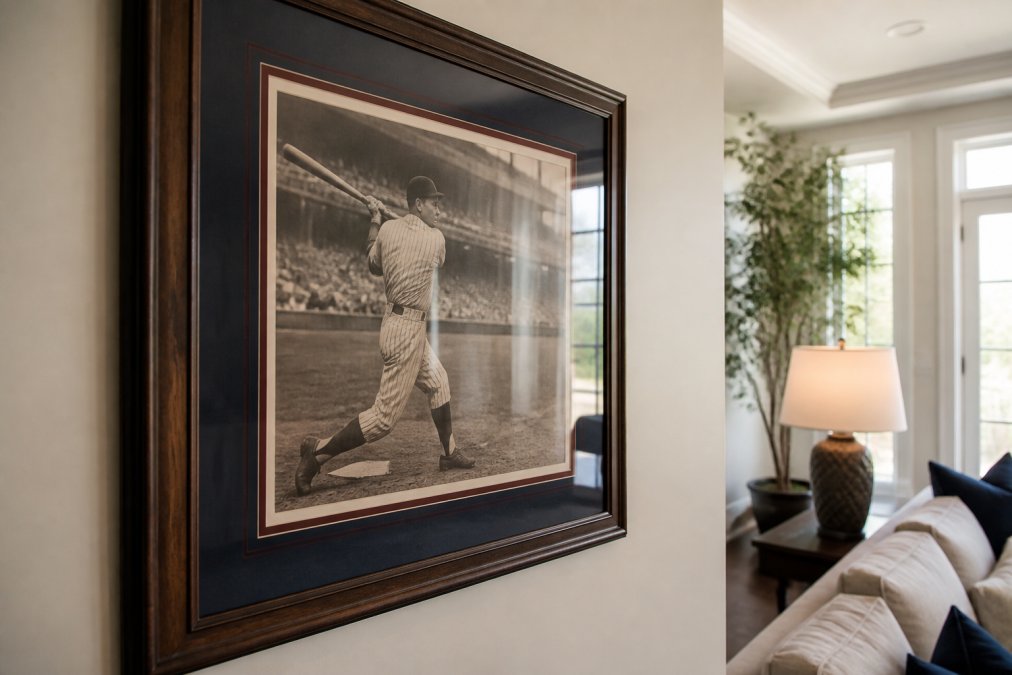
Preservation costs money, and most collectors underestimate how much. Proper storage for valuable memorabilia requires climate control (65-70°F, 45-55% humidity), UV-blocking display cases, and acid-free materials. A single high-value piece can cost $200-$500 annually to maintain correctly.
Custom pieces created from vintage materials require the same preservation standards as the originals. A blanket made from vintage baseball jerseys needs archival storage, protection from sunlight, and careful handling.
Insurance adds another layer. Homeowners' policies typically cap collectibles coverage at $1,000-$2,500 total. Specialized collectibles insurance costs 1-3% of the item's appraised value annually. For custom items, insurance makes sense only if the piece is genuinely irreplaceable or incorporates high-value source materials.
Tax implications matter when you're selling. If you buy memorabilia for $1,000 and sell it for $1,500, that $500 gain is taxable income. The IRS treats collectibles as capital assets taxed at ordinary income rates, capped at 28% federal tax. This is significantly higher than the 15% long-term capital gains rate for stocks, making memorabilia a less attractive investment vehicle than equities.
For custom pieces you're keeping, tax implications are minimal. For pieces you're considering selling later, factor in 20-28% federal tax on gains, plus state taxes.
Pros and Cons of Custom Memorabilia
Pros:
-
Uniqueness and personalization. You own something no one else has. A custom piece incorporating your memorabilia is genuinely one-of-a-kind.
-
Functional beauty. Unlike a framed autograph that sits on a shelf, custom pieces from MoonlightWeave (like the 1967 World Series Ticket St Louis Doormat at $57.95) integrate memorabilia into daily life.

1967 World Series Ticket St Louis Doormat | Vintage Baseball Memorabilia -
Emotional resonance. Custom work transforms objects with sentimental meaning into display pieces. A child's championship jersey becomes a blanket. A vintage scorecard becomes a doormat.
-
Preservation through transformation. Fragile vintage items get a second life as protected, usable pieces. You're preserving the memory while making it functional.
-
Lower authentication costs. Custom pieces don't require expensive professional grading. Verification is straightforward.
Cons:
-
Resale value collapse. Personalized or customized memorabilia loses 40-70% of its value compared to authenticated, unaltered pieces.
-
Narrow buyer pool. Custom pieces appeal to the original owner or someone with a specific emotional connection. The secondary market is tiny.
-
No investment appreciation. Unlike rare, authenticated memorabilia that appreciates 3-8% annually, custom pieces don't appreciate.
-
Preservation and insurance costs. Proper storage and insurance add $100-$500+ annually for high-value pieces.
-
Irreplaceability risk. If your custom piece is damaged, lost, or stolen, it's gone forever. You can't buy another one.
-
Tax complications when selling. Capital gains taxes apply at ordinary income rates (up to 28% federal), not the lower long-term capital gains rate.
The bottom line: Custom memorabilia is worth the cost if you're buying it for yourself, your home, or as a meaningful gift. It's rarely worth the cost if you're hoping to resell it later or treat it as an investment. The pieces that bring daily joy, like a 1961 Chicago Baseball Spring Training Mixing Glass ($21.95) displayed on your bar cart or a vintage-themed doormat greeting guests, justify their cost through use and emotional value. Buy custom memorabilia to keep. Buy authenticated, unaltered pieces if you want investment potential. Don't try to do both.
Frequently Asked Questions
Does personalization reduce the resale value of memorabilia?
Personalized items typically have lower resale value than non-personalized versions of the same memorabilia. A personalized autograph or custom inscription narrows the buyer pool to people who appreciate that specific personalization. Non-personalized memorabilia appeals to a broader collector market, making it easier to sell at secondary market rates. However, personalized pieces often retain strong sentimental value for the original recipient, making them better suited as keepsakes than investments.
What's the typical cost of professional authentication for sports memorabilia?
Professional authentication costs vary by item type and service. Third-party grading services like PSA and Beckett typically charge $20-$500+ per item depending on the memorabilia's estimated value and the service tier selected. High-value items (autographed jerseys, rare cards) command premium authentication fees. Budget-conscious collectors should factor authentication costs into their total investment when considering custom sports card resale value or other collectible purchases. Always use established grading services recognized in the collector market.
Should I insure custom memorabilia, and how does that affect my taxes?
High-value custom memorabilia should be insured as part of your homeowner's or renter's policy, or through a separate collectibles rider. Document provenance and condition with photos and appraisals. For tax purposes, memorabilia held as a personal collection typically doesn't trigger capital gains until you sell it. If you sell custom memorabilia at a profit, the gain is taxable income. Keep records of purchase price, authentication certificates, and sale documentation. Consult a tax professional if selling significant collections, as treatment varies by circumstances.
Is custom memorabilia a better investment than buying pre-made vintage pieces?
Custom memorabilia excels as a sentimental keepsake but typically underperforms as a pure financial investment compared to authenticated vintage pieces with established collector demand. Pre-made vintage memorabilia has transparent market pricing and broader resale liquidity. Custom pieces lack comparable market data and appeal primarily to the original owner. If your goal is asset appreciation, focus on rarity, condition, and provenance. If you want meaningful home decor that celebrates your memories, custom handcrafted items offer genuine value despite lower resale potential.
What factors affect whether custom memorabilia will hold its value?
Several factors determine long-term value: authenticity (third-party certification helps), condition (preservation through archival framing matters), provenance (documented history of the original memorabilia), market demand (signature or team popularity), and rarity (one-of-a-kind handcrafted pieces have niche appeal). Custom personalization typically reduces secondary market value but increases emotional worth. Items incorporating verified vintage memorabilia perform better than purely new custom creations. Consider whether you're buying for personal enjoyment or investment potential, this distinction shapes which factors matter most.
This article was written using GrandRanker