

Table of Contents
- Why Custom Fabric Wall Art Is Gaining Ground in 2026
- Fabric vs Canvas Wall Art Comparison: Texture, Weight, and Visual Impact
- Durability and Fade Resistance: How Long Does Custom Fabric Wall Art Last?
- Is Vintage Sports Decor a Good Investment? Long-Term Value and Resale
- How to Clean Fabric Wall Art Without Damaging the Print
- Acoustic Benefits and Environmental Impact: The Angles Most Buyers Miss
- Customization Options, Technical File Requirements, and Cost Factors
- Conclusion: When Custom Fabric Wall Art Is Worth It for You
- Frequently Asked Questions
Last Updated: September 16, 2026
Why Custom Fabric Wall Art Is Gaining Ground in 2026
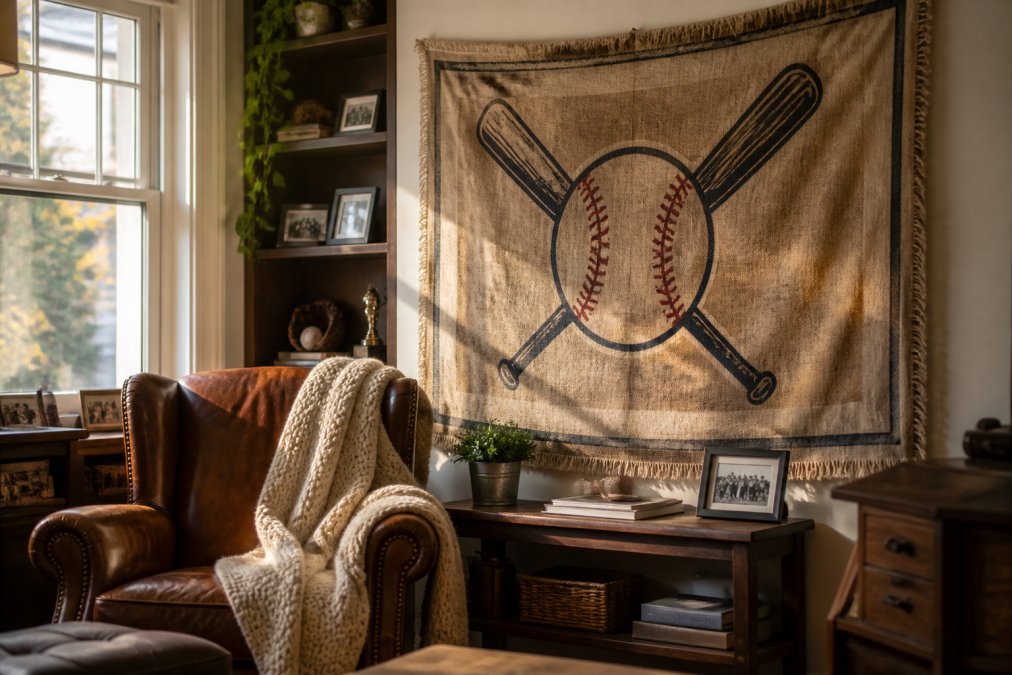
Custom fabric wall art is printed artwork produced on woven textiles rather than canvas or paper, and it has moved from a niche craft purchase to a mainstream decor choice. At MoonlightWeave, we've watched that shift among sports fans who want their memorabilia on the wall, not in a box.
Fabric vs Canvas Wall Art Comparison: Texture, Weight, and Visual Impact
Fabric and canvas differ most in surface texture, weight, and response to light. Fabric prints carry a subtle woven grain that softens reflections, while canvas shows a pronounced weave pattern that can compete with fine detail.
Surface Texture and Aesthetic Appeal
Fabric reads as textile art rather than a stretched print: the weave adds depth, and the matte surface keeps colors from glaring under overhead lights. Canvas has a coarser tooth that suits bold graphic work but can muddy sharp photographic detail.
Fabric Weight and Installation Differences
Fabric prints are generally lighter than stretched canvas of the same size, which matters past roughly 60 centimeters wide. Lighter panels need less hardware and stress drywall less. Canvas can sag if stretcher bars aren't solid; fabric hangs flat from a rod or rail.
| Factor | Fabric Wall Art | Canvas Wall Art |
|---|---|---|
| Surface texture | Fine woven grain, matte | Coarse weave, slight sheen |
| Weight (large sizes) | Lighter | Heavier |
| Installation | Rod, rail, or frame | Stretcher bars, hooks |
| Best for | Textile look, soft detail | Bold graphic prints |
Durability and Fade Resistance: How Long Does Custom Fabric Wall Art Last?
A well-printed fabric panel kept out of direct sun typically holds its color for years. Longevity comes down to four things: ink chemistry, weave density, pretreatment, and placement. Get all four right and a fabric print can outlast a comparable canvas print; get one wrong and it can look tired within a season.
The Ink System Is the Single Biggest Variable
Three ink systems dominate custom fabric printing:
- Dye sublimation. Heat transfers dye gas into polyester fibers, so the color lives inside the fabric rather than on top of it. The print won't crack or peel because there's no surface coating to fail. It's the most durable option for synthetics, and why sublimated sports jerseys survive years of washing.
- Pigment-based digital printing. Pigment particles sit on a pretreated coating. They resist fading better than dye inks on natural fibers like cotton and linen, but the coating can abrade if rubbed repeatedly.
- Solvent and latex inks. Common for large-format commercial work. Latex is water-based and lower-odor; solvent is durable but carries a stronger chemical profile. Both are less common for home decor panels.
Buyers often focus on the design and never ask about ink. Ask any printer what ink system they use before you commit, it's the difference between a piece that lasts a decade and one that fades in two summers.
Lightfastness Ratings and What They Actually Mean
Printers and suppliers often publish a lightfastness rating, usually in hours of exposure under controlled light or on a blue-wool scale. Higher ratings mean slower fading under the same light load, but the rating assumes a specific intensity, so it's a comparison tool, not a guarantee, a panel rated for thousands of hours under museum lighting will still fade faster in a sun-drenched room.
Wear and Tear in High-Traffic Rooms
Hallways, kids' rooms, and stairwells punish wall decor. Fabric handles this better than paper because the weave absorbs minor scuffs and won't crack like a rigid coated surface. The real risk is abrasion from constant brushing, so keep panels above shoulder height in narrow corridors.
Color Fastness and Archival Quality
Color fastness describes how well a print resists fading from light and time. Dye sublimation and pigment-based digital printing both perform well when the fabric is pretreated, and archival-quality inks resist yellowing far better than budget alternatives. Pretreatment is the quiet variable: an improperly coated fabric won't hold pigment evenly, and the print can look blotchy even if the ink is good.
A Realistic Lifespan Estimate
Most practitioners find that a quality fabric print in indirect light holds strong color for many years, while the same print in direct afternoon sun can soften noticeably within a couple of years. That gap is larger than the gap between most ink systems, placement beats spec sheet.
Is Vintage Sports Decor a Good Investment? Long-Term Value and Resale
Vintage sports decor is a good investment only when it's tied to genuine memorabilia, not reproductions. A signed jersey or original program holds value because collectors want the artifact; a printed reproduction is decor, not an asset.
How to Clean Fabric Wall Art Without Damaging the Print
The safest way to clean fabric wall art is dry dusting with a soft brush or a vacuum on its lowest setting with a brush attachment. Never soak a mounted panel or scrub a printed surface.
A simple routine:
- Dust every two to four weeks with a dry microfiber cloth
- Vacuum gently along the weave, not across it
- Spot-treat only with a barely damp cloth and mild soap, then blot dry
- For framed pieces, clean the frame and glass, not the fabric
- For removable panels, follow the printer's care label before washing
Acoustic Benefits and Environmental Impact: The Angles Most Buyers Miss
Most guides to fabric wall art talk only about looks. Two functional angles change the math on whether a piece is worth it: sound absorption and material sourcing.
How Fabric Wall Art Actually Dampens Sound
Fabric wall art absorbs sound through two mechanisms. First, the porous weave lets sound waves penetrate the surface, where friction inside the fibers converts acoustic energy into a tiny amount of heat instead of reflecting it back into the room. Second, a panel hung with an air gap behind it, on a rod, rail, or standoff frame, creates a cavity that traps and dissipates lower-frequency energy.
What it will and won't do:
- It will soften flutter echo, reduce the sharp slap-back you hear in rooms with hard floors, drywall, and large windows, and make conversation easier in open-plan spaces.
- It will help most in home offices, dining rooms, and living rooms where hard surfaces dominate.
- It won't replace proper acoustic treatment. A single panel absorbs a modest amount of energy; a room with serious echo problems needs multiple panels, bass traps, or purpose-built absorbers.
Environmental Impact and Material Sourcing
Material sourcing matters more than most buyers realize, and it's where sustainability claims deserve scrutiny.
Why This Matters for the 'Worth It' Question
Compared to a paper poster, the fabric version wins on both counts: it absorbs sound instead of reflecting it, and it lasts long enough that you're not re-buying every couple of years. Compared to a purpose-built acoustic panel, it loses on absorption but wins on aesthetics and cost. The honest framing: fabric wall art is a decor purchase with a real but modest functional bonus, not a substitute for acoustic treatment, and not a sustainability statement on its own.
Customization Options, Technical File Requirements, and Cost Factors
Customization is where fabric printing pulls ahead of off-the-shelf decor. You control size, crop, color treatment, and the fabric itself, from a lightweight hanging panel to a heavier upholstery-grade weave.
- Resolution: 300 DPI at final print size for photographic detail
- Color mode: CMYK, since fabric printing doesn't use RGB
- File type: high-quality PDF, TIFF, or PNG
- Bleed: extra margin around the edges for trimming
- Vector art: preferred for logos and text so edges stay crisp
Conclusion: When Custom Fabric Wall Art Is Worth It for You
The honest test is simple. Custom fabric wall art is worth it when you want texture, quiet color, and a piece that fits your room exactly, and when you're willing to hang it out of harsh light and care for it properly.
Frequently Asked Questions
What are the disadvantages of fabric walls?
Fabric wall art can collect dust and may require more careful cleaning than canvas or metal prints. Some fabrics wrinkle if stretched poorly during mounting, and lower-quality digital printing can fade faster in direct sunlight. Fabric also tends to cost more than paper posters, though it typically outlasts them. If you choose a tight-weave fabric with UV-resistant inks and keep it out of harsh sun, most of these drawbacks disappear. The trade-off is usually worth it for the texture and acoustic softness you gain.
Is fabric wall art more durable than canvas?
Fabric wall art often holds up better than canvas in humid rooms because it resists cracking and does not sag the way stretched canvas can over time. Canvas is rigid and can dent or tear if bumped, while a tight-weave fabric flexes and recovers. The key is weave density and print method: dye sublimation and high-resolution digital printing bond color into the fibers, so it survives wear and tear better than a surface coating. For high-traffic areas or rooms with moisture, fabric usually wins on longevity.
Does custom fabric wall art fade over time?
Fading depends on ink type, fabric, and sun exposure. UV-cured inks and dye sublimation printing offer strong fade resistance, often holding color vibrancy for years indoors. Direct sunlight is the main enemy, so placing fabric wall art away from south-facing windows or using UV-filtering glass extends its life. Archival-quality fabrics with high color fastness ratings resist yellowing and dulling far better than standard poster paper. With reasonable care, most custom fabric prints keep their visual impact for a decade or more.
How much does custom fabric typically cost?
Pricing depends on size, fabric weight, print method, and whether you supply your own memorabilia or choose a ready-made design. Larger pieces and specialty weaves cost more, and custom work with personal items usually carries a higher labor charge than mass-produced decor. MoonlightWeave does not publish fixed prices because every order varies. Check the website for current quotes, or reach out with your project details for an accurate estimate before you commit.
The real challenge with wall decor isn't finding something to hang, it's finding something that means something. MoonlightWeave handcrafts vintage memorabilia into fabric goods and home accessories, offering unique pieces with genuine nostalgic value, from sports-themed blankets to functional decor. Continue shopping with MoonlightWeave and turn your memorabilia into something you see every day.