

Table of Contents
- What Makes Handcrafted Sports Decor Different
- Best Materials for Handcrafted Sports Decor
- How to Identify Authentic Sports Memorabilia
- Printing Techniques That Define Quality
- Durability Standards: Wash Resistance and Longevity
- Design Process and Professional Layout
- Budget vs. Quality: Finding Your Sweet Spot
- Sustainability in Handcrafted Sports Decor
Last Updated: August 9, 2026
What Makes Handcrafted Sports Decor Different
Handcrafted sports decor quality represents far more than nostalgia stitched onto fabric. The gap between a piece that fades after six months and one that looks vibrant for years isn't luck, it's deliberate choices made during production. These choices touch everything: fabric weight, ink adhesion method, how appliqué or embroidery is anchored, and whether the design respects the textile's natural limits.
Most buyers assume quality handcrafted sports decor is simply "better made" without understanding what that means. Better could refer to durability, color fastness, visual impact, or how well the piece holds up through washing and handling. This guide breaks down the specific criteria that separate genuinely excellent handcrafted sports decor from pieces that look good in photos but disappoint in real life.
Best Materials for Handcrafted Sports Decor
The material you select determines everything that comes after. Handcrafted sports decor quality depends on choosing substrates that can hold vibrant colors, resist fading, and survive repeated washing without losing their character.
Fabric Weight and Performance
Fabric weight matters more than most people realize. A lightweight cotton blend won't have the structural integrity to hold embroidery tension or support screen-printed ink saturation. Heavier performance fabrics, typically 14-16 ounces for home decor applications, provide the foundation that quality handcrafted sports decor requires.
The weight determines how the piece will hang, drape, and respond to stress. A doormat needs coir fiber or heavy canvas that resists compression and wear. Blankets need breathable cotton or cotton blends that maintain softness through multiple washings. Wall hangings benefit from structured fabrics that won't sag over months or years.
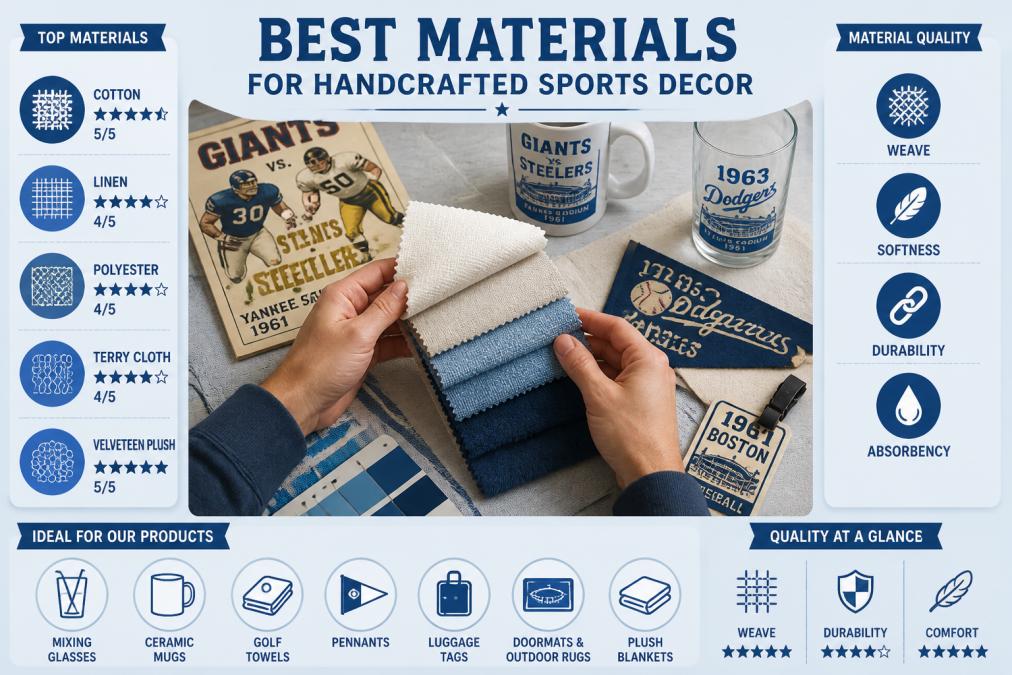
The sweet spot for most handcrafted sports decor is an 80/20 or 85/15 cotton-polyester blend that balances color vibrancy with practical durability. Pure cotton holds vibrant colors longer, while polyester blends offer better wash resistance. MoonlightWeave selects materials specifically for their ability to showcase vintage sports imagery without fading or degradation, like the coir doormats used in the Vintage Kezar Stadium Football Doormat.


Ink Adhesion and Color Fastness
Color fastness, the ability of dyes to resist fading under light, heat, and washing, separates handcrafted sports decor that stays vibrant from pieces that look washed out after a season. Ink adhesion is the technical foundation that makes color fastness possible. Poor adhesion means the ink sits on the fabric surface rather than bonding with the fibers, leading to flaking, cracking, and color loss.
Screen printing achieves strong ink adhesion through heat curing, which bonds plastisol or water-based inks to the fabric at the molecular level. Heat transfer uses pressure and temperature to fuse the design to the substrate. Embroidery uses thread adhesion through tension and knot security.
The best handcrafted sports decor uses inks tested for AATCC (American Association of Textile Chemists and Colorists) standards, which measure color retention after repeated washings and light exposure. When a piece claims excellent color fastness, colors will maintain their depth and saturation through at least 50 washings at standard temperatures.
How to Identify Authentic Sports Memorabilia
Authenticity matters because counterfeit or misattributed vintage sports memorabilia undermines the entire piece. Real vintage sports memorabilia typically shows specific signs of age: slight color shifts, printing imperfections consistent with the era's technology, visible wear patterns, and paper or fabric degradation that's authentic rather than artificially distressed.
Provenance matters. Authentic pieces often come with documentation: original publication information, verifiable ownership history, or authentication from sports memorabilia experts. When sourcing materials for handcrafted sports decor, verify that the vintage imagery comes from legitimate archives, licensed collections, or items you personally own rather than generic "vintage-style" designs created to appear old.
Authentic vintage sports memorabilia carries genuine character and imperfections that tell the story of age and use. Reproductions attempt to mimic that character but often fall flat because they lack the subtle inconsistencies that make vintage items compelling.
Printing Techniques That Define Quality
The method used to transfer your design onto fabric fundamentally shapes the final result. Different printing techniques produce different visual qualities, durability profiles, and aesthetic characteristics.
Screen Printing vs. Heat Transfer
Screen printing involves pushing ink through a mesh screen onto fabric, creating bold, vibrant colors with excellent color fastness. For vintage sports imagery with solid colors and strong contrast, like classic team logos or stadium designs, screen printing delivers unmatched vibrancy and longevity.
Heat transfer uses pressure and temperature to fuse a pre-printed design onto fabric. The process works well for detailed, photographic images with multiple colors and gradients. Heat transfer can reproduce fine details that screen printing struggles with, making it ideal for complex vintage sports photographs. However, heat transfer designs can sometimes feel plastic-like to the touch and may crack if the fabric stretches significantly.
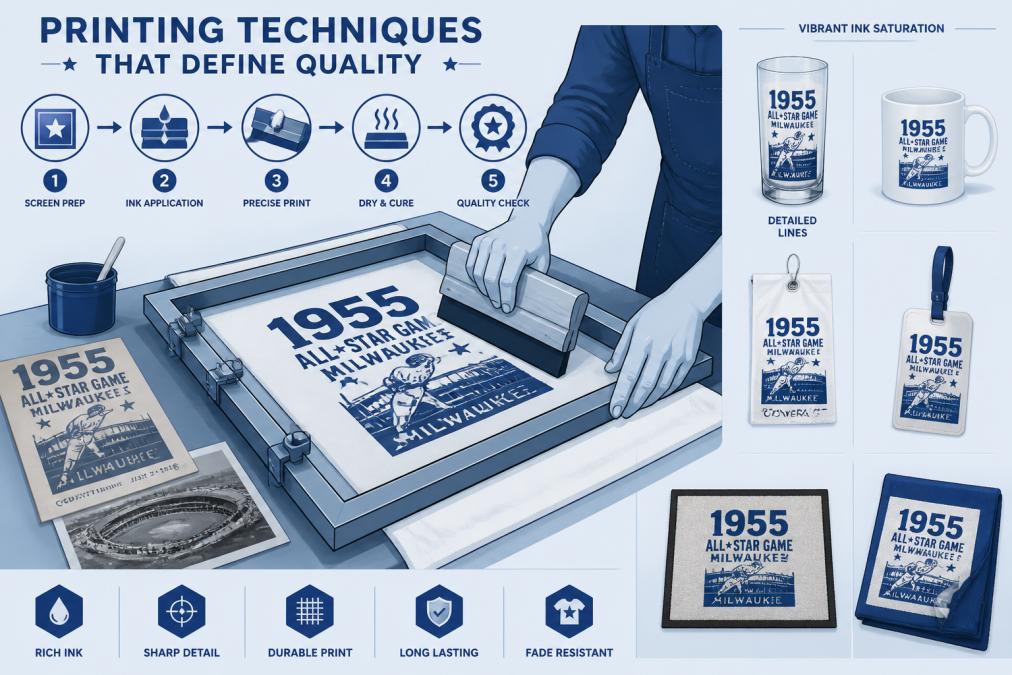
The choice depends on your design characteristics. Bold, graphic vintage sports logos benefit from screen printing's deep saturation. Detailed vintage photographs often work better with heat transfer. The highest handcrafted sports decor quality sometimes combines both methods: screen printing for primary design elements and heat transfer for detailed background elements.
Embroidery and Appliqué Methods
Embroidery adds tactile dimension that printing alone cannot achieve. Thread is stitched directly into the fabric, creating raised texture and visual depth. For handcrafted sports decor, embroidery works exceptionally well for logos, lettering, and design elements that benefit from dimensional impact. The downside is that embroidery is slower and more expensive than printing, but the quality and longevity justify the investment for pieces designed to last decades.
Appliqué involves cutting design elements from one fabric and stitching them onto another, creating layered visual interest. When executed well, it produces handcrafted sports decor that feels genuinely artisanal. The best handcrafted sports decor often uses hybrid approaches: screen printing for the primary image, embroidery for accent elements, and appliqué for dimensional contrast.
Durability Standards: Wash Resistance and Longevity
Durability separates pieces you'll treasure from pieces you'll replace. Wash resistance is the practical measure of whether your handcrafted sports decor will maintain its appearance through regular use and cleaning.
Wash resistance depends on several factors working together: fiber composition, ink adhesion, stitching quality, and finishing techniques. A doormat needs to survive foot traffic, moisture exposure, and regular brushing. The Vintage Kezar Stadium Football Outdoor Rug uses coir fiber specifically chosen for its ability to withstand weather exposure and repeated contact without degrading.

Quality handcrafted sports decor should survive 50+ cold-water washings with minimal color fading. Stitching should remain secure, edges should not fray, and the overall structure should maintain its integrity. Longevity also depends on how you care for the piece: wash in cold water, dry gently, and store away from direct sunlight when not in use.
Design Process and Professional Layout
The design process determines whether your vintage sports memorabilia translates effectively onto fabric. Professional layout considers how the image will scale, which elements will command attention, and how the design will interact with the fabric's natural properties.
Professional design for handcrafted sports decor involves sourcing and authenticating the vintage imagery, scanning or digitizing the design at appropriate resolution, color correction to match the original while accounting for fabric absorption, sizing for the specific substrate, and positioning to maximize visual impact.
Resolution matters significantly. A vintage sports photograph scanned at low resolution will produce fuzzy, disappointing results. Professional designers work with high-resolution scans (typically 300+ DPI) to capture detail that translates to quality handcrafted sports decor.
Budget vs. Quality: Finding Your Sweet Spot
The relationship between price and quality in handcrafted sports decor isn't linear. Finding your sweet spot requires understanding what quality factors matter most for your specific use case and budget constraints.
Entry-level handcrafted sports decor typically starts around $40-60 for smaller items like doormats or accent pieces. These pieces use quality materials and basic printing techniques that deliver good results for casual display. MoonlightWeave's Vintage Kezar Stadium Football Outdoor Rug at $39.95 represents this tier.
Mid-range handcrafted sports decor ($50-100) typically incorporates better materials, more sophisticated printing or embroidery techniques, and additional customization options. The Vintage Kezar Stadium Football Doormat at $52.95 sits in this range, offering coir construction and vintage-authentic design.
Premium handcrafted sports decor ($100+) features multiple techniques, rare materials, or extensive customization. These pieces might combine screen printing with embroidery, use specialty fabrics, or incorporate hand-finished details.
| Quality Tier | Price Range | Best For | Typical Features |
|---|---|---|---|
| Entry-level | $40-60 | Casual display, gifts | Standard materials, basic printing, good durability |
| Mid-range | $50-100 | Regular use, personal collection | Quality fabrics, better color saturation, customization |
| Premium | $100+ | Investment pieces, unique memorabilia | Multiple techniques, rare materials, hand finishing |
The budget vs. quality decision depends on your intended use. A piece you'll display casually doesn't need premium construction. A piece you'll use daily, like a doormat or blanket, benefits from mid-range or premium quality that ensures longevity.
Sustainability in Handcrafted Sports Decor
Sustainability increasingly matters to consumers choosing handcrafted sports decor. The production methods, material sourcing, and longevity of pieces all affect their environmental impact.
Natural fiber materials like cotton, linen, and coir represent more sustainable choices than synthetic alternatives. These materials biodegrade at end-of-life rather than persisting in landfills for decades. Coir, used in MoonlightWeave's doormat products, is a byproduct of coconut processing, transforming agricultural waste into functional, durable products.
Water-based inks offer environmental advantages over petroleum-based plastisol inks. They contain fewer volatile organic compounds, require less energy to cure, and produce less chemical waste during production.
Durability itself is a sustainability factor. A handcrafted sports decor piece designed to last 10 years has lower environmental impact than a cheaper piece that needs replacement every 2-3 years. Investing in quality handcrafted sports decor actually reduces your environmental footprint compared to repeatedly replacing lower-quality alternatives.
When you're evaluating handcrafted sports decor quality, you're assessing whether a piece will deliver on its promise: to preserve your connection to sports memories while enhancing your living space. The materials, techniques, and design choices determine whether that promise holds up through years of use. MoonlightWeave specializes in transforming vintage sports memorabilia into handcrafted pieces designed for longevity, using quality materials, proven techniques, and professional design that respects both your memorabilia and your space. Start exploring how your vintage sports memories can become lasting pieces with MoonlightWeave's collection and discover the difference genuine handcrafted sports decor quality makes.
Frequently Asked Questions
What materials indicate high quality in handcrafted sports decor?
Quality handcrafted sports decor relies on heavyweight, performance fabrics with tight weaves that resist fraying and pilling. Look for natural fiber blends (cotton-polyester mixes) that provide durability without sacrificing breathability. Ink adhesion and color fastness matter equally, premium pieces use screen printing or embroidery that withstands repeated washing without fading. Substrate quality determines how well decorative elements bond to the fabric. MoonlightWeave's pieces prioritize these standards, ensuring your vintage memorabilia transforms into decor that lasts.
How can you tell if a sports decor piece is authentic and well-made?
Authentic handcrafted sports decor shows consistent stitching, even ink saturation, and no loose threads or bubbling prints. Examine seams closely for reinforced stitching and check that logos or designs sit flat without warping. Run your hand across the surface, quality pieces feel smooth and finished. Verify the source of the memorabilia used; reputable makers document their vintage items and provide provenance. Ask for photos of finished pieces before committing. Real handcrafted work takes time; if a maker promises instant turnaround, quality likely suffered.
What are the benefits of choosing handcrafted sports decor over mass-produced items?
Handcrafted pieces offer one-of-a-kind aesthetic appeal and nostalgic value that mass production cannot replicate. Each item celebrates your specific sporting memories rather than generic team branding. Artisan makers use superior materials, tighter quality control, and finishing techniques that extend durability. Your vintage memorabilia becomes functional decor, a doormat, blanket, or wall piece, rather than collecting dust. Handcrafted work supports small makers and ensures your investment reflects genuine craftsmanship, not factory shortcuts.
Does handcrafted sports decor hold its value better than factory-made alternatives?
Handcrafted pieces appreciate over time, especially when made from authenticated vintage memorabilia and built with durable materials and professional finishing techniques. Unlike mass-produced decor that trends and fades, unique handcrafted items gain sentimental and collectible value. Proper care, following wash resistance guidelines and protecting from direct sunlight, preserves both aesthetic appeal and resale potential. Factory-made sports decor depreciates quickly; handcrafted work retains its worth because it combines rarity, quality craftsmanship, and the story behind the original memorabilia.
What should I look for in the finish and durability of sports wall art?
Examine the textile integrity by checking seams, hems, and edge finishing for reinforcement. Quality wall art uses archival-grade materials resistant to fading and deterioration. Look for vibrant colors achieved through proper ink saturation and color fastness testing. The substrate should feel substantial, not flimsy. If the piece incorporates embroidery or appliqué, stitches should be tight and evenly spaced. Ask makers about their quality assurance process, testing for wash resistance, light exposure, and wear patterns. Durable sports wall art should last decades with minimal fading or structural damage.
How does screen printing compare to heat transfer for sports decor?
Screen printing creates deeper color saturation and superior wash resistance by pushing ink directly into fabric fibers, making it ideal for high-durability items like doormats and outdoor rugs. Heat transfer offers flexibility for complex designs and photographs but can crack or peel after repeated washing. For handcrafted sports decor, screen printing delivers longer-lasting results and better branding consistency. Embroidery and appliqué methods provide tactile appeal and exceptional durability, though they require more labor. The best choice depends on your design complexity and how heavily you'll use the finished piece.
Can handcrafted sports decor makers handle valuable vintage memorabilia safely?
Reputable handcrafted makers document and insure items during the production process. Before sending anything valuable, request their handling protocol, insurance coverage, and return policy. Ask for references from previous customers who submitted high-value pieces. Professional makers photograph items upon arrival and maintain detailed records. They use archival-quality materials to prevent damage during production. For extremely valuable items (signed jerseys, rare cards), discuss custom solutions, some makers can create digital reproductions or limited-edition pieces without risking the original. Always ship with full insurance and tracking.
What's the typical turnaround time for handcrafted sports decor projects?
Handcrafted production typically takes 3-6 weeks depending on complexity and current order volume. Simple designs with straightforward printing take less time than pieces requiring custom embroidery or appliqué work. Rush options may be available but often cost more and can compromise quality assurance. Plan ahead if you need a finished piece by a specific date. Ask makers upfront about their timeline and whether they guarantee delivery by a certain date. MoonlightWeave provides clear timelines so you can plan gifts and home projects accordingly.
This article was written using GrandRanker