

Table of Contents
- Why Old Jerseys Make the Best Handcrafted Home Decor
- DIY Jersey Wall Art Ideas That Show Off Team History
- No-Sew Jersey Throw Pillows and Blankets
- Preserving Vintage Sports Jerseys Before You Cut
- Creative Ways to Use Old Tickets in Your Decor
- Thematic Sports Room Styling: Pulling It All Together
- Budget-Friendly Crafting: Sourcing Materials and Staying Under Budget
- Common Mistakes When Repurposing Jerseys (and How to Avoid Them)
- Frequently Asked Questions
Last Updated: September 16, 2026
Why Old Jerseys Make the Best Handcrafted Home Decor
Handcrafted home decor made from old jerseys turns sentimental athletic wear into one-of-a-kind interior accents. A jersey that once hung in a closet can become wall art, a throw pillow, or a shadow box centerpiece that starts conversations every time someone walks into the room.
At MoonlightWeave, we turn vintage memorabilia into fabric goods and home accessories. Jerseys carry color, texture, and history that no store-bought print can match.
Here's the thing most guides skip: jersey fabric is not ordinary cotton. It's often a performance blend, and it behaves differently under a needle than a quilting square does. Understanding that difference is what separates a project that lasts from one that frays apart in a month.
Below, we'll walk through seven unique handcrafted home decor ideas from old jerseys, plus the prep work that keeps them intact.
DIY Jersey Wall Art Ideas That Show Off Team History
DIY jersey wall art ideas start with one decision: do you want the jersey preserved as-is, or cut into pieces? Preservation keeps resale and sentimental value intact. Cutting gives you more design freedom.
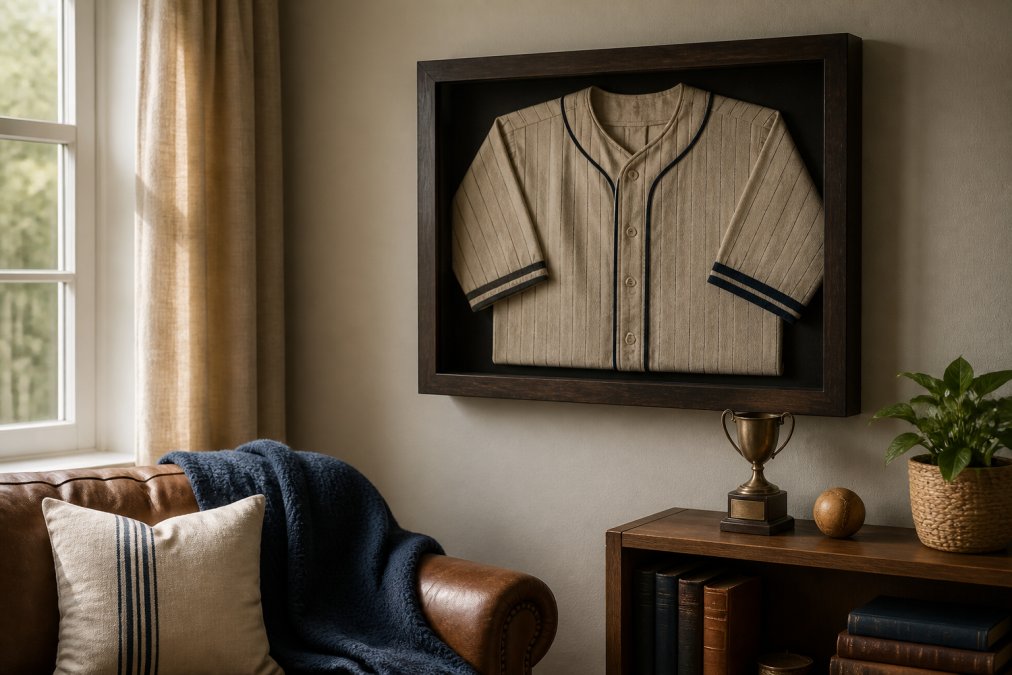
Shadow Box Display for a Single Jersey
A shadow box is the least destructive option. You fold the jersey around a foam core, pin it in place with acid-free pins, and seal it behind UV-filtering glass. No cutting, no stitching, no risk.
Choose a box at least 2 inches deeper than your folded jersey. A standard football jersey folds to roughly 16 by 20 inches, so a 20 by 24 inch box gives you breathing room.
Framed Jersey Number Collage
If you have several jerseys from the same era, cut the numbers out and arrange them in a grid. Back each number with fusible interfacing first so the edges don't curl. This works especially well for a series of retired numbers or a family's collection across generations.
No-Sew Jersey Throw Pillows and Blankets
No-sew projects are the fastest path from closet to couch, but jersey knit punishes shortcuts more than quilting cotton does. The fabric stretches in every direction, curls at cut edges, and can pucker under heat. Handle those three behaviors and a no-sew piece will hold up; ignore them and it will look tired within a season.
Stabilize Before You Cut
Jersey is a knit, not a woven. When you cut it, the loops along the cut edge are free to unravel, and the fabric's natural curl pulls the edge into a tube. Fusible knit interfacing, a lightweight, stretchy tricot, is the fix. Iron it onto the wrong side of the jersey panel before you cut. It locks the loops, kills the curl, and lets the fabric keep some give so seams don't pop.
Use a low heat setting and a pressing cloth. Performance blends that contain polyester or spandex can scorch or glaze under a hot iron, and once the surface is glazed, no amount of steaming brings it back.
Throw Pillow: A 16-Inch Build
A 16-inch square insert is the standard throw pillow form and the easiest size to cut from a jersey front. Here's the sequence that works:
- Cut the jersey front and back panels into 17-inch squares, one inch of seam allowance on each side.
- Fuse knit interfacing to the wrong side of both squares.
- Place the panels right sides together and run fusible hemming tape along three edges, following the tape manufacturer's iron temperature and dwell time.
- Clip the corners diagonally before turning. This removes bulk so the corners lie flat instead of bunching.
- Turn right side out, insert the form, and close the fourth edge with more tape.
If the jersey has a number or logo you want centered, lay the insert on top of the panel before cutting and mark the center with a pin. Off-center numbers are the most common complaint on finished jersey pillows.
Throw Blanket: Material Math
One adult jersey yields roughly two 16-inch squares once you work around the collar and armholes. A 50-by-60-inch throw, a common lap size, needs about 12 squares if you piece the top entirely from jersey. Most people don't have 12 jerseys, so the practical approach is a jersey top layer plus a solid fleece backing.
Fleece is the right backing because it doesn't fray, it's warm, and it comes in team colors. Cut the fleece to the finished blanket size plus one inch all around. Lay the jersey panels on top, arrange them, and fuse or tape them to the fleece. Finish the perimeter with a folded fleece binding or a blanket-stitch edge.
The Honest Trade-Off
Fusible tape bonds are less durable than stitched seams. On a pillow that gets daily couch use, expect the tape to lift at the corners within a year or two. The fix is simple: once the tape fails, hand-stitch a whipstitch along the edge with a needle and heavy thread. The interfacing you already fused keeps the fabric from stretching out of shape during that repair.
If the piece will be handled constantly, a kid's blanket, a game-day throw, consider stitching the seams from the start. A basic straight stitch on a machine handles interfaced jersey well, and the seam will outlast the tape by years.
Preserving Vintage Sports Jerseys Before You Cut
Preserving vintage sports jerseys should always come before the scissors. Once you cut, you can't undo it.
Start with a condition check. Look for dry rot along the shoulders, moth damage near the collar, and fading on the numbers. Fabric that crumbles when you tug it gently is past saving for wearables but can still work inside a sealed shadow box.
Clean the jersey before any project. Hand wash in cool water with a gentle detergent, then lay flat to dry. Never machine dry a vintage jersey; heat accelerates fiber breakdown.
For anything with real value, get it appraised first. A signed game-worn jersey may be worth far more intact than repurposed, and a professional appraisal tells you which path makes sense.
Creative Ways to Use Old Tickets in Your Decor
Creative ways to use old tickets pair naturally with jersey projects because they share the same nostalgia. A shadow box that holds a folded jersey can also hold the ticket stub from the game it was worn to.
Layering is what makes ticket decor work. Mount tickets on a mat board behind the jersey, or arrange them in a small frame beside it. Group tickets from a single season into a grid, or stack them in a shadow box with the jersey for a full game-day capsule.
Ticket paper is fragile and fades fast in direct sunlight.
Thematic Sports Room Styling: Pulling It All Together
Thematic sports room styling works when every piece points to the same team, era, or memory.
Budget-Friendly Crafting: Sourcing Materials and Staying Under Budget
Budget-friendly crafting starts with using what you already own.
| Supply | Where to Find It | What It Does |
|---|---|---|
| Shadow box frame | Thrift stores, craft retailers | Protects and displays a full jersey |
| Fusible interfacing | Fabric stores | Stabilizes knit before cutting |
| Hemming tape | Craft retailers | Creates no-sew seams |
| Acid-free pins | Archival suppliers | Holds fabric without staining |
| UV-filtering glass | Frame shops | Slows fading on fabric and paper |
Common Mistakes When Repurposing Jerseys (and How to Avoid Them)
The biggest mistake is cutting before stabilizing.
Frequently Asked Questions
How do you preserve old sports jerseys for home decor?
Before cutting or framing, wash the jersey gently by hand in cold water with a mild detergent, then air dry flat away from direct sunlight. For valuable or signed jerseys, avoid washing altogether and consider non-destructive display methods like shadow boxes with acid-free backing. Store unused jerseys in a cool, dry place away from sunlight to prevent fading. If the jersey has sentimental or monetary value, consult a textile conservator before making any permanent changes.
Can you turn old sports jerseys into throw pillows?
Yes, jerseys make excellent throw pillows because the fabric is soft and often features bold numbers or logos. Cut a square from the chest area that includes the number or team crest, then sew or fuse it to a backing fabric. For a no-sew option, use iron-on adhesive sheets and stuff with polyester filling. A 16-inch or 18-inch pillow insert works well for most jerseys. Avoid jerseys with heavy stains or fragile lettering.
What materials are needed to frame a sports jersey for wall art?
You will need a shadow box frame deep enough to hold the folded jersey (usually 2 to 3 inches deep), acid-free backing board, stainless steel pins or archival mounting tape, and a clean cotton glove for handling. For a DIY jersey wall art project, choose a frame that matches your room's decor. Avoid using regular tape or glue, which can stain fabric over time. Pre-made jersey display frames are also available at craft stores.
How do I clean old jerseys before repurposing them for crafts?
Check the care label first. Most jerseys can be hand-washed in cold water with a gentle detergent, then laid flat to dry. Do not use bleach or fabric softener, which can break down fibers. For stubborn stains, spot-treat with a diluted vinegar solution before washing. If the jersey is vintage or has autographs, skip washing and instead spot-clean only the areas you plan to cut. Always test on a small hidden section first.