

Table of Contents
- The Essential Adult Beer League Gear Checklist
- Where to Spend vs. Where to Save on Gear
- A Hockey Equipment Checklist for Beginners
- Best Hockey Sticks for Recreational Players
- How to Maintain Hockey Gear for Longevity
- New vs. Used: Smart Choices for Adult Play
- Conclusion: Get on the Ice Prepared
- Frequently Asked Questions
Last Updated: September 7, 2026
The Essential Adult Beer League Gear Checklist
The debate over the essential gear for adult beer league players usually ends the same way: someone shows up with a stick from high school and a pair of shin guards that have seen better decades. That approach works until your first hard slash or a bad fall, and then you start shopping for real equipment. This guide breaks down what you actually need to play safely and comfortably, without pretending you're heading to the NHL.
The reality is that adult recreational hockey demands a different mindset than the game you played at 16. Your body doesn't recover the same way, and the equipment should reflect that. The good news is that you don't need pro stock everything. You need gear that fits properly, protects the areas that take the most abuse, and lasts longer than one season of weekend play.
Below, we'll walk through a complete checklist, show you where to invest versus where to save, and cover the maintenance habits that keep your gear from becoming a biohazard by February.
Where to Spend vs. Where to Save on Gear
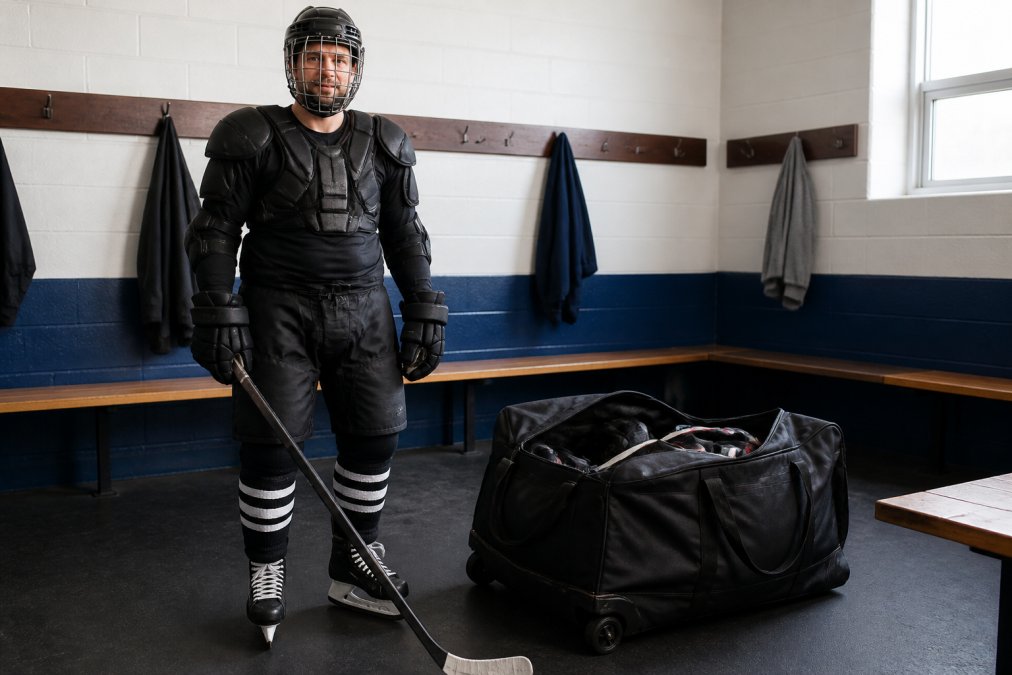
Most players waste money in the same places: they buy a top-tier stick they don't have the shot speed to flex, then cheap out on the helmet that protects their head. Flip that equation and you'll be safer and spend less overall.
Spend on: helmets, skates, and anything that prevents injury or supports your feet for two hours on ice. Save on: sticks, gloves, and hockey pants, where mid-range options perform nearly as well for recreational play.
Protective Equipment: The Non-Negotiables
A proper helmet with a full cage or visor is the single most important piece of protective equipment you will buy. For adult players, the cage is the smarter choice: teeth are expensive to replace, and errant sticks and pucks find faces more often than anyone likes to admit. Look for a helmet certified to current safety standards and replace it after any significant impact, since the foam only protects once.
Beyond the helmet, your checklist includes shoulder pads, elbow pads, shin guards, hockey pants, and a jock or jill. For recreational play, focus on padding density in the areas that matter: collarbones, elbows, and knees. Cut-resistant base layers and a neck guard are increasingly common and worth the modest investment for the protection they add.
Skates and Sticks: Buy Smart, Not Twice
Skates are the one place where spending more genuinely pays off. A properly fitted skate with a stiff boot supports your ankles and transfers energy better than a bargain pair. Get fitted at a shop where they can measure your foot and recommend a skate fit based on your width and arch, not just your shoe size. Budget for quality here because poor skates cause foot pain that will keep you off the ice.
Sticks are where you can be smarter. A stick that costs half the price of the top model will serve a recreational player perfectly well. What matters more than price is finding the right stick flex and blade curve for your height, weight, and playing style.
A Hockey Equipment Checklist for Beginners
If you're new to the game or returning after a long break, here's the complete list of what you need before your first skate:
- Helmet with full cage or visor
- Cut-resistant neck guard (strongly recommended)
- Shoulder pads
- Elbow pads
- Hockey gloves with durable palms
- Hockey pants with built-in hip and kidney protection
- Shin guards
- Jock or jill with cup
- Hockey socks to cover shin guards
- Base layer (moisture-wicking, not cotton)
- Skates (properly fitted)
- Stick (correct flex and curve)
- Gear bag
- Water bottle and towel
That's the full kit. For your first season, you don't need the most expensive version of any of these items. You need gear that fits correctly and meets basic safety standards. Many players find that buying mid-range protective equipment new, and a used pair of quality skates, is the smartest entry point.
Best Hockey Sticks for Recreational Players
The best hockey sticks for recreational players prioritize durability and a forgiving feel over the latest performance tech. Pro stock sticks used by NHL players are often stiffer and lighter, but they also break faster and cost significantly more. For weekend warriors, a mid-flex stick with a blade pattern you're comfortable with will serve you better.
Understanding Stick Flex and Blade Curve
Stick flex refers to how much the shaft bends when you lean into a shot. A common rule of thumb is to choose a flex around half your body weight in pounds. A player weighing 180 pounds should start with a flex around 85 or 90. If you have a weaker shot or prefer quick releases, drop down a few flex points. If you're heavier or generate more power, move up.
Blade curve affects puck control and shot accuracy. A deeper curve helps lift the puck and makes it easier to handle, but it can make backhand passes trickier. A moderate curve is the safest choice for most recreational players because it balances shooting and passing. Test a few patterns if you can, but don't overthink it. Consistency matters more than the perfect curve.
How to Maintain Hockey Gear for Longevity
Hockey gear takes a beating, and so does your back and your wallet if you're hauling a 40-pound bag and replacing equipment every season. A simple maintenance routine extends the life of your equipment, keeps it from smelling like something that should be reported to local authorities, and makes the logistics of getting to the rink less of a chore. The goal is to dry your gear thoroughly after every skate, deep clean it a few times per season, and organize your bag so the weight doesn't wreck your posture.
The 10-Minute Post-Game Routine
Your post-game routine should take no more than ten minutes. The clock starts the moment you step off the ice. Wipe down your skate blades with a dry cloth to prevent rust, remove the insoles to dry separately, and loosen the laces completely. Hang your jersey and base layer on a hanger, not draped over a chair. Spray the inside of your gloves and helmet with an antimicrobial equipment spray. This small investment of time prevents the breakdown of materials and keeps your equipment comfortable to wear.
Drying: The Non-Negotiable Step
Do not leave gear zipped in a bag overnight. Moisture is what breeds the bacteria that cause odor and break down the foams and plastics in your pads. A dedicated gear dryer like the Rocket Dryer or a simple portable boot dryer with hose attachments speeds up the process considerably. If you don't want to spend the money, a cheap clip-on fan pointed at your gear laid out on a rack works almost as well. The key is airflow. Hang your shoulder pads and pants on hangers spaced apart, and turn your gloves inside out so the palms dry.
Deep Cleaning: Twice a Season Is Enough
A deep clean twice per season is often sufficient for recreational play. Fill a bathtub with lukewarm water and add a cup of a sports-specific detergent like Sport-Wash or a mild soap like Dr. Bronner's. Submerge your pads, pants, and gloves, gently agitate them, and let them soak for 30 minutes. Rinse thoroughly until the water runs clear. Do not wring them out; press the water out gently and lay them flat on a towel. Never put hockey gear in a washing machine or dryer, as the agitation breaks down foams and the heat warps plastic. For helmets, wipe the inside shell and liner with a cloth dampened with a diluted vinegar solution (one part vinegar to three parts water) to kill odor without damaging the foam.
Repair Before You Replace
Extending the life of your gear is both budget-friendly and sustainable. A common pattern is that gloves wear out at the palms first. A cobbler or a hockey shop can often replace the palms for $30 to $50, which is far less than the $150 to $250 for a new pair. Loose stitching on shoulder pads or pants can be reinforced with a heavy-duty needle and waxed thread. Small cracks in plastic shin guard caps can be stabilized with a layer of epoxy on the inside. These simple repairs keep gear in play for years longer.
Gear Bag Organization and Weight Management
Adult players often struggle with the logistics of transporting heavy gear. A fully loaded bag can easily weigh 40 to 50 pounds, and schlepping it from the car to the rink takes a toll on your lower back. The first step is choosing the right bag. A wheeled bag with a telescoping handle is a worthwhile investment for anyone over 30. Look for one with a hard bottom and separate compartments. Heavier items like skates and helmet should sit at the bottom or in designated compartments, keeping the center of gravity low. Sticks should be carried separately if your bag lacks a stick pocket. A well-organized bag makes it easier to find things and prevents your skates from crushing your gloves and shin guards.
Consider a backpack-style bag if you have to navigate stairs or uneven terrain. These distribute weight across both shoulders, which is better for your spine than a single-strap duffel. Whichever style you choose, pack the heaviest items closest to your back or the wheels, and keep your stick in a stick bag to protect the blade and shaft.
New vs. Used: Smart Choices for Adult Play
Buying used gear can save you a significant amount of money, but you need to be selective. The rule is simple: never buy a used helmet or used skates that don't fit perfectly. Helmets are designed to protect once, and you don't know the impact history of a secondhand one. Skates mold to the previous owner's feet, and a poor fit will cause pain and injury.
Safe used purchases include shoulder pads, elbow pads, shin guards, hockey pants, and gloves, provided they're in good condition with intact padding and no cracks in the plastic. Check the stitching on gloves and the condition of the palm. Look for signs of heavy wear or compression in the padding. For budget-conscious players, USA Hockey's equipment guidance offers a useful overview of what to inspect before taking the ice.
Conclusion: Get on the Ice Prepared
The essential gear for adult beer league players comes down to protecting your head, supporting your feet, and buying smart everywhere else. You don't need the most expensive equipment on the shelf, but you do need gear that fits, meets safety standards, and gets maintained properly. Start with the checklist, prioritize a quality helmet and skates, and save your money on sticks and accessories.
Recovery Is Part of the Game
For the 30-and-over player, the game doesn't end when you step off the ice. Recovery is where you prevent the injuries that keep you sidelined. Most adult league players find that a simple post-game routine makes the difference between playing twice a week and sitting out with a nagging groin pull. Within 30 minutes of finishing, eat a protein-rich snack or meal to start muscle repair. Hydration is critical; for every hour of play, plan to drink at least 24 ounces of water or an electrolyte drink. A 20-minute ice bath or a cold shower on your legs reduces inflammation in the knees and ankles. Stretching your hips flexors and lower back before you drive home prevents the stiffness that sets in during the car ride.
Listen to Your Body
A common pattern among adult players is ignoring minor aches until they become major injuries. If something hurts for more than a few days, see a physical therapist or sports medicine doctor. A $100 copay for a professional assessment is cheaper than a season lost to a torn meniscus. Many players also find that adding a simple 10-minute mobility routine on off days, focusing on hips, ankles, and shoulders, keeps them on the ice consistently.
Once you've got your gear sorted and you're playing regularly, you'll start accumulating the memories that make the game worth it: the post-game conversations, the unlikely goals, the friendships that form over shared wins and losses. At MoonlightWeave, we believe those moments deserve to be remembered. When your old jersey or a ticket stub from a memorable season holds a story you want to keep telling, our handcrafted keepsakes turn vintage memorabilia into blankets, luggage tags, and home decor you'll actually use. USA Hockey's adult player resources can help you find a league near you if you're ready to lace up.
Frequently Asked Questions
What is the minimum equipment required for adult hockey leagues?
Most adult leagues require a full set of protective equipment: a certified hockey helmet with a full cage or visor, shoulder pads, elbow pads, hockey pants, shin guards, gloves, and a protective cup (jock or jill). You also need skates, a stick, and hockey socks. League rules vary, so check your specific league's handbook before your first game.
How much should a beginner expect to spend on beer league gear?
The cost of a full set of new, mid-range adult beer league gear can vary. You can lower that initial cost by buying used equipment, especially for less critical items like elbow pads or hockey pants. Invest more in the pieces that matter most for safety and performance: a quality helmet, well-fitted skates, and a reliable stick.
What is the best hockey stick for beer league?
The best hockey stick for recreational play balances durability with a reasonable price. Look for a stick with a mid-range flex (75-85 for most adult players) that matches your weight. A lower kick point helps with quick wrist shots, which are common in beer league. Consider a stick with a blade pattern you are already comfortable with.
How do I maintain hockey gear to make it last longer?
A simple routine adds years to your adult beer league gear. After each game, take everything out of your bag to air dry. Use a gear dryer or a dehumidifier to prevent bacterial growth. Wipe down your skates and helmet. Wash your base layer, socks, and jerseys regularly, and use an anti-microbial spray on pads to control odor.
Getting geared up is the first step, but the real reward is the time you spend on the ice. MoonlightWeave turns the jerseys and memorabilia from those seasons into unique, handcrafted fabric goods and home accessories, so your best hockey memories stay part of your everyday life. Continue shopping to see how we celebrate the game you love.