

Table of Contents
- Quick Comparison: Top Gift Picks for Every Budget
- 1. Lou Gehrig 1933 Mixing Glass: A Piece of Baseball Card History
- 2. Vintage Ticket Doormats: A Grand Entrance for Sports Fans
- 3. Retro Team Barware: Mixing Drinks with Sports History
- 4. Cozy Memorabilia Blankets for Game Day
- 5. Wall Clocks and Unique Sports Memorabilia Display Ideas
- How to Preserve Vintage Sports Cards and Other Keepsakes
- Personalized Sports Memorabilia Gifts: Making It Their Own
- Frequently Asked Questions
Last Updated: September 9, 2026
Finding the best gifts for vintage sports collectors means moving past mass-produced jerseys and generic fan gear. True collectors want pieces that honor the history, stats, and stories behind their favorite teams. At MoonlightWeave, we specialize in transforming vintage sports imagery into handcrafted home goods, so we know exactly what makes a collector smile.
Focus on items that feel like artifacts, not merchandise. A gift referencing a specific season, legendary player, or long-gone stadium shows you paid attention. The options below balance nostalgia with everyday function, organized by budget and purpose.
Quick Comparison: Top Gift Picks for Every Budget
Here is a snapshot of the best gifts for vintage sports collectors across price points, prioritizing authenticity, design quality, and nostalgic value.
| Gift Idea | Price | Best For | Vibe |
|---|---|---|---|
| Vintage Ticket Doormat | $52.95 | Home entryways and man caves | Bold, nostalgic statement |
| Retro Mixing Glass | $21.95 | Bar carts and daily use | Functional memorabilia |
| Cozy Memorabilia Blanket | $42.95 | Game day lounging | Warm and sentimental |
| Sports Wall Clock | $58.95 | Offices and rec rooms | Eye-catching focal point |
| Vintage Luggage Tag | $20.95 | Traveling fans | Compact and personal |
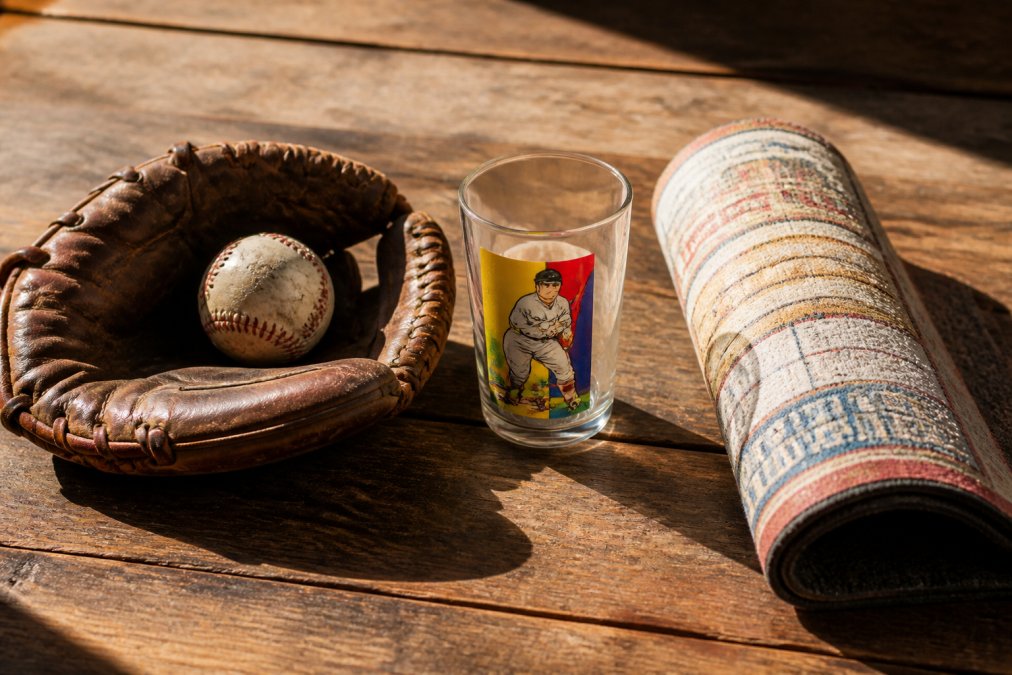
Budget-friendly options start around $21, while statement pieces run closer to $59. The right choice depends on whether you want to add to their collection or their living space.

1. Lou Gehrig 1933 Mixing Glass: A Piece of Baseball Card History
For the collector who appreciates the hobby's roots, this glass features the iconic 1933 Big League Chewing Gum card design of Lou Gehrig, one of the most coveted sets in baseball history. This 16oz mixing glass from MoonlightWeave is priced at $21.95.

The glass works as a cocktail shaker or sturdy everyday drinking glass. It is dishwasher-safe, though hand washing keeps the vibrant colors sharp for years. It is a great choice for the fan who already owns the actual cards and wants to display their passion in a new way.
2. Vintage Ticket Doormats: A Grand Entrance for Sports Fans
A vintage World Series ticket design turns a practical doormat into daily sports memorabilia. MoonlightWeave offers iconic options at $52.95 each, including the 1969 Mets at Shea Stadium, the 1932 Cubs-Yankees matchup, and the 1954 Giants clash featuring Willie Mays' famous catch.

Each mat is made from eco-friendly coconut coir fiber with an anti-slip black vinyl backing. They measure 24 by 16 inches and are built for outdoor use, though a covered overhang extends their life. Expect some natural shedding during the first month; a quick shake removes it.
3. Retro Team Barware: Mixing Drinks with Sports History
For the fan who entertains, vintage barware is a reliable crowd-pleaser. The collection includes a 1934 Chicago Cubs glass and a 1950 Philadelphia Eagles vs. Pittsburgh Steelers mug, each priced at $21.95, plus a 1967 Seattle SuperSonics design for basketball enthusiasts.
The 16oz capacity works well for everything from craft beer to old-fashioned cocktails, with vibrant, durable colors that hold up to regular use. These make excellent gifts for game nights, Father's Day, or upgrading a home bar.
4. Cozy Memorabilia Blankets for Game Day
Game day comfort meets sports history with this plush throw blanket featuring the 1934 Cincinnati Reds football schedule. Priced at $42.95, this Velveteen blanket offers a tangible connection to an era that predates the modern NFL structure.
Made from durable polyester, it is medium heavy-weight, extra soft without being stifling. Machine wash cold on a gentle cycle and tumble dry on low to keep the print looking new.
5. Wall Clocks and Unique Sports Memorabilia Display Ideas
For the collector running out of shelf space, a wall clock offers a functional display option. The 1960 Patriots-Bills acrylic clock, priced at $58.95, makes a focal point for a home office, game room, or man cave.
Group items by era or team: a dedicated wall with a vintage clock as the centerpiece, surrounded by framed ticket stubs or photos, creates a curated look. Acrylic clocks are lightweight and easy to mount with a keyhole slot.
How to Preserve Vintage Sports Cards and Other Keepsakes
Most gift guides stop at "buy a top loader." That advice is dangerously incomplete for vintage pieces. A single wrong preservation choice, like using a rubber band or cleaning a card with a damp cloth, can permanently destroy value. This section covers what to do, what to avoid, and why restoration ethics matter.
The Three-Tier Protection System
Preservation works in three escalating tiers of protection, each addressing a different threat: physical damage, environmental degradation, and handling errors.
Tier 1: Sleeves and Top Loaders (The Bare Minimum)
For raw cards, the standard is a penny sleeve (a soft, archival-safe polypropylene sleeve) inserted into a rigid top loader. The penny sleeve prevents surface scratches; the top loader prevents bending. Do not skip the penny sleeve, sliding a raw card directly into a rigid holder can scuff corners. For thicker vintage cards or those with memorabilia patches, use a 35pt or 55pt top loader, not the standard 20pt version.
Tier 2: Magnetic Holders and UV-Protective Display
For cards worth displaying, a magnetic one-touch holder offers better protection than a top loader because it seals on all four sides and is less likely to be opened accidentally. The critical upgrade here is UV protection. Standard glass does almost nothing to stop fading. Look for display frames or cases explicitly labeled "UV-protective glass" or "museum-grade acrylic." The Library of Congress guidelines on preserving paper items emphasize that light is the single most damaging factor for paper-based collectibles. Even indirect sunlight through a window can fade a card's colors noticeably within a few months.
Tier 3: Archival Storage Boxes and Climate Control
For long-term storage, a shoebox is not acceptable. Archival-safe boxes are made from acid-free, lignin-free materials; standard cardboard contains acids that migrate into paper, causing yellowing and brittleness. Only use plastic holders labeled "archival-safe" or "PVC-free," as PVC off-gasses and can cause a greenish film on cards.
Temperature and humidity are the silent killers. The Library of Congress recommends keeping paper collections between 60-70°F and 35-50% relative humidity. Basements are too humid (risk of mold and warping); attics are too hot (risk of ink bleeding). A climate-controlled closet or interior room is safest.
The Restoration Ethics Trap: What NOT to Do
If you are buying a gift for a collector, the worst thing you can do is also buy a "cleaning kit" or suggest they "freshen up" an old autograph or card. Here is why:
- Never clean a vintage card with water, erasers, or chemical cleaners. Vintage card stock is highly porous; moisture causes paper fibers to swell, leading to rippling, ink bleeding, or sticking. Even a "gentle" dry erase can remove the top layer of gloss, a major grading factor.
- Never press or flatten a bent card with heavy books. This can crack the paper's surface and cause permanent creasing. Professional pressing requires controlled humidity and heat.
- Never attempt to remove tape or adhesive residue. The adhesive is often stronger than the card's surface; a botched removal can tear the top layer. Leave this to a professional conservator.
- Never "improve" an autograph. Touching up a faded signature is restoration fraud. It destroys provenance and makes the item worthless to serious collectors.
The Gift-Giver's Rule: Preservation Over Intervention
The most valuable gift is not a product that alters the item, it is one that protects it from alteration. An archival storage box, acid-free backing boards, or a UV-protective display case shows you understand the item's value lies in its untouched state.
For high-value items (think graded cards worth over $500 or signed memorabilia), consider gifting a consultation with a professional conservator or an authentication service. The FBI's guidance on art and antiquities fraud highlights why provenance is critical for high-value collectibles, and the same logic applies to sports memorabilia. A documented authentication report is often more valuable than the item itself, because it proves the item is genuine and establishes a chain of custody.
Quick Reference: What to Buy vs. What to Avoid
| Gift Type | Safe? | Why |
|---|---|---|
| Archival-safe penny sleeves and top loaders | Yes | Prevents physical damage without altering the card |
| UV-protective display frame | Yes | Blocks fading from light exposure |
| Acid-free storage box | Yes | Prevents chemical migration from cardboard |
| "Card cleaning" or "restoration" kits | No | Risk of permanent surface damage or ink removal |
| Rubber bands or paper clips | No | Causes dents, creases, and surface impressions |
| Magnetic holders for thick cards | Yes | Provides rigid protection for thicker memorabilia cards |
If a product description uses words like "restore," "clean," or "renew," put it down. If it uses "archival," "acid-free," or "UV-protective," it is likely a safe bet.
Personalized Sports Memorabilia Gifts: Making It Their Own
Personalization elevates a gift from thoughtful to unforgettable, but in the vintage sports world, the line between a unique item and a counterfeit is dangerously thin. This section covers how to choose a genuinely personalized gift and how to verify authenticity.
The Two Types of Personalization
There are two distinct ways to personalize a gift, and they require different levels of caution.
Type 1: Custom-Made Items (Safe, Creative, and Low-Risk)
This includes items like the 1965 Detroit Spring Training luggage tag from MoonlightWeave, priced at $20.95, featuring a glossy acrylic print with a discreet rear pocket for a business card. This type takes a vintage design and applies it to a new, functional object. The risk is minimal because the item is new, there is no question of authenticity.
Other safe examples include custom-printed vintage ticket doormats, retro team barware, and wall clocks featuring historic game designs. These are clearly reproductions, which is exactly why they are safe.
Type 2: Autographed Memorabilia (High-Value, High-Risk)
If you are considering gifting an autographed vintage baseball, jersey, or photograph, you are entering the world of authentication, where most gift-givers make costly mistakes.
The Authentication Verification Guide
Most gift guides assume you know how to spot a fake. You do not, and neither do most collectors. Here is the verification process to follow before spending money on any autographed item:
Step 1: Demand a Certificate of Authenticity (COA) from a Recognized Third-Party Authenticator
A COA from the seller themselves is worthless. It must come from an independent, recognized service. The three most widely accepted in the United States are PSA/DNA, JSA (James Spence Authentication), and Beckett Authentication Services (BAS). If the seller cannot provide one, walk away.
Step 2: Verify the COA Number Online
Every legitimate COA has a unique serial number. Go to the authenticator's official website yourself and enter that number in their verification database. Do not call the phone number printed on the COA, it could be fake.
Step 3: Check the Item's Provenance
Provenance is the documented history of who owned the item and how it changed hands. A signed baseball with a clear chain of custody from a team employee or a known collector is far more valuable and trustworthy than one with no history. The FBI's guidance on art and antiquities fraud highlights why provenance is critical for high-value collectibles, and the same logic applies to sports memorabilia.
Step 4: Be Wary of "Too Good to Be True" Deals
If a seller is offering a Babe Ruth signed baseball for $200, it is counterfeit. Period. Vintage autographs from legendary players command thousands of dollars. A price that seems too good to be true is a red flag.
The Provenance Documentation Gift
For collectors with valuable, signed items, consider gifting a provenance documentation service rather than another physical item. A formal appraisal or authentication report from a recognized service adds verifiable value and provides peace of mind for insurance purposes.
Practical Personalization Ideas That Respect the Hobby
To personalize a gift without counterfeit risk, focus on items that celebrate the collector's specific interests:
- Custom-framed vintage ticket stubs: Take a stub from a game the collector attended and have it professionally framed with a photo from that game. This is deeply personal and completely authentic.
- Team-specific barware: A retro glass featuring the collector's favorite team's 1960s-era logo is a safe, functional gift that shows you know their team history.
- Custom luggage tags with vintage designs: These are low-risk, practical, and carry nostalgia without pretending to be original artifacts.
Quick Verification Checklist for Autographed Gifts
| Check | What to Look For | Red Flag |
|---|---|---|
| Third-party COA | PSA/DNA, JSA, or BAS logo | COA from the seller or "in-house" authentication |
| Online verification | Serial number matches authenticator's database | Number not found or website looks unofficial |
| Provenance | Documented chain of custody | No history or vague "estate sale" story |
| Price | Market-consistent for the player and item | Significantly below market value |
| Item condition | Consistent with age and handling | Looks artificially aged or "too clean" |
Use this checklist before you buy. It takes ten minutes and can save you from a costly mistake.
Frequently Asked Questions
What are some good gift ideas for a sports card collector?
For a sports card collector, focus on items that complement their collection rather than compete with it. Archival-quality protective sleeves and top loaders are always welcome, as is a dedicated display case for showcasing prized cards. If you want something more unique, consider a vintage-themed mixing glass featuring a famous card design, like the 1933 Lou Gehrig option. A gift card to a reputable auction house or online marketplace for rare finds is also a thoughtful choice.
How do you store and display vintage sports memorabilia safely?
Proper storage and display are crucial for preserving vintage sports memorabilia. Keep items out of direct sunlight, which can fade colors and damage paper. Use archival-quality, acid-free sleeves and top loaders for cards, and consider a UV-protective display case for autographed items or tickets. For larger pieces like jerseys, store them in breathable garment bags. Avoid basements or attics where temperature and humidity fluctuate, as these conditions accelerate deterioration.
What is the most sought after sports memorabilia?
The most sought-after sports memorabilia typically includes game-used equipment, championship rings, and iconic autographs. For vintage collectors, high-grade rookie cards from the 1950s and 60s, such as the Mickey Mantle or Hank Aaron cards, are highly prized. Original ticket stubs from historic games, like the 1969 World Series, are also considered valuable. The key is provenance; an item's history and authentication significantly increase its desirability and value.
What is the price range for unique vintage sports decor?
The price range for unique vintage sports decor varies widely based on the item and its historical significance. Functional, handcrafted pieces like a 16oz mixing glass with a vintage team design are accessible at $21.95. Larger statement pieces, such as a doormat replicating a 1932 World Series ticket, are priced around $52.95. This range allows you to find a meaningful, nostalgic gift that fits your budget, from a small token to a more substantial home decor piece.
Finding the right gift comes down to respecting the collector's passion for history. Whether it is a functional mixing glass, a statement doormat, or a cozy blanket, the goal is to celebrate the sports heritage they love. MoonlightWeave offers a range of handcrafted pieces that turn vintage sports imagery into everyday items, from barware and home decor to travel accessories. Browse the collection to find a unique piece that honors their favorite memories and team spirit.